Portable generators are indispensable for backup power, outdoor adventures, and job site needs. Yet, even the most reliable units can falter if their heart – the carburetor – becomes clogged with fuel residue and debris. A dirty carburetor is one of the most common culprits behind generator performance issues, leading to frustrating failures when you need power the most. This comprehensive DIY guide, drawing on over a decade of hands-on experience, will walk you through everything you need to know to diagnose, clean, and maintain your portable generator’s carburetor, ensuring it runs smoothly and reliably for years to come.
Why Your Portable Generator’s Carburetor Needs Cleaning
Understanding why your generator’s carburetor gets dirty and recognizing the signs are the first steps toward effective maintenance. This small but mighty component is crucial for your generator’s operation.
Understanding the Carburetor’s Role
|
Our Picks for the Best Portable Generator in 2026
As an Amazon Associate I earn from qualifying purchases.
|
||
| Num | Product | Action |
|---|---|---|
| 1 | GENMAX Portable Inverter Generator, 6000W open frame Gas Powered High Speed Engine with Electric Start, Ultra Lightweight for Backup Home Use & Job Site,EPA Compliant (GM6000XiE) |

|
| 2 | Honda 664240 EU2200i 2200 Watt Portable Inverter Generator with Co-Minder |
|
| 3 | Champion Power Equipment 2500-Watt Dual Fuel Portable Inverter Generator with Quiet Technology and CO Shield |
|
| 4 | Anker SOLIX C1000 Portable Power Station, 1800W (Peak 2400W) Solar Generator, Full Charge in 58 Min, 1056wh LiFePO4 Battery for Home Backup, Power Outages, and Outdoor Camping (Optional Solar Panel) |
|
| 5 | BLUETTI Portable Power Station AC180, 1152Wh LiFePO4 Battery Backup w/ 2 1800W (2700W peak) AC Outlets, 0-80% in 45Min, Solar Generator for Camping, Off-grid, Power Outage |
|
| 6 | 5000 Watts Portable Dual Fuel Inverter Generator– Small Gasoline LPG Powered for Home Backup, Camping, RV, Tailgating with CO Protection, Eco Mode, Recoil/Electric/Remote Start, Parallel Capable |
|
| 7 | Generac 2,500-Watt Gas Powered Portable Inverter Generator - Lightweight and Compact Design - Produces Clean, Stable Power - Quiet Operation - Great for Home Backup, Camping, and RV Use |
|
| 8 | maXpeedingrods 2400 Watt Portable Inverter Generator Gas Powered, Bluetooth® App Remote Data Monitor,Only 33lbs, Compact and Lightweight for Outdoor Camping, Home Use |
|
| 9 | Anker SOLIX C1000 Gen 2 Portable Power Station, 2,000W (Peak 3,000W) Solar Generator, Full Charge in 49 Min, 1,024Wh LiFePO4 Battery for Home Backup, Power Outages, and Camping (Optional Solar Panel) |
|
| 10 | Westinghouse 155Wh 150 Peak Watt Portable Power Station & Solar Generator, Modified Sine Wave AC Outlet, Backup Lithium Battery for Camping, Home, Travel, Indoor/Outdoor Use (Solar Panel Not Included) |
|
The carburetor’s primary function is to precisely mix air and fuel in the correct ratio before this mixture enters the engine for combustion. It also regulates the engine’s idle speed and the amount of fuel and air delivered based on engine speed, load, and throttle position. When functioning optimally, your generator starts easily, idles smoothly, and responds predictably to load changes.
Common Causes of Carburetor Clogs
Most carburetor clogs stem from fuel-related issues. The most common causes include:
- Old Gasoline: Fuel degrades and breaks down, often within 30 days, leaving behind sticky varnish and gum deposits.
- Ethanol Fuel: Modern gasoline frequently contains ethanol, which attracts moisture and can lead to corrosion inside the carburetor.
- Improper Storage: Leaving fuel in the carburetor during storage allows it to evaporate, leaving varnish that blocks tiny jets and passages essential for proper fuel flow.
These deposits restrict the critical fuel and air passages, disrupting the delicate balance required for efficient combustion.
Recognizing the Symptoms of a Dirty Carburetor
Your generator will often signal when its carburetor is dirty or clogged. Key indicators include:
- Difficulty Starting or No Start: If the generator takes multiple attempts to start or won’t start at all, a dirty carburetor could be the problem.
- Starts Then Stalls: The engine might fire up briefly but then quickly die.
- Surging or Rough Running: The generator runs unevenly, vibrates excessively, or its RPM fluctuates, indicating an incorrect fuel-air mixture.
- Only Runs with Choke On: If the generator only operates when the choke is engaged, it suggests the carburetor isn’t supplying enough fuel.
- Reduced Power Output: A dirty carburetor can limit the fuel reaching the engine, leading to a noticeable drop in power.
- Increased Fuel Consumption: An overly rich fuel-air mixture, often caused by clogs, forces the engine to burn more fuel than necessary.
- Black Smoke from Exhaust: This is another sign of an excessively rich mixture, as unburnt fuel exits as black smoke.
- Fuel Leaking from Carburetor: This can indicate issues with the float needle or other internal components that are no longer sealing properly.
If you observe any of these symptoms, inspecting and cleaning the carburetor should be your first troubleshooting step.
Essential Tools and Materials for Carburetor Cleaning
Before you begin, gather the necessary tools and materials to ensure a smooth and effective cleaning process. Having everything organized will prevent interruptions and make the job easier.
- Carburetor Cleaner Spray: A specialized solvent designed to dissolve varnish, gum, and dirt. Popular options include Gunk, Gumout, WD-40 Specialist, and CRC Clean-R-Carb™. [cite: 5, 1 (carb cleaner spray search), 2 (carb cleaner spray search), 3 (Generac)]
- Clean Rags or Paper Towels: For wiping away dirt and drying components.
- Small Brush: An old toothbrush or a specialized small wire brush can help scrub stubborn grime. Be gentle to avoid damaging delicate parts.
- Screwdrivers: Flathead and Phillips head, varying in size, will be needed for disassembly.
- Wrenches/Socket Set: For removing nuts and bolts holding the carburetor in place (a 10mm socket wrench is commonly useful). [cite: 5, 1 (tools needed search)]
- Needle-Nose Pliers: Helpful for disconnecting fuel lines, springs, and linkages. [cite: 1 (tools needed search)]
- Thin-Gauge Wire or Needle: To clear tiny jets and passages without enlarging them. Do not use metal wire that can damage jet openings. [cite: 1 (tools needed search)]
- Compressed Air: (Optional but highly recommended) To blow out loosened debris from small passages and dry parts thoroughly. Ensure it’s moisture-free to prevent rust.
- Drain Pan/Container: To catch fuel and cleaner during the process, preventing spills and allowing for proper disposal.
- Disposable Gloves: Carburetor cleaner can be harsh on the skin.
- Safety Glasses/Goggles: Always protect your eyes when working with chemicals and small parts under pressure.
- Small Bowl or Magnetized Tray: To keep track of small screws and components.
- New Gaskets/Carburetor Rebuild Kit: (Optional) If gaskets are damaged during disassembly, replacements will be needed.
Step-by-Step Guide to DIY Portable Generator Carburetor Cleaning
Cleaning a portable generator’s carburetor involves careful disassembly, thorough cleaning, and meticulous reassembly. Follow these steps to ensure a successful DIY repair.
Safety First: Preparation is Key
Before touching your generator, always prioritize safety:
- Turn Off and Cool Down: Ensure the generator is completely off and has cooled to the touch. [cite: 3 (Generac)]
- Disconnect Spark Plug: Disconnect the spark plug wire to prevent any accidental startups while you work. [cite: 3 (Generac), 5 (Factory Direct Supply)]
- Work in a Well-Ventilated Area: Carburetor cleaner emits harmful fumes; perform this task in an open, well-ventilated space, away from open flames or ignition sources.
- Wear Safety Gear: Put on your safety glasses and disposable gloves.
- Refer to Owner’s Manual: Always consult your generator’s owner’s manual for model-specific instructions and warnings. [cite: 3 (Generac)]
Accessing and Removing the Carburetor
- Shut Off Fuel Valve and Drain Fuel: Locate the fuel shut-off valve and turn it to the “off” position. Place a drain pan beneath the carburetor float bowl and unscrew the drainage screw (if available) to drain any remaining fuel. If no drain screw, fuel will likely spill during removal. [cite: 1, 3 (Generac), 5 (WEN)]
- Remove Air Filter Housing: Carefully remove the air filter housing, which usually sits in front of the carburetor. This provides better access. [cite: 3, 5 (Factory Direct Supply)]
- Locate and Photograph Connections: Identify all fuel lines, vacuum hoses, and throttle/choke linkages connected to the carburetor. Take clear photos or make a diagram to aid in correct reassembly.
- Disconnect Components: Carefully disconnect the fuel lines and any connecting springs or throttle/choke linkages using needle-nose pliers. Be gentle as these parts can be delicate. [cite: 4, 5 (WEN)]
- Unbolt Carburetor: Use appropriate wrenches or screwdrivers to loosen and remove the bolts or screws securing the carburetor to the engine. Place all removed fasteners in a small bowl or magnetized tray. [cite: 4, 5 (WEN)]
- Carefully Remove Carburetor: Gently slide the carburetor off the mounting bolts. Be mindful of any gaskets between the carburetor and the engine; inspect them for damage and replace if necessary. [cite: 4, 5 (WEN)]
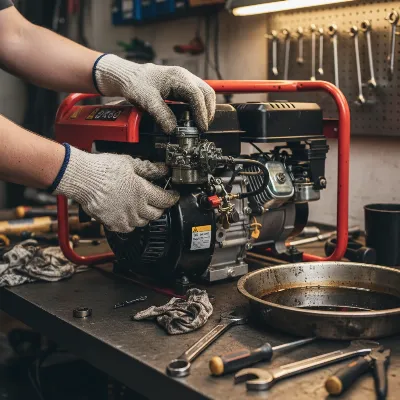 A person carefully removing a dirty carburetor from a portable generator engine, with various tools and a drain pan nearby, in a well-lit workshop.
Disassembly and Initial Inspection
With the carburetor removed, you can begin a more detailed inspection and cleaning:
- Remove Float Bowl: Unscrew the bolt at the bottom of the carburetor bowl (the lowest part). Be prepared for any residual fuel inside. [cite: 1, 5 (WEN)]
- Remove Float and Pin: Carefully remove the plastic or brass float and its pivot pin. Beneath the float, you’ll find the needle valve. [cite: 5 (WEN)]
- Extract Jets: Using a flathead screwdriver or appropriate tool, remove the main jet (often located in the center post or nozzle) and the pilot jet (a smaller jet, sometimes less accessible). These are typically where the most stubborn clogs occur. [cite: 1, 3 (YouTube), 5 (WEN)]
- Inspect Parts: Examine all components for visible dirt, varnish, corrosion, or any signs of wear or damage (e.g., warped float, damaged needle valve). If parts are severely corroded or damaged, consider replacement.
Thorough Cleaning of Carburetor Components
This is the most critical step for resolving carburetor issues:
- Spray Carburetor Cleaner: Liberally spray all metal carburetor parts, including the float bowl, main body, and jets, with carburetor cleaner. Ensure each part is thoroughly soaked. This helps dissolve gum, varnish, and dirt.
- Scrub Stubborn Debris: Use your small brush or an old toothbrush to gently scrub away any stubborn dirt or residue. Be particularly gentle when cleaning the jets and their tiny orifices.
- Clear Clogs with Thin Wire: For blocked jets and small passages, carefully use a thin-gauge wire or needle to dislodge debris. Do not use metal wire that can damage or enlarge the jet openings. [cite: 1, 5 (WEN)] Ensure light can pass through the jet holes to confirm they are clear.
- Blow Out with Compressed Air: After scrubbing and clearing, use compressed air to thoroughly blow out all passages, jets, and openings. This removes any remaining cleaner and loosened debris, ensuring a clean, dry surface.
- Dry Parts: Wipe down all parts with a clean rag and allow them to air dry completely to prevent moisture-related issues.
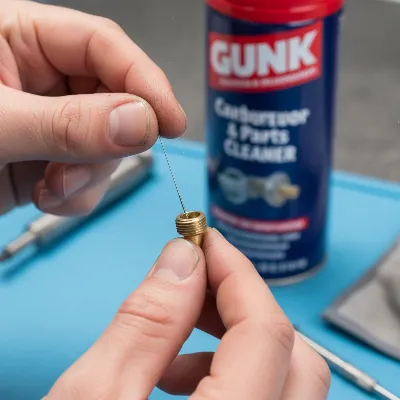 A close-up of a person using a thin wire to clear a jet from a portable generator carburetor, with a can of carburetor cleaner in the background, showing careful precision.
Reassembly and Reinstallation
Putting the carburetor back together correctly is crucial for its function:
- Reassemble Carburetor: Reverse the disassembly steps. Carefully reinstall the cleaned jets, needle valve, float, and float bowl. Ensure all gaskets and O-rings are clean and properly seated. Replace any gaskets that appear cracked, brittle, or shredded. [cite: 3 (YouTube)]
- Reinstall Carburetor to Engine: Carefully slide the reassembled carburetor back onto the mounting bolts on the engine. Reconnect all fuel lines, vacuum hoses, and throttle/choke linkages according to your earlier photos or diagrams. Ensure all connections are secure and tight to prevent leaks or loose operation. [cite: 4, 5 (WEN)]
- Reattach Air Filter Housing: Reinstall the air filter housing and any other components you removed to access the carburetor. [cite: 3, 5 (Factory Direct Supply)]
Final Checks and Testing
- Refill with Fresh Fuel: Add fresh, ethanol-free gasoline to the fuel tank. Consider adding a fuel stabilizer for long-term storage.
- Reconnect Spark Plug: Reconnect the spark plug wire.
- Test Run: Start the generator and allow it to run for several minutes. Listen for smooth idling, consistent power output, and watch for any leaks. Observe its performance under a small load to ensure proper function.
Cleaning Your Carburetor Without Removing It (Quick Fix)
For minor clogs or as a preventive measure, you can sometimes clean your carburetor without full disassembly. This method is a quicker fix but may not be effective for severe blockages.
- Preparation: Ensure the generator is off and cool, and disconnect the spark plug wire. Locate the carburetor, typically behind the air filter housing. You may need to remove the air filter to gain access. [cite: 5 (Factory Direct Supply)]
- Spray Carburetor Cleaner into Intake: With the engine off, spray carburetor cleaner directly into the carburetor’s intake and all accessible orifices and nozzles. Allow the cleaner to sit briefly, as per product instructions, to dissolve deposits. [cite: 5 (Factory Direct Supply)]
- Start and Run Engine: Reconnect the spark plug. Start the generator and let it run for a few minutes. The cleaner will circulate through the system, helping to break down residue. You can spray short bursts of cleaner into the intake while the engine is running to further aid the process, being careful not to stall the engine. [cite: 5 (Factory Direct Supply)]
- Use Compressed Air (Optional): After running, turn off the engine and disconnect the spark plug. Use compressed air to blow out any remaining loosened dirt or cleaner, ensuring all passages are clear. [cite: 5 (Factory Direct Supply)]
- Reattach Air Filter: Reinstall the air filter.
When to Replace Your Carburetor vs. Clean It
While cleaning is often the first and most cost-effective solution, there are situations where replacing the carburetor is the better, or even necessary, option.
Consider replacement if:
- Severe Corrosion: If internal carburetor components show significant corrosion that cleaning cannot remove, it indicates irreversible damage.
- Permanently Blocked Jets: If jets remain blocked despite thorough cleaning with wire and compressed air, they may be permanently clogged beyond repair.
- Damaged Float Needle or Components: A warped float or a damaged float needle can lead to persistent fuel leaks or improper fuel levels, which cleaning won’t fix.
- Persistent Issues After Cleaning: If your generator continues to exhibit symptoms of a dirty carburetor after multiple cleaning attempts, the issue may be more complex or the carburetor is simply worn out.
- Long-Term Storage with Old Fuel: If the generator has been stored for more than six months with untreated fuel, the internal damage might be extensive enough to warrant a new carburetor. [cite: 1 (replace vs clean search)]
- Cost-Effectiveness: For many small portable generators, aftermarket carburetors are relatively inexpensive, often costing around $20-30. [cite: 4 (reddit)] In such cases, replacing the entire unit can be faster and more reliable than spending hours on a deep clean that may not fully restore function.
While cleaning offers a therapeutic DIY experience, a new, factory-tuned carburetor ensures optimal performance without the hassle of troubleshooting lingering issues.
Preventing Future Carburetor Issues
Proactive maintenance is the best way to keep your portable generator’s carburetor clean and extend its lifespan.
- Use Fresh Fuel: Always use fresh gasoline, as it begins to break down after about 30 days.
- Opt for Ethanol-Free Fuel: If available, use ethanol-free gasoline to minimize moisture absorption and corrosion in the fuel system.
- Add Fuel Stabilizer: For any fuel stored for more than a month, or if your generator won’t be used frequently, add a high-quality fuel stabilizer to the tank. This prevents fuel degradation and varnish buildup.
- Run Generator Regularly: Start and run your generator every 30 days for at least 15-20 minutes, preferably under a light load. This circulates fresh fuel and keeps components lubricated.
- Drain Fuel for Storage: Before storing your generator for an extended period (more than 30 days), turn off the fuel valve and run the engine until it runs out of fuel. This empties the carburetor and prevents stale fuel from causing clogs. Alternatively, drain the fuel tank completely and then run the carburetor dry.
By adopting these preventive measures, you can significantly reduce the likelihood of encountering a dirty portable generator carburetor.
Conclusion
A dirty carburetor can quickly turn your reliable portable generator into a frustrating paperweight. By understanding the common causes and symptoms, gathering the right tools, and following a methodical cleaning process, you can confidently restore your generator’s performance. Whether you opt for a thorough disassembly or a quick cleaning spray, remember that safety and precision are paramount. Moreover, integrating preventive maintenance habits—like using fresh, stabilized fuel and proper storage—will safeguard your carburetor from future clogs, ensuring your Portable Generator is always ready to deliver power when you need it most.
How often do you find yourself needing to clean your generator’s carburetor, and what’s your go-to preventative measure?
Câu Hỏi Thường Gặp
How often should I clean my portable generator’s carburetor?
The frequency depends on usage and storage. For frequent use or dusty environments, clean more often. As a general guideline, consider cleaning the carburetor at least once a year, or if your generator exhibits symptoms like hard starting or rough running after storage.
Can I use regular engine cleaner instead of carburetor cleaner?
No, it’s best to use a specialized carburetor cleaner. These products are specifically formulated to dissolve varnish, gum, and carbon deposits without damaging delicate carburetor components like rubber or plastic seals, which regular engine cleaners might corrode.
What are the dangers of a clogged carburetor?
A clogged carburetor can lead to serious performance issues, including difficulty starting, engine stalling, reduced power output, and increased fuel consumption. Prolonged use with a dirty carburetor can also cause excessive wear and tear on engine components, potentially shortening the generator’s lifespan.
Is it possible to clean a carburetor without removing it from the generator?
Yes, for light clogs, you can try cleaning the carburetor without removing it. This involves removing the air filter, spraying carburetor cleaner into the intake while the engine is off, then running the engine briefly, and optionally using compressed air. However, this method is less effective for severe blockages.
What type of fuel is best for portable generators to prevent carburetor issues?
Using fresh, ethanol-free gasoline is highly recommended to prevent carburetor issues. If ethanol-free fuel is not available, always use a high-quality fuel stabilizer when storing fuel for more than 30 days or during periods of infrequent generator use.