Ensuring your portable generator remains a reliable power source often comes down to one crucial maintenance task: changing its oil. Just like with your car, the engine oil in your generator is its lifeblood, protecting internal components from friction and heat. Over time, this oil degrades, collecting contaminants and losing its lubricating properties. Neglecting regular oil changes can lead to reduced efficiency, increased wear and tear, and ultimately, costly breakdowns, leaving you without power when you need it most. This guide will walk you through the essential steps to safely and effectively change the oil in your portable generator, ensuring its longevity and peak performance.
What is a Portable Generator and Why is Oil Crucial for It?
A portable generator is a self-contained unit designed to provide electricity, typically used for backup power during outages, at job sites, or for recreational activities. These versatile machines usually run on gasoline, propane, or diesel and house an internal combustion engine that converts fuel into electrical energy. Like any engine with moving parts, a portable generator’s engine generates significant friction and heat during operation.
This is where engine oil becomes indispensable. Its primary function is to lubricate these intricate components, reducing friction and preventing premature wear. Beyond lubrication, oil also helps to cool the engine, seal piston rings, and clean internal parts by carrying away contaminants. High-quality oil ensures optimal lubrication, which directly impacts the generator’s overall efficiency, fuel consumption, and, most importantly, its lifespan. Regular maintenance, particularly oil changes, is paramount to sustain these critical functions.
Important Considerations for Portable Generator Maintenance
When choosing a portable generator, future maintenance is often an overlooked but critical factor. Consider engine type, as it dictates the required oil and filter types. Generators designed for easy maintenance will often feature accessible oil drain plugs, oil fill caps, and potentially oil filters that are simple to replace. Some models may even include longer oil drain tubes to prevent messy spills.
Understanding these features upfront can save time and effort during routine maintenance, making the process smoother and more likely to be performed regularly. Factors like engine size can also influence oil capacity and the frequency of changes, with smaller engines often requiring more frequent attention. Always consult the owner’s manual for specific maintenance recommendations for your chosen generator.
Comparing Generator Oil Types for Optimal Performance
Choosing the correct oil for your portable generator is vital for its performance and longevity. The best oil type depends largely on your generator’s engine, the ambient operating temperature, and manufacturer recommendations. Here’s a general comparison of common oil types:
| Feature | SAE 30 (Mineral) | 10W-30 (Mineral or Semi-Synthetic) | 5W-30 (Synthetic or Semi-Synthetic) |
|---|---|---|---|
| Viscosity | Thicker | Multi-grade, adapts to temperature | Multi-grade, excellent cold flow |
| Temperature | Above 32°F (0°C) | Between -10°F and 40°F | All temperatures, especially cold |
| Protection | Good in moderate climates | Good all-around protection | Superior in extreme temperatures |
| Cost | Lower | Moderate | Higher |
| Longevity | Shorter change intervals | Standard change intervals | Longer change intervals, better wear protection |
- SAE (Single-Grade) Oils: Such as SAE 30, are typically suitable for warmer climates where temperatures consistently remain above freezing.
- Multi-Grade Oils: Like 10W-30 and 5W-30, offer more flexibility across varying temperatures. The “W” indicates “winter,” meaning the oil performs well in colder conditions, while the second number denotes its viscosity at higher operating temperatures.
- Synthetic Oils: Full synthetic 5W-30 is often recommended for extreme hot or cold conditions, providing superior lubrication, better resistance to thermal breakdown, and longer change intervals. They are engineered to offer the highest level of performance and engine protection.
Always refer to your generator’s owner’s manual for the specific oil type and API (American Petroleum Institute) rating recommended by the manufacturer. Using the correct oil ensures proper lubrication and helps prevent costly engine damage.
Preparing for Portable Generator Oil Changes: A Maintenance Guide
Before you embark on changing your portable generator’s oil, having the right supplies and tools on hand will streamline the process and ensure safety. This preparation step is akin to a “maintenance buying guide,” focusing on what you need to keep your generator running smoothly.
Essential Supplies and Tools:
- New Engine Oil: Ensure it’s the correct type and quantity specified in your generator’s manual. Having a high-quality oil that meets or exceeds the manufacturer’s recommendations is critical for engine health.
- Oil Drain Pan: A pan with sufficient capacity to collect all the old oil without overflowing.
- Oil Funnel: To prevent spills when adding new oil. Long-neck funnels are particularly helpful for generators with awkwardly placed oil fill ports.
- Socket Wrench or Wrench Set: For removing the oil drain plug and potentially the oil fill cap.
- Clean Rags or Paper Towels: For wiping up any spills and cleaning around the oil ports.
- Work Gloves: To protect your hands from hot oil and grime.
- Eye Protection: Safety glasses or goggles are advisable to protect against splashes.
- Optional – Oil Filter: If your generator model includes an oil filter, ensure you have a new one on hand, along with an oil filter wrench if needed.
- Optional – Fuel Stabilizer: If you plan to store your generator with fuel in the tank, a stabilizer can prevent fuel degradation.
|
Our Picks for the Best Portable Generator in 2026
As an Amazon Associate I earn from qualifying purchases.
|
||
| Num | Product | Action |
|---|---|---|
| 1 | 5000 Watts Portable Dual Fuel Inverter Generator– Small Gasoline LPG Powered for Home Backup, Camping, RV, Tailgating with CO Protection, Eco Mode, Recoil/Electric/Remote Start, Parallel Capable |

|
| 2 | Honda 664240 EU2200i 2200 Watt Portable Inverter Generator with Co-Minder |
|
| 3 | BLUETTI Portable Power Station AC180, 1152Wh LiFePO4 Battery Backup w/ 2 1800W (2700W peak) AC Outlets, 0-80% in 45Min, Solar Generator for Camping, Off-grid, Power Outage |
|
| 4 | Generac 2,500-Watt Gas Powered Portable Inverter Generator - Lightweight and Compact Design - Produces Clean, Stable Power - Quiet Operation - Great for Home Backup, Camping, and RV Use |
|
| 5 | Anker SOLIX C1000 Portable Power Station, 1800W (Peak 2400W) Solar Generator, Full Charge in 58 Min, 1056wh LiFePO4 Battery for Home Backup, Power Outages, and Outdoor Camping (Optional Solar Panel) |
|
| 6 | Westinghouse 155Wh 150 Peak Watt Portable Power Station & Solar Generator, Modified Sine Wave AC Outlet, Backup Lithium Battery for Camping, Home, Travel, Indoor/Outdoor Use (Solar Panel Not Included) |
|
| 7 | GENMAX Portable Inverter Generator, 6000W open frame Gas Powered High Speed Engine with Electric Start, Ultra Lightweight for Backup Home Use & Job Site,EPA Compliant (GM6000XiE) |
|
| 8 | Champion Power Equipment 2500-Watt Dual Fuel Portable Inverter Generator with Quiet Technology and CO Shield |
|
| 9 | maXpeedingrods 2400 Watt Portable Inverter Generator Gas Powered, Bluetooth® App Remote Data Monitor,Only 33lbs, Compact and Lightweight for Outdoor Camping, Home Use |
|
| 10 | Anker SOLIX C1000 Gen 2 Portable Power Station, 2,000W (Peak 3,000W) Solar Generator, Full Charge in 49 Min, 1,024Wh LiFePO4 Battery for Home Backup, Power Outages, and Camping (Optional Solar Panel) |
|
Identifying Your Generator’s Needs:
- Consult the Manual: This cannot be stressed enough. Your owner’s manual is the definitive guide for your specific model’s oil type, capacity, drain plug location, and recommended oil change intervals.
- Check Oil Level and Quality: Before each use, inspect the oil level and look for signs of degradation, such as a very dark, thick, or metallic-flecked appearance.
Stocking these items allows for quick, efficient maintenance, preventing delays that could leave your generator unprepared for emergency use.
Maintaining and Using a Portable Generator Correctly: The Oil Change Process
Proper maintenance, particularly timely and safe oil changes, is paramount for the longevity and reliable operation of your portable generator. Follow these steps meticulously to ensure a safe and effective oil change.
Step-by-Step Guide to Changing Portable Generator Oil:
-
Warm Up the Engine (Briefly): Start your generator and let it run for a few minutes (5-10 minutes is usually sufficient) to warm the oil. Warm oil drains more easily and carries out more contaminants. Immediately shut off the generator once warm.
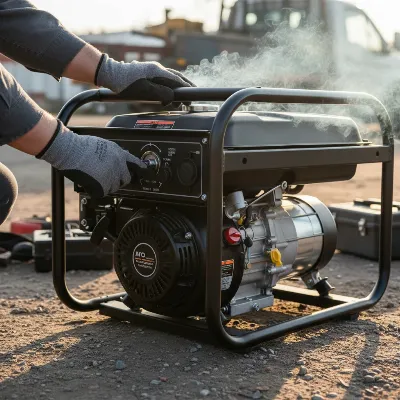 Technician warming up a portable generator engine before an oil change, with safety gloves
 -
Ensure Safety First: Disconnect the spark plug wire to prevent accidental startups. For electric start models, also disconnect the battery cable. Allow the engine to cool for at least 30 minutes to prevent burns from hot components or oil. Work in a well-ventilated area to avoid inhaling any fumes.
-
Position for Drainage: Place your generator on a level surface. Position an adequately sized oil drain pan directly beneath the oil drain plug, which is typically found at the base of the engine. Some generators might require tilting to ensure complete drainage, but ensure stability.
-
Drain the Old Oil: Using a socket wrench or the appropriate size wrench, carefully remove the oil drain plug. Be prepared for the oil to drain quickly. Allow the old oil to drain completely into the pan. This can take several minutes. If your generator has an oil filter, this is also the ideal time to replace it according to your manual’s instructions.
-
Replace Drain Plug (and Filter): Once all the old oil has drained, reinstall the oil drain plug, tightening it securely but without over-tightening. If applicable, install the new oil filter, lubricating the gasket with a thin film of new oil before twisting it on hand-tight, then giving it an additional quarter to half-turn with a filter wrench if recommended by the manufacturer.
-
Refill with New Oil: Locate the oil fill cap, usually yellow or clearly marked on the top or side of the engine. Remove the cap and insert a clean funnel into the oil fill opening. Slowly pour the new, recommended type of oil into the engine. Continuously check the oil level using the dipstick (do not screw in the dipstick when checking the level unless your manual instructs otherwise) to avoid overfilling. Fill until the oil level reaches the “full” or “max” mark on the dipstick.
-
Final Checks and Run: Replace the oil fill cap securely. Reconnect the spark plug wire and battery cable (if disconnected). Start the generator and let it run for a few minutes to circulate the new oil and check for any leaks around the drain plug or filter. Shut it off and recheck the oil level, topping up if necessary.
> “Regular oil changes are the single most impactful maintenance task for extending your generator’s life. Think of it as preventative medicine for your essential power source.” – Sarah Jenkins, Lead Power Equipment Technician
Safe Oil Disposal:
Never dispose of used engine oil in household trash or down drains. Collect the old oil in a sealed container and take it to an auto parts store, local recycling center, or hazardous waste facility that accepts used motor oil for proper disposal.
Conclusion
Regular oil changes are not just a recommendation; they are a fundamental requirement for maintaining the health and extending the lifespan of your portable generator. By understanding the importance of clean lubrication, selecting the correct oil type, and diligently following safe maintenance procedures, you empower your generator to perform reliably when you need it most. This proactive approach not only safeguards your investment but also ensures you have a dependable power source during outages or off-grid adventures.
Prioritize this vital maintenance task, consult your owner’s manual, and equip yourself with the right tools and knowledge. Will you make regular oil changes a cornerstone of your portable generator’s maintenance routine to ensure it’s always ready for action?
Frequently Asked Questions
How often should I change the oil in my portable generator?
Most manufacturers recommend changing the oil in portable generators every 50 to 100 hours of operation. For a new generator, perform the first oil change after the initial break-in period, typically between 20-30 hours, to remove any manufacturing debris. If used infrequently, change the oil at least once a year, as oil can degrade over time even without extensive use.
What kind of oil should I use for my portable generator?
Always refer to your generator’s owner’s manual for the exact oil type and viscosity recommended. Common choices include SAE 30 for warmer temperatures, 10W-30 for varied temperatures, and 5W-30 (especially synthetic) for extreme hot or cold conditions. Ensure the oil meets the API rating specified by your manufacturer.
Can I use car oil in my portable generator?
While some car oils may have similar viscosity ratings, it’s always best to use oil specifically recommended for small engines or your generator’s engine type as specified in the owner’s manual. Car oils might lack specific additives needed for generator engines or have detergents that are not ideal for small air-cooled engines.
What are the dangers of not changing the oil in my generator?
Neglecting oil changes can lead to severe consequences, including increased friction, overheating, premature wear of engine components, sludge buildup, reduced fuel efficiency, and ultimately, engine failure. This can result in costly repairs or the need to replace the entire generator.
How much oil does a portable generator typically hold?
The oil capacity of a portable generator varies significantly by make and model, ranging from as little as 0.5 quarts to over 1 quart. Always check your specific generator’s owner’s manual for the exact oil capacity. Overfilling or underfilling can both be detrimental to the engine.
Do all portable generators have an oil filter?
No, not all portable generators come equipped with an oil filter. Many smaller portable generators, particularly those with basic air-cooled engines, rely solely on regular oil changes to keep the lubricant clean. Larger or more advanced Portable Generators may include an oil filter, similar to a car engine.