Stepping into the realm of off-grid living demands reliable, sustainable power. For technicians with extensive experience in portable power, the evolution of solar portable generators presents a revolutionary shift from traditional fuel-based models. These innovative units harness the sun’s energy, offering a clean, quiet, and efficient solution for powering everything from remote cabins to RVs and emergency backups. This comprehensive guide will navigate the best solar portable generators available in 2026, equipping you with the knowledge to select the perfect power companion for your self-sufficient lifestyle.
What is a Portable Solar Generator?
A portable solar generator, often referred to as a portable power station with solar charging capabilities, is an integrated system designed to capture, store, and convert solar energy into usable electricity. Unlike traditional gas generators, these devices operate silently and produce zero emissions, making them ideal for both indoor and outdoor use in off-grid settings. They typically combine a high-capacity battery, an inverter to convert DC power to AC, and a charge controller to manage solar input, all within a compact and movable unit.
These generators come in various capacities and designs, from smaller units perfect for camping and charging essential electronics to large, expandable systems capable of powering an entire remote cabin. Their applications are incredibly diverse, serving as a lifeline for off-grid homes, reliable backup during power outages, and a convenient power source for RVs, vans, construction sites, and outdoor adventures. The flexibility and environmental benefits of solar portable generators make them an increasingly popular choice for those seeking energy independence.
Essential Factors When Choosing a Portable Solar Generator
Selecting the right portable solar generator for off-grid living requires careful consideration of several key factors to ensure it meets your specific energy demands and lifestyle. Understanding these specifications will help you make an informed decision and invest in a system that offers reliable power for years to come.
Power Output and Capacity (Wattage)
The wattage of a portable solar generator is paramount. It involves two main aspects: battery capacity, measured in watt-hours (Wh) or kilowatt-hours (kWh), which determines how much energy the unit can store, and inverter output, measured in watts (W), which indicates the continuous power it can deliver and its surge capability. A generator’s continuous power must meet the running wattage of your appliances, while the surge power (often 2-3 times the continuous) is crucial for starting motors in refrigerators or power tools. For serious off-grid setups, matching your solar array wattage to your daily energy consumption is more vital than just looking at battery capacity.
Battery Type
|
Our Picks for the Best Portable Generator in 2026
As an Amazon Associate I earn from qualifying purchases.
|
||
| Num | Product | Action |
|---|---|---|
| 1 | Honda 664240 EU2200i 2200 Watt Portable Inverter Generator with Co-Minder |

|
| 2 | Generac 2,500-Watt Gas Powered Portable Inverter Generator - Lightweight and Compact Design - Produces Clean, Stable Power - Quiet Operation - Great for Home Backup, Camping, and RV Use |
|
| 3 | 5000 Watts Portable Dual Fuel Inverter Generator– Small Gasoline LPG Powered for Home Backup, Camping, RV, Tailgating with CO Protection, Eco Mode, Recoil/Electric/Remote Start, Parallel Capable |
|
| 4 | BLUETTI Portable Power Station AC180, 1152Wh LiFePO4 Battery Backup w/ 2 1800W (2700W peak) AC Outlets, 0-80% in 45Min, Solar Generator for Camping, Off-grid, Power Outage |
|
| 5 | Anker SOLIX C1000 Gen 2 Portable Power Station, 2,000W (Peak 3,000W) Solar Generator, Full Charge in 49 Min, 1,024Wh LiFePO4 Battery for Home Backup, Power Outages, and Camping (Optional Solar Panel) |
|
| 6 | maXpeedingrods 2400 Watt Portable Inverter Generator Gas Powered, Bluetooth® App Remote Data Monitor,Only 33lbs, Compact and Lightweight for Outdoor Camping, Home Use |
|
| 7 | GENMAX Portable Inverter Generator, 6000W open frame Gas Powered High Speed Engine with Electric Start, Ultra Lightweight for Backup Home Use & Job Site,EPA Compliant (GM6000XiE) |
|
| 8 | Westinghouse 155Wh 150 Peak Watt Portable Power Station & Solar Generator, Modified Sine Wave AC Outlet, Backup Lithium Battery for Camping, Home, Travel, Indoor/Outdoor Use (Solar Panel Not Included) |
|
| 9 | Champion Power Equipment 2500-Watt Dual Fuel Portable Inverter Generator with Quiet Technology and CO Shield |
|
| 10 | Anker SOLIX C1000 Portable Power Station, 1800W (Peak 2400W) Solar Generator, Full Charge in 58 Min, 1056wh LiFePO4 Battery for Home Backup, Power Outages, and Outdoor Camping (Optional Solar Panel) |
|
The type of battery significantly impacts a generator’s lifespan, safety, and performance. Lithium Iron Phosphate (LiFePO4) batteries are the industry standard for modern solar portable generators due to their superior cycle life (3,000-6,000 cycles to 80% capacity), enhanced safety, and faster charging capabilities compared to older lithium-ion or lead-acid chemistries. For those in colder climates, look for units with self-heating batteries which consume a small amount of power to warm the cells, allowing them to charge efficiently even below freezing temperatures.
Solar Input
The solar input capacity, measured in watts (W), dictates how quickly your generator can recharge from solar panels. Higher solar input allows for faster charging, especially beneficial during limited sunlight hours or on partly cloudy days. Generators equipped with Maximum Power Point Tracking (MPPT) charge controllers are more efficient, optimizing the energy harvest from your solar panels by finding the ideal voltage and current. High solar input voltage tolerance (e.g., 150V or more) also improves performance in low-light conditions and allows for simpler, more efficient panel wiring in series.
Runtime
Runtime refers to how long a generator can power your devices. This is directly proportional to its battery capacity and the power draw of your connected appliances. To accurately estimate runtime, list all devices you intend to power, their individual wattages, and how many hours per day you plan to run them. Summing these daily watt-hours will give you your total daily energy needs, which should ideally be less than your generator’s capacity for sustained off-grid living, factoring in days without optimal sun.
Noise Level
One of the significant advantages of solar portable generators over traditional gas models is their virtually silent operation. This is especially important for off-grid living, camping, or emergency home backup where noise pollution can be a major drawback. Solar units have no internal combustion engine, relying instead on electrical components that produce minimal to no audible noise, making them suitable for indoor use and serene environments.
Portability
Portability varies greatly depending on the generator’s capacity and design. Smaller units (under 30 lbs) are highly portable, ideal for camping or light recreational use, often featuring sturdy handles. Larger systems, while still “portable” in that they aren’t permanently installed, can weigh over 100 pounds and may include built-in wheels and telescoping handles to aid in movement. Consider your primary use case – frequent transport for camping versus a more stationary setup for a cabin – when evaluating weight and dimensions.
Expandability
Many modern portable solar generators offer expandability, allowing you to increase battery capacity or solar input over time. This modular design means you can start with a base unit and add additional battery packs or connect more solar panels as your energy needs grow or your budget allows. Expandability future-proofs your investment, ensuring your power system can adapt to evolving demands of off-grid living.
Additional Features
Look for pure sine wave inverters, which produce clean, stable electricity safe for sensitive electronics like laptops and medical devices. A variety of output ports (AC, DC, USB-A, USB-C, 30A RV outlets) ensures compatibility with all your devices. Smart features like mobile app control via Bluetooth or Wi-Fi allow for remote monitoring and management of your power usage and charging status, enhancing convenience and efficiency.
Comparing Popular Portable Solar Generators
When choosing a portable solar generator for off-grid living in 2026, several models stand out for their performance, reliability, and specific use cases. Here’s a comparison of some top contenders:
Detailed Comparison Table
| Feature | EcoFlow DELTA Pro 3 | Bluetti Elite 200 V2 | Anker SOLIX F3800 | Jackery Explorer 2000 Plus |
|---|---|---|---|---|
| Best For | Full-time cabin living, whole-home backup | Van life & small cabins, budget-conscious | RV living, 240V appliances, high-power needs | Affordable modular systems, CPAP backup |
| Battery Capacity | 4,096 Wh (expandable to 45 kWh) | 2,048 Wh (expandable to 8 kWh) | 3,840 Wh (expandable to 26.9 kWh) | 2,042 Wh (expandable up to 24 kWh) |
| Continuous Power | 4,000 W (120/240 V) | 2,400 W | 6,000 W (120/240 V) | 3,000 W |
| Surge Power | 8,000 W | 3,600 W | 9,000 W | 6,000 W |
| Max Solar Input | Up to 2,600 W | Up to 1,200 W | Up to 2,400 W | Up to 1,400 W |
| Battery Type | LiFePO4 (3000+ cycles) | LiFePO4 (3500+ cycles) | LiFePO4 (3000+ cycles) | LiFePO4 (4000 cycles to 70%) |
| Weight | 113.5 lbs | 53.4 lbs (PopSci) / 62 lbs (PowerOutage) | 132 lbs | 61 lbs |
| Warranty | 5 years | 6 years | 5 years | 3+2 years (extended) |
| Self-Heating Battery | Yes | Yes | Yes | Not explicitly mentioned but common for LiFePO4 |
Portable Solar Generator Buying Guide
Choosing the ideal portable solar generator is a personalized journey, deeply influenced by your specific energy demands, lifestyle, and financial considerations. Follow these steps to navigate the options and make the best investment for your off-grid needs.
Determine Your Usage Needs
Start by making a comprehensive list of all the electrical devices and appliances you intend to power, whether for a remote cabin, RV, or emergency backup. For each item, note its running wattage and estimated daily usage in hours. Multiply these figures to calculate the total daily watt-hours (Wh) required. Don’t forget to account for surge wattage, which is the brief, higher power draw needed when motors (like those in refrigerators or well pumps) first start up. Your generator’s surge capacity should at least double its continuous output to handle these spikes. This detailed assessment ensures your chosen generator can comfortably handle your essential loads.
Set Your Budget
Portable solar generators represent a significant investment, with prices varying widely based on capacity, features, and brand. Determine a realistic budget you are comfortable with, but also consider the long-term value. While a higher upfront cost might seem daunting, investing in a larger capacity or more advanced model now can be more cost-effective than needing to upgrade or buy a second unit later. Factor in the cost of solar panels, which are often sold separately, and potential accessories like expansion batteries. Remember that solar power, once the initial investment is made, provides free electricity, offering substantial long-term savings compared to fuel-dependent generators.
Research Brands and Reputation
The market for portable solar generators has expanded rapidly, but not all brands offer the same level of quality and support. Focus on reputable manufacturers known for their durable products, reliable performance, and excellent customer service. Read expert reviews and user testimonials to gauge real-world satisfaction and identify any common issues. Brands like EcoFlow, Bluetti, Anker, and Jackery consistently appear in top recommendations, often backed by solid warranties. A good warranty (typically 5-6 years) indicates a manufacturer’s confidence in their product’s longevity.
Prioritize Expandability
Modern off-grid living often involves evolving energy needs. Systems that offer expandability are a smart choice, allowing you to grow your power capacity over time without replacing your entire setup. Look for generators that can connect with additional battery packs or integrate more solar panels into the system. This modularity means you can start with a base unit that meets your immediate needs and then scale up as your energy consumption increases or your budget permits, ensuring your system remains relevant and efficient for years to come.
Top Portable Solar Generators for Off-Grid Living
For those committed to off-grid living, certain portable solar generators distinguish themselves through robust performance, scalability, and specialized features. Here are some of the best models for 2026:
1. EcoFlow DELTA Pro 3
The EcoFlow DELTA Pro 3 is often hailed as the “whole-home champion” for serious off-grid applications in fixed locations. It boasts a substantial 4,096 Wh LiFePO4 battery, expandable to an impressive 45 kWh with additional units, making it suitable for powering an entire cabin. Its 4,000 W continuous (8,000 W surge) output and up to 2,600 W solar input (handling up to 200V) ensure it can run heavy-duty appliances and recharge rapidly. While its 113.5 lbs weight makes it less portable for frequent movement, its advanced features like Smarthome panel integration and quiet operation justify its premium price for those prioritizing extensive, reliable off-grid power.
2. Bluetti Elite 200 V2
The Bluetti Elite 200 V2 strikes an excellent balance between capacity, portability, and value, making it ideal for van life, smaller cabins, and budget-conscious homesteaders. It offers 2,048 Wh of LiFePO4 battery storage, expandable to 8 kWh, with a 2,400 W continuous (3,600 W surge) output. Its 1,200 W max solar input allows for quick recharging, especially beneficial during limited sunlight windows. Praised for its robust build quality, long battery lifespan (3,500+ cycles), and efficient cold-weather performance thanks to self-heating batteries, the Elite 200 V2 is a reliable workhorse for comfortable off-grid living without excessive bulk.
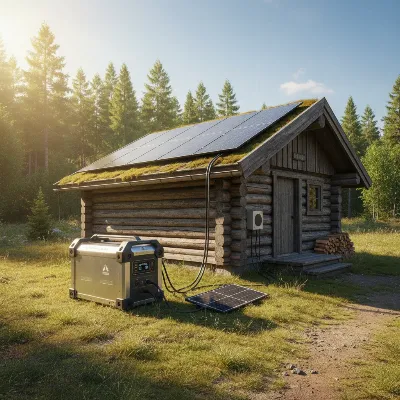 A large portable solar generator powering a small, rustic off-grid cabin with solar panels visible on the roof, daytime, realistic, wide shot.
3. Anker SOLIX F3800
For RV dwellers and those with high-power needs, the Anker SOLIX F3800 emerges as a powerhouse. It features a 3,840 Wh LiFePO4 battery, expandable to 26.9 kWh, and an impressive 6,000 W continuous (9,000 W surge) output, capable of handling 240V appliances and even EV charging. Its built-in NEMA 14-50 outlet directly accommodates RV shore power, eliminating the need for adapters. With up to 2,400 W solar input, it can run energy-intensive equipment like air conditioners for extended periods. Though heavy at 132 lbs, its specialized design and high wattage capacity make it an unmatched solution for demanding mobile and stationary off-grid setups.
4. Jackery Explorer 2000 Plus
The Jackery Explorer 2000 Plus provides a versatile and expandable solution for small off-grid cabins, camping, and CPAP machine backup. With a 2,042 Wh LiFePO4 battery expandable up to 24 kWh, it offers considerable flexibility. Its 3,000 W continuous (6,000 W surge) output can power a wide range of devices and even handle short bursts for power-hungry tools. The unit supports up to 1,400 W solar input when paired with multiple panels. Known for its integrated wheels, handle, and reliable LiFePO4 battery chemistry, the Explorer 2000 Plus offers a balanced blend of capacity, portability, and affordability for those looking for a modular off-grid system.
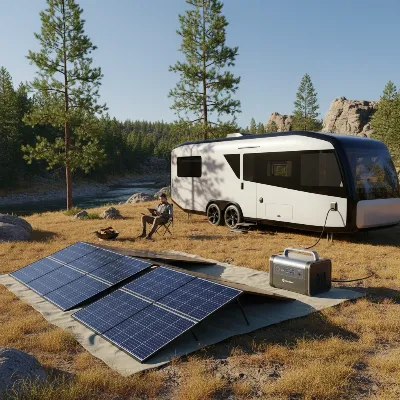 A portable solar generator with solar panels set up next to a modern RV in a scenic natural campsite, sunny day, editorial style, medium shot.
Maintaining and Safely Using Your Portable Solar Generator
While portable solar generators require significantly less maintenance than their gas-powered counterparts, proper care and adherence to safety guidelines are crucial for maximizing their lifespan and ensuring safe operation. Neglecting these aspects can reduce efficiency and potentially compromise safety.
Maintenance Tips
Regular maintenance for your portable solar generator primarily involves keeping the solar panels clean and correctly positioned. Dust, dirt, leaves, and bird droppings can significantly reduce the efficiency of your solar panels, so cleaning them 1-2 times per year, or more frequently in dusty environments, is recommended. Visually inspect panels for any cracks, scratches, or chips that could affect performance.
It’s also important to monitor your battery’s state of charge and avoid consistently draining it completely or overcharging it, which can shorten its cycle life. Regularly inspect all connections—battery terminals, inverter connections, and cable ports—for any signs of corrosion, loose wires, or damage. Keep the inverter unit clean and ensure it has adequate ventilation to prevent overheating, especially during periods of heavy use. Store the unit at moderate temperatures, as extreme heat or cold can impact battery health, though self-heating batteries mitigate cold-weather issues.
Safety Guidelines
The inherent safety of solar generators, free from fumes and loud noise, allows for indoor operation, unlike gas generators which must be used outdoors with ample ventilation. However, basic electrical safety precautions still apply. Always refer to your solar generator’s user manual for specific operating instructions and safety warnings.
Ensure the generator is placed on a stable, flat surface to prevent tipping. Avoid overloading the unit beyond its continuous power rating, as this can trigger safety shutdowns or damage components. While solar generators eliminate fire risks associated with flammable fuels, it’s still good practice to keep them away from highly combustible materials. When handling solar panels and wiring, always ensure connections are secure and that you are using appropriate gauge wiring to prevent power loss and potential hazards.
Troubleshooting Common Issues
Common issues often relate to charging efficiency or power delivery. If your generator isn’t charging efficiently, check that your solar panels are clean, unobstructed, and angled optimally towards the sun. Undersized solar arrays or long, thin extension cords can lead to significant power loss. Always ensure the panel’s wattage matches the generator’s solar input capacity. If appliances aren’t powering on, verify their wattage against the generator’s continuous and surge output, especially for motor-driven devices which require high startup power. Checking all cable connections for proper seating can also resolve many minor power interruptions.
Conclusion
Embracing off-grid living with a portable solar generator offers unparalleled energy independence, blending modern comfort with sustainable practices. From robust units like the EcoFlow DELTA Pro 3 for full-time cabin power to versatile options like the Bluetti Elite 200 V2 for van life, the market in 2026 provides sophisticated solutions for every off-grid scenario. By carefully assessing your power needs, understanding key specifications like battery capacity and solar input, and prioritizing reputable brands, you can confidently select a portable solar generator that ensures a reliable, quiet, and clean energy supply wherever your journey takes you. Are you ready to harness the power of the sun and redefine your off-grid experience?
Frequently Asked Questions
Can a portable solar generator power an entire home off-grid?
High-capacity portable solar generators, especially modular systems like the EcoFlow DELTA Pro 3 or Anker SOLIX F3800 with expanded battery packs, can power essential circuits or even a whole home with careful load management. However, achieving full home power typically requires a substantial investment in multiple batteries and a large solar array to meet average daily consumption of 5-10 kWh.
How long do LiFePO4 batteries in solar generators typically last?
Quality LiFePO4 batteries, commonly found in 2026 solar generators, are rated for 3,000 to 3,500 full charge cycles to retain 80% of their original capacity. With daily cycling, this translates to 8-10 years of reliable use. With partial cycling and proper maintenance, their lifespan can realistically extend to 12-15 years or more.
Do portable solar generators work in cloudy weather?
Yes, portable solar generators can still charge during cloudy or overcast conditions, but at a significantly reduced rate compared to direct sunlight. The efficiency depends on the cloud density and the quality of the solar panels and charge controller. Many systems also allow charging via wall outlets or car ports as alternative methods during prolonged periods of low sun.
