The best portable generators for camping in 2026 balance power output, quiet operation, fuel efficiency, and portability. Top models like the Honda EU2200i and Yamaha EF2200iS offer exceptional reliability and low noise, while dual-fuel options such as the Champion 2000-Watt provide versatility. For silent, emission-free power, portable power stations like the Jackery Explorer 1000 are excellent alternatives, especially for shorter trips or noise-restricted areas.
What is a Portable Generator? Definition and Camping Applications
A portable generator is a self-contained power source designed to provide electricity where grid power is unavailable. These compact units typically feature an engine that converts fuel (like gasoline, propane, or diesel) into electrical energy, delivering power through standard outlets. Unlike standby generators, which are permanently installed, portable generators are designed for easy transportation and temporary use, making them ideal for a variety of off-grid scenarios.
For camping enthusiasts, portable generators offer immense flexibility and convenience. They are invaluable for powering essential devices such as lights, portable refrigerators, phone chargers, and even medical equipment like CPAP machines. Beyond basic necessities, many campers use them to run small kitchen appliances, inflatable pumps for air mattresses, or entertainment systems, significantly enhancing the camping experience. Some models are specifically designed for quiet operation, ensuring they don’t disturb the tranquility of your natural surroundings or fellow campers. The ability to bring a touch of home comfort to remote campsites is why portable generators have become a staple for many modern adventurers.
Key Factors to Consider When Choosing a Portable Generator for Camping
Selecting the right portable generator involves balancing power needs, fuel type, noise levels, and portability. Each factor plays a crucial role in determining the best fit for your specific camping style and requirements.
Power Output (Wattage): Matching Your Needs
The wattage a portable generator produces is paramount. You need to calculate the total running watts of all the appliances you plan to use simultaneously. Also, consider the surge watts (starting watts) required for motor-driven appliances like mini-fridges or air compressors, which demand a temporary boost of power to start up. For most camping setups, a generator with 1,500 to 3,000 running watts is sufficient. However, if you plan to power an RV’s air conditioner, you might need a unit generating 3,500 watts or more. Overestimating your power needs slightly is always better than underestimating, ensuring you have enough juice for all your devices.
Fuel Type: Gasoline, Propane, or Dual Fuel
Portable generators typically run on gasoline, propane, or offer a dual-fuel option. Gasoline generators are common and often have lower upfront costs, but gasoline can be less stable for long-term storage and harder to transport safely. Propane generators burn cleaner, store indefinitely, and propane tanks are readily available. They also tend to be quieter. Dual-fuel generators provide the best of both worlds, allowing you to switch between gasoline and propane, offering flexibility and extended runtimes if one fuel source runs out. For camping, dual-fuel models are increasingly popular due to their versatility.
Runtime: How Long Will It Last?
|
Our Picks for the Best Portable Generator in 2026
As an Amazon Associate I earn from qualifying purchases.
|
||
| Num | Product | Action |
|---|---|---|
| 1 | BLUETTI Portable Power Station AC180, 1152Wh LiFePO4 Battery Backup w/ 2 1800W (2700W peak) AC Outlets, 0-80% in 45Min, Solar Generator for Camping, Off-grid, Power Outage |

|
| 2 | Honda 664240 EU2200i 2200 Watt Portable Inverter Generator with Co-Minder |
|
| 3 | GENMAX Portable Inverter Generator, 6000W open frame Gas Powered High Speed Engine with Electric Start, Ultra Lightweight for Backup Home Use & Job Site,EPA Compliant (GM6000XiE) |
|
| 4 | maXpeedingrods 2400 Watt Portable Inverter Generator Gas Powered, Bluetooth® App Remote Data Monitor,Only 33lbs, Compact and Lightweight for Outdoor Camping, Home Use |
|
| 5 | Westinghouse 155Wh 150 Peak Watt Portable Power Station & Solar Generator, Modified Sine Wave AC Outlet, Backup Lithium Battery for Camping, Home, Travel, Indoor/Outdoor Use (Solar Panel Not Included) |
|
| 6 | Anker SOLIX C1000 Portable Power Station, 1800W (Peak 2400W) Solar Generator, Full Charge in 58 Min, 1056wh LiFePO4 Battery for Home Backup, Power Outages, and Outdoor Camping (Optional Solar Panel) |
|
| 7 | 5000 Watts Portable Dual Fuel Inverter Generator– Small Gasoline LPG Powered for Home Backup, Camping, RV, Tailgating with CO Protection, Eco Mode, Recoil/Electric/Remote Start, Parallel Capable |
|
| 8 | Generac 2,500-Watt Gas Powered Portable Inverter Generator - Lightweight and Compact Design - Produces Clean, Stable Power - Quiet Operation - Great for Home Backup, Camping, and RV Use |
|
| 9 | Champion Power Equipment 2500-Watt Dual Fuel Portable Inverter Generator with Quiet Technology and CO Shield |
|
| 10 | Anker SOLIX C1000 Gen 2 Portable Power Station, 2,000W (Peak 3,000W) Solar Generator, Full Charge in 49 Min, 1,024Wh LiFePO4 Battery for Home Backup, Power Outages, and Camping (Optional Solar Panel) |
|
Runtime indicates how long a generator can operate on a single tank of fuel at a certain load, typically 25% or 50% capacity. A longer runtime means fewer refuels, which is highly beneficial in remote camping locations. Consider the size of the fuel tank and the generator’s fuel efficiency. If you plan for extended trips or overnight power, prioritize models with larger fuel tanks and efficient engines. Remember that actual runtime will vary based on the load you place on the generator.
Noise Level: Quiet Operation for Serenity
Noise is a significant consideration, especially in campgrounds with strict noise regulations or if you value peace and quiet. Generator noise is measured in decibels (dB), and for camping, quieter is always better. Inverter generators are generally the quietest, often operating in the 50-60 dB range, comparable to a normal conversation. Traditional open-frame generators can be much louder, reaching 70-80 dB, which can be disruptive. Always check the decibel rating before purchasing to ensure it aligns with your camping environment and preferences.
Portability and Weight: Easy to Transport
For camping, “portable” truly means easy to move. Consider the generator’s weight and physical dimensions. Lightweight models (under 50 lbs) are ideal for car camping or situations where you need to move the generator frequently. Heavier units (over 100 lbs) might require wheels and handles for easier transport. Assess your vehicle’s cargo space and your ability to lift and maneuver the generator. Compact designs are often preferred for saving space in crowded vehicles.
Additional Features: Convenience and Safety
Modern portable generators come with a variety of features that enhance convenience and safety. Electric start eliminates manual pull-starting. USB ports are great for charging small electronics directly. Fuel gauges help monitor fuel levels. Low-oil shutdown protects the engine from damage. Automatic idle control saves fuel and reduces noise by adjusting engine speed to the load. GFCI (Ground Fault Circuit Interrupter) outlets provide crucial electrical safety, especially in outdoor, potentially damp environments.
Comparison of Popular Portable Generator Types
Understanding the distinct characteristics of different generator types is key to choosing the best model for your camping adventures.
Traditional Portable Generators
These are typically open-frame generators, known for their robust power output and affordability. They use an alternator to directly produce AC power. While powerful, they are generally heavier, louder, and less fuel-efficient than inverter generators. They are a good choice if maximum power for a lower cost is your priority, and noise is less of a concern, perhaps for remote hunting camps or construction sites. However, for most public campgrounds, their noise level can be a significant drawback.
Inverter Generators
Inverter generators utilize advanced electronic circuitry to produce clean, stable power, making them safe for sensitive electronics like laptops and smartphones. They are characterized by their compact size, lighter weight, and significantly quieter operation compared to traditional models, often achieved through enclosed designs and variable engine speed technology. This makes them ideal for camping, tailgating, and RVing where noise reduction and clean power are paramount. While typically more expensive, their benefits in terms of noise, fuel efficiency, and portability often justify the investment for recreational users.
Dual-Fuel Portable Generators
Dual-fuel generators offer the flexibility of running on either gasoline or propane. This versatility is a major advantage for campers, as propane can be easier to store, burns cleaner, and is often readily available. If one fuel type is scarce, you have a backup. While often available in both traditional and inverter formats, the dual-fuel feature specifically enhances convenience and extends operating options. This type is perfect for those seeking maximum adaptability in their power source.
Here’s a comparative overview:
| Feature | Traditional Portable Generator | Inverter Portable Generator | Dual-Fuel Portable Generator |
|---|---|---|---|
| Power Output | High (up to 10,000+ W) | Moderate (1,000-7,000 W) | Varies (often inverter or traditional) |
| Noise Level | Loud (70-85 dB) | Quiet (50-60 dB) | Varies by engine/design |
| Portability | Heavy, bulky | Lightweight, compact | Varies (often lighter for camping models) |
| Fuel Efficiency | Lower | Higher | High (especially on propane) |
| Power Quality | Less stable (not for sensitive electronics) | Clean, stable (safe for electronics) | Varies by design (inverter preferred for electronics) |
| Cost | Lower | Higher | Mid to High |
| Best For | Heavy-duty, construction | Camping, RVs, sensitive electronics | Versatility, extended trips |
Portable Generator Buying Guide: Step-by-Step Selection
Choosing the ideal portable generator can feel overwhelming, but breaking it down into a few key steps will simplify the process.
Determine Your Power Needs
The first and most critical step is to list all the appliances and devices you plan to power simultaneously during your camping trip. Include everything from cell phone chargers and LED lights to a coffee maker, portable fridge, or even a small air conditioner for an RV. For each item, identify its running watts (the power it continuously consumes) and its starting watts (the brief surge of power required to kick-start motors). Sum up the running watts for all items you might use at once. Then, identify the single item with the highest starting wattage and add that to your total running watts. This will give you a good estimate of the minimum wattage your generator needs to produce. It’s often wise to add a 10-20% buffer to this total for unexpected needs or future expansion.
Set Your Budget
Portable generators vary widely in price, from a few hundred dollars for basic models to several thousands for high-end inverter units with advanced features. Establish a realistic budget upfront. While it might be tempting to opt for the cheapest option, remember that investing a bit more in a reliable, feature-rich generator can save you headaches and expenses in the long run. Consider not just the initial purchase price, but also potential fuel costs, maintenance, and the long-term value of peace of mind. Balancing your desired features with your financial limits is crucial.
Research Brands and Reviews
Reputation matters when it comes to durable and safe power equipment. Stick to well-known and respected brands in the portable generator market. Companies like Honda, Yamaha, Generac, Champion, and Westinghouse have established track records for quality and customer support. Once you’ve narrowed down a few models, delve into user reviews and expert ratings. Pay attention to comments regarding reliability, noise levels, ease of use, and fuel efficiency. Look for patterns in feedback—positive or negative—to get a clearer picture of a generator’s real-world performance. Also, check for warranty information and accessible customer service.
> “A portable generator isn’t just about raw power; it’s about reliable power when and where you need it most. Prioritizing clean output, quiet operation, and robust safety features will ensure your camping experience is powered without compromise.” – Dr. Eleanor Vance, Renewable Energy Systems Engineer
Top Portable Generators for Camping
The market for portable generators is constantly evolving, with new models offering enhanced features and performance. Here are some of the top contenders that stand out for camping, considering their power, noise, portability, and overall value.
1. Honda EU2200i Inverter Generator
The Honda EU2200i remains a gold standard for camping, offering 2,200 starting watts and 1,800 running watts. Renowned for its whisper-quiet operation (as low as 48 dB), exceptional fuel efficiency, and legendary reliability, it’s a favorite among serious campers. Its clean inverter power is perfect for sensitive electronics, and it’s relatively lightweight at under 47 lbs. The main drawback is its premium price tag.
2. Yamaha EF2200iS Inverter Generator
A strong competitor to Honda, the Yamaha EF2200iS provides similar power output (2,200 starting watts, 1,800 running watts) and quiet operation. It features a unique tri-handle design for easy portability and offers a fuel gauge, which is a convenient addition. Yamaha generators are known for their durability and reliable performance, making this another excellent, albeit higher-priced, option.
3. Champion 2000-Watt Dual Fuel Inverter Generator
Champion is a popular brand known for offering excellent value. This 2000-watt (peak) dual-fuel inverter generator is a fantastic option for campers who want the flexibility of running on either gasoline or propane. It’s relatively lightweight, quiet, and its dual-fuel capability extends its utility, especially on longer trips where fuel options might be limited. It’s a great balance of features and affordability.
4. Westinghouse iGen2200 Inverter Generator
The Westinghouse iGen2200 delivers 2,200 peak watts and 1,800 running watts, matching some of its more expensive rivals in power while often coming in at a more competitive price point. It boasts a quiet operation (52 dB) and is highly portable. Users frequently praise its ease of use and consistent performance, making it a strong contender for budget-conscious campers who don’t want to compromise on quality.
5. Generac GP2200i Inverter Generator
Generac, a leader in home standby generators, also offers robust portable options. The GP2200i is a 2,200-watt inverter generator designed for quiet operation and clean power. It’s a reliable choice that offers solid performance for general camping needs, often with smart features like an economy mode to save fuel. It provides a good blend of performance and brand trust.
6. Jackery Explorer 1000 Portable Power Station
While not a traditional “generator” in the sense of burning fuel, the Jackery Explorer 1000 is a powerful portable power station that deserves mention for camping. It provides 1000W (2000W peak) from its lithium battery, operating silently with zero emissions. Ideal for shorter trips or areas where fuel generators are prohibited, it recharges via solar panels, car, or wall outlet. Its convenience and eco-friendliness are unmatched.
7. Goal Zero Yeti 1500X Portable Power Station
Another premium portable power station, the Goal Zero Yeti 1500X offers a massive 1516Wh battery capacity and 2000W (3500W surge) pure sine wave AC output. It’s a silent, emission-free alternative for longer camping trips or powering more demanding devices. Its robust build quality and extensive connectivity options (USB-C PD, multiple AC outlets) make it a top-tier choice for tech-heavy campers.
8. DuroMax XP2300iH Dual Fuel Inverter Generator
The DuroMax XP2300iH is a powerful dual-fuel inverter, offering 2,300 peak watts and 1,800 running watts. It stands out with its slightly higher power output compared to some 2200-watt models and the versatility of gasoline or propane. It’s designed to be quiet and reliable, providing a strong option for campers needing that extra bit of power with fuel flexibility.
9. Ryobi RYi2300BTA Inverter Generator
The Ryobi RYi2300BTA is a compelling choice, especially for those already invested in the Ryobi 40V battery ecosystem. It offers 2,300 starting watts and 1,800 running watts, with an incredibly quiet operation and integrated Bluetooth monitoring. Its unique feature is the ability to connect to Ryobi’s 40V batteries for an extra boost or emergency power, making it a versatile hybrid solution.
10. WEN 56203i Super Quiet Inverter Generator
For campers on a tighter budget, the WEN 56203i offers impressive value. With 2,000 surge watts and 1,700 rated watts, it’s capable of powering essential camping gear. Its “Super Quiet” operation (51 dB) rivals much more expensive units, and its compact, lightweight design makes it highly portable. While it may not have all the bells and whistles of premium brands, it provides reliable, clean power at an unbeatable price point.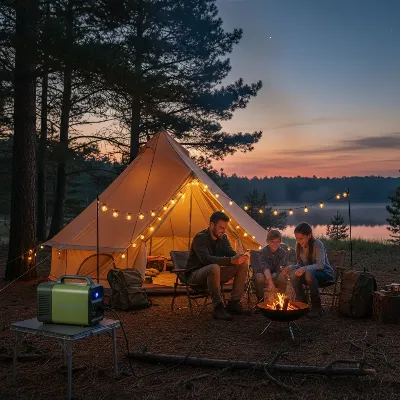 A family camping with a portable generator providing power for outdoor lights and charging devices.
Maintenance and Safe Operation of Your Portable Generator
To ensure your portable generator serves you reliably for many camping seasons, proper maintenance and adherence to safety guidelines are essential. Neglecting these aspects can lead to breakdowns, reduce the generator’s lifespan, and even pose serious hazards.
Regular Maintenance for Longevity
Consistent maintenance is key to a generator’s performance and longevity. Always refer to your owner’s manual for specific recommendations. Generally, this includes regular oil changes (after the first 20-25 hours of use, then every 50-100 hours), checking and cleaning or replacing the air filter, inspecting spark plugs, and draining the fuel system before long-term storage (especially if using gasoline). Keep the generator clean and free from debris, and periodically check all connections and hoses for wear and tear. A well-maintained generator starts easier, runs more efficiently, and lasts longer.
Essential Safety Measures
Operating a portable generator safely is paramount. The most critical rule is never run a generator indoors or in an enclosed space, including tents, RVs, garages, or basements. Generators produce carbon monoxide, a colorless, odorless, and deadly gas. Always operate the generator outdoors in a well-ventilated area, at least 20 feet away from your tent or RV, and direct the exhaust away from any living spaces. Ensure the generator is on a level, dry surface. Keep it away from flammable materials, and never refuel a hot generator. Use appropriate extension cords (heavy-duty, outdoor-rated, grounded) and ensure all electrical connections are secure. Always have a working carbon monoxide detector in your camping area for added safety.
Troubleshooting Common Issues
Even with proper maintenance, you might encounter minor issues. If your generator won’t start, check the fuel level, ensure the oil level is correct, verify the spark plug is clean, and confirm the choke is properly set. If the generator runs but produces no power, check the circuit breakers on the unit and any connected devices. Overloading the generator can trip its internal breakers. Consult your owner’s manual for specific troubleshooting steps and consider professional servicing if issues persist or are beyond your comfort level to address.
Conclusion
Choosing the best portable generator for your camping adventures comes down to understanding your power needs, prioritizing features like quiet operation and fuel type, and considering your budget. Whether you opt for the ultra-reliable quiet hum of a Honda inverter, the versatile dual-fuel capabilities of a Champion, or the silent, emission-free power of a Jackery portable power station, a well-chosen generator can significantly enhance your outdoor experience. Remember to prioritize safety with proper placement and ventilation, and maintain your unit regularly to ensure it’s always ready for your next escape into nature.
What kind of camping adventure are you planning, and which features are most important for powering your ideal experience?
Frequently Asked Questions
What size portable generator do I need for camping?
For most basic camping needs like charging phones, running lights, and a small fridge, a generator with 1,500 to 2,500 running watts is typically sufficient. If you plan to power an RV air conditioner or more demanding appliances, you may need 3,000 watts or more.
Are inverter generators worth the extra cost for camping?
Yes, inverter generators are often worth the extra cost for camping due to their significantly quieter operation, lighter weight, and ability to produce clean, stable power safe for sensitive electronics. Their fuel efficiency also adds to long-term savings and convenience.
Can I use a portable generator in a campground?
Many campgrounds have specific rules regarding generator use, often restricting operating hours and noise levels. Inverter generators, with their lower decibel ratings, are generally more accepted. Always check campground regulations before bringing your generator.
Is dual-fuel better than gasoline-only for camping?
Dual-fuel generators offer greater flexibility by allowing you to run on either gasoline or propane. Propane has advantages like cleaner burning, longer storage life, and potentially easier availability in some remote areas. This versatility can be a significant benefit for campers.
How far away should a generator be from a tent or RV?
For safety, a portable generator should be operated outdoors at least 20 feet away from your tent, RV, or any other living space. Always ensure the exhaust is directed away from people and vents, as generators produce deadly carbon monoxide.
Frequently Asked Questions
What size portable generator do I need for camping?
For basic camping needs like charging phones, running lights, and a small fridge, a generator with 1,500 to 2,500 running watts is typically sufficient. If you plan to power an RV air conditioner or more demanding appliances, you may need 3,000 watts or more.
Are inverter generators worth the extra cost for camping?
Yes, inverter generators are often worth the extra cost for camping due to their significantly quieter operation, lighter weight, and ability to produce clean, stable power safe for sensitive electronics. Their fuel efficiency also adds to long-term savings and convenience.
Can I use a portable generator in a campground?
Many campgrounds have specific rules regarding generator use, often restricting operating hours and noise levels. Inverter generators, with their lower decibel ratings (typically 50-60 dB), are generally more accepted. Always check campground regulations before bringing your generator.
Is dual-fuel better than gasoline-only for camping?
Dual-fuel generators offer greater flexibility by allowing you to run on either gasoline or propane. Propane has advantages like cleaner burning, longer storage life, and potentially easier availability in some remote areas. This versatility can be a significant benefit for campers.
How far away should a generator be from a tent or RV?
For safety, a portable generator should be operated outdoors at least 20 feet away from your tent, RV, or any other living space. Always ensure the exhaust is directed away from people and vents, as generators produce deadly carbon monoxide.
How to Choose a Portable Generator for Camping
Selecting the right portable generator for your camping trip involves assessing your power needs, considering fuel types, evaluating noise levels, and prioritizing portability. Follow these steps to make an informed decision.
List all appliances you plan to use simultaneously, noting their running watts and starting watts. Sum the running watts, then add the highest starting wattage from a single item. Add a 10-20% buffer to this total for optimal performance.
Establish a realistic budget, remembering that investing in a reliable, feature-rich generator can save long-term costs. Consider not just the initial purchase price but also fuel expenses and maintenance for peace of mind.
Focus on reputable brands like Honda, Yamaha, Champion, and Westinghouse known for quality and support. Read user reviews and expert ratings for insights into reliability, noise, ease of use, and fuel efficiency before making a final decision.

I tried out one of the portable power stations, specifically a Jackery Explorer 1000, for a weekend trip. While it’s super quiet and great for charging phones and a small fan, it just didn’t have enough juice for my portable coffee maker. It’s good for short trips or light use, but I might need something with more wattage next time.
The dual-fuel Champion 2000-Watt generator mentioned was exactly what I needed. The versatility of using either gasoline or propane is fantastic, especially when gas prices fluctuate. It’s a bit heavier than I expected, but the power output for its size is impressive, keeping our essentials running smoothly at the campsite.
My Yamaha EF2200iS has been fantastic for all our camping adventures. The low noise level is a huge benefit, and it’s surprisingly fuel-efficient, which means fewer trips to refill. It easily handles our air mattress pump and charges all our devices, making our outdoor experience much more comfortable.
I took the plunge and got the Honda EU2200i after reading about it here, and it’s been a game-changer for our family camping trips. It’s incredibly quiet, which is a huge plus when you’re trying to enjoy nature, and it powers our small fridge and lights without a hitch. Definitely worth the investment for reliable power in the wilderness.