Embarking on an RV journey or planning the ultimate tailgating party often means bringing along the comforts of home, from powering your mini-fridge to charging sensitive electronics. However, the enjoyment can quickly diminish with the drone of a loud generator, disturbing the peace of nature or the festive atmosphere. This comprehensive guide will help you navigate the world of portable generators, focusing on models designed for quiet operation, ensuring your adventures remain serene and powered up.
What is a Portable Generator for RV & Tailgating?
A portable generator is a versatile device that converts mechanical energy into electrical power, offering an independent source of electricity wherever you roam. Unlike built-in RV generators, portable units offer flexibility and can be positioned away from your living space to minimize noise. For RVers and tailgaters, these generators are indispensable for powering appliances, charging batteries, and running electronics when off-grid or away from traditional hookups.
The market primarily features two types relevant to quiet operation: conventional and inverter generators. Inverter generators are the gold standard for RV and tailgating due to their advanced technology. They produce electricity in a three-step process that results in “clean” power, safe for sensitive devices like laptops and smartphones. Crucially, their engine speed adjusts to the power demand, meaning they run slower and significantly quieter under lighter loads, making them ideal for noise-sensitive environments. Additionally, battery-powered power stations (often paired with solar panels) offer a completely silent, emission-free alternative, perfect for smaller power needs and environmentally conscious users.
These generators serve various applications, from keeping your RV’s air conditioner running on a hot day, powering a microwave for quick meals, or providing lighting and entertainment systems for a lively tailgating event. Their ability to deliver consistent power without a constant roar makes them essential companions for any outdoor enthusiast.
Key Factors When Choosing a Quiet Portable Generator
Selecting the right portable generator involves more than just picking the first quiet model you find. Several critical factors influence both performance and overall satisfaction, especially when prioritizing low noise for RV camping or tailgating.
Noise Level (Decibels – dB)
Noise is paramount for RV and tailgating applications. Generator noise is measured in decibels (dB), a logarithmic scale where a small increase in dB represents a significant jump in perceived loudness. A “quiet” generator typically operates between 50-60 dB from 23 feet away, comparable to a normal conversation. Many campgrounds, including national parks, enforce strict noise limits, often requiring generators to operate at or below 60 dB at 50 feet, with even stricter quiet hours overnight. Inverter generators excel in this area due to their variable engine speed, which lowers noise output during partial loads.
Power Output (Wattage)
|
Our Picks for the Best Portable Generator in 2026
As an Amazon Associate I earn from qualifying purchases.
|
||
| Num | Product | Action |
|---|---|---|
| 1 | Anker SOLIX C1000 Portable Power Station, 1800W (Peak 2400W) Solar Generator, Full Charge in 58 Min, 1056wh LiFePO4 Battery for Home Backup, Power Outages, and Outdoor Camping (Optional Solar Panel) |

|
| 2 | BLUETTI Portable Power Station AC180, 1152Wh LiFePO4 Battery Backup w/ 2 1800W (2700W peak) AC Outlets, 0-80% in 45Min, Solar Generator for Camping, Off-grid, Power Outage |
|
| 3 | Generac 2,500-Watt Gas Powered Portable Inverter Generator - Lightweight and Compact Design - Produces Clean, Stable Power - Quiet Operation - Great for Home Backup, Camping, and RV Use |
|
| 4 | 5000 Watts Portable Dual Fuel Inverter Generator– Small Gasoline LPG Powered for Home Backup, Camping, RV, Tailgating with CO Protection, Eco Mode, Recoil/Electric/Remote Start, Parallel Capable |
|
| 5 | Anker SOLIX C1000 Gen 2 Portable Power Station, 2,000W (Peak 3,000W) Solar Generator, Full Charge in 49 Min, 1,024Wh LiFePO4 Battery for Home Backup, Power Outages, and Camping (Optional Solar Panel) |
|
| 6 | Westinghouse 155Wh 150 Peak Watt Portable Power Station & Solar Generator, Modified Sine Wave AC Outlet, Backup Lithium Battery for Camping, Home, Travel, Indoor/Outdoor Use (Solar Panel Not Included) |
|
| 7 | maXpeedingrods 2400 Watt Portable Inverter Generator Gas Powered, Bluetooth® App Remote Data Monitor,Only 33lbs, Compact and Lightweight for Outdoor Camping, Home Use |
|
| 8 | GENMAX Portable Inverter Generator, 6000W open frame Gas Powered High Speed Engine with Electric Start, Ultra Lightweight for Backup Home Use & Job Site,EPA Compliant (GM6000XiE) |
|
| 9 | Champion Power Equipment 2500-Watt Dual Fuel Portable Inverter Generator with Quiet Technology and CO Shield |
|
| 10 | Honda 664240 EU2200i 2200 Watt Portable Inverter Generator with Co-Minder |
|
Understanding your power needs is crucial. You’ll need to calculate both running watts (the continuous power an appliance needs) and starting watts (the brief surge of power required to start motor-driven appliances like air conditioners or refrigerators). List all the devices you plan to run simultaneously and sum their running watts. For starting watts, use the highest starting wattage of any single appliance. It’s wise to add a 10-20% buffer to your total to ensure the generator isn’t constantly running at its maximum capacity, which can increase noise and reduce lifespan.
Fuel Type
Portable generators come in various fuel types, each with pros and cons for quiet operation:
- Gasoline: Most common, widely available, typically offers higher power output. However, gasoline generators often produce exhaust fumes and can be louder than other types.
- Propane: Offers cleaner burning, longer storage life, and can run slightly quieter than gasoline. It’s often found in dual-fuel generators.
- Dual-Fuel: Provides flexibility to switch between gasoline and propane. This is a popular choice for RVers, allowing for fuel versatility and potentially quieter operation on propane.
- Battery/Solar: Power stations, often rechargeable via solar panels, are virtually silent and emit no fumes. They are excellent for smaller power needs and respectful of the environment but have limited runtime and lower power output compared to fuel-based models.
Runtime & Fuel Efficiency
Runtime indicates how long a generator can operate on a full tank of fuel or charge. Generators with “Economy Mode” or “Eco-Throttle” automatically adjust engine speed to match the load, significantly improving fuel efficiency and extending runtime while also reducing noise. A larger fuel tank generally means longer operation between refills.
Portability
For RV and tailgating, portability is key. Consider the generator’s weight and dimensions. Look for models with integrated handles and wheels for easier transport and maneuverability, especially if you need to move it frequently from your vehicle to a campsite or tailgate spot.
Key Features
Modern quiet portable generators come with an array of features that enhance convenience and performance:
- Inverter Technology: Essential for clean, stable power suitable for sensitive electronics and for achieving quieter operation.
- Remote Start: Allows you to start and stop the generator from a distance, a great convenience for RVers, particularly during inclement weather or if the generator is placed further away.
- Low-Oil Shutdown: Protects the engine by automatically shutting down if oil levels drop too low.
- Digital Display: Provides real-time information on power output, fuel level, and runtime.
- Sound-Dampening Enclosures: Advanced designs use specialized materials and innovative airflow patterns to muffle engine noise.
- Multi-Chamber Exhaust Systems: Further reduce exhaust noise for a quieter experience.
- Anti-Vibration Mounts: Prevent engine vibrations from transferring to the frame, minimizing rattling sounds.
Comparing Popular Quiet Portable Generators
To help you visualize the differences, here’s a comparison of several highly-regarded quiet portable generators suitable for RV and tailgating use.
Detailed Comparison Table
| Feature | Honda EU2200i | Cummins Onan P4500iDF | Champion 4000-Watt RV Ready Inverter | EcoFlow Delta 2 Max (Battery) |
|---|---|---|---|---|
| Power (Watts) | 2200 Peak / 1800 Running | 4500 Peak / 3700 Running | 4000 Peak / 3500 Running | 2400W (Expandable to 4800W) |
| Fuel Type | Gasoline | Dual-Fuel (Gasoline/Propane) | Gasoline | Battery (LiFePO4) / Solar |
| Noise Level (dB) | 48-57 dB (at 1/4 load) | 52 dB (at 1/4 load) | 61 dB (at 1/4 load) | 0 dB (Silent) |
| Runtime | Up to 8.1 hrs (1 gal) | Up to 15 hrs (Propane) | Up to 14 hrs (2.25 gal) | Varies greatly with load/capacity |
| Weight | 47.4 lbs | 98 lbs | 101 lbs | 50 lbs |
| Key Highlights | Ultra-quiet, reliable, portable | Dual-fuel flexibility, long runtime | RV-ready outlet, economy mode, wheels | Silent, zero emissions, fast charging |
Your Buying Guide to Quiet Portable Generators
Making the final decision on a portable generator involves a thoughtful evaluation of your personal needs, the rules of your chosen destinations, and your financial investment.
Determine Your Power Needs
Start by listing every appliance you plan to power. This includes big-ticket items like an RV air conditioner (often 13,500 BTU or more, requiring 2000-3000 running watts and up to 4000 starting watts), microwave, refrigerator, coffee maker, and smaller essentials like phone chargers, laptops, and lights. Add up the running watts for all items you anticipate using simultaneously, then identify the single highest starting watt requirement among them. This calculation will give you a clear minimum wattage requirement for your generator. Always factor in a small buffer to avoid overloading your unit and to ensure smoother, quieter operation.
Consider Noise Restrictions
Research the noise regulations of the places you frequent. National parks and many private campgrounds have specific quiet hours and maximum decibel limits (e.g., 60 dB at 50 feet) for generator operation. A generator that’s rated in the low 50 dB range at quarter load will offer the most flexibility and ensure you’re a good neighbor. Tailgating venues might also have rules, though often less stringent than campgrounds.
Budget
Portable generators range widely in price. While a higher price often correlates with quieter operation, advanced features, and greater reliability, there are excellent value options available. Balance your budget against the desired power output, fuel type, and essential features like inverter technology and portability. Remember that a more fuel-efficient generator might save you money in the long run.
Brand Reputation and Reviews
Investigate brands known for quality and customer support. Honda, Yamaha, Champion, and Cummins Onan are consistently praised for their reliable and quiet inverter generators. For battery power stations, Jackery and EcoFlow are popular choices. Read current user reviews to get real-world insights into noise levels, performance, and durability.
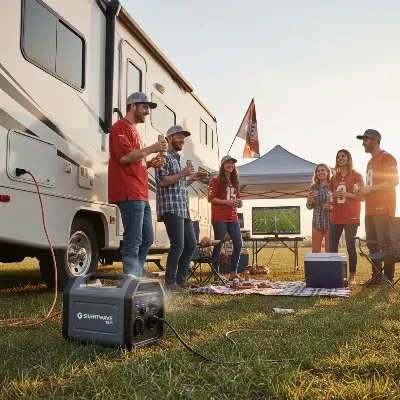 A quiet portable inverter generator providing power to an RV during a sunny tailgating party with people relaxing nearby.
Top Quiet Portable Generator Models for RV Tailgating
Based on extensive research and user feedback, several models consistently stand out for their quiet operation and suitability for RV and tailgating applications.
-
Honda EU2200i: Often considered the benchmark for quiet portability, the Honda EU2200i is an iconic choice. Operating between 48-57 dB, it’s remarkably quiet, about the volume of a normal conversation. Weighing under 50 pounds, it’s easy to transport and known for its legendary reliability and fuel efficiency. It’s perfect for powering essential RV items or smaller tailgating setups.
-
Cummins Onan P4500iDF: For those needing more power and fuel flexibility, the Cummins Onan P4500iDF is an excellent dual-fuel option. It delivers substantial wattage (4500 peak) while maintaining a quiet 52 dB at quarter load. Its dual-fuel capability allows you to switch between gasoline and propane, offering extended runtimes and convenience. It’s a robust choice for running an RV air conditioner and other larger appliances.
-
Champion 4000-Watt RV Ready Inverter Generator: Champion offers a compelling blend of power and quietness. This model features an RV-ready outlet and quiet technology, operating around 61 dB. Its Economy Mode helps conserve fuel and reduce noise under lighter loads. While slightly heavier than the Honda, integrated wheels and handles make it manageable, offering excellent value for its power output.
-
Yamaha EF2000iSv2: Similar to the Honda EU2200i, Yamaha’s inverter generators are highly regarded for their quiet operation (around 51.5 dB) and reliability. The EF2000iSv2 offers clean power and excellent fuel efficiency, making it another top contender for those prioritizing tranquility and sensitive electronics.
-
Battery Power Stations (e.g., EcoFlow Delta Series, Jackery Explorer Series): For ultimate silence and zero emissions, high-capacity battery power stations are increasingly popular. Models like the EcoFlow Delta 2 Max offer significant wattage (2400W expandable) and numerous output ports, all with completely silent operation. While their runtime is dependent on battery capacity and load, they are ideal for powering smaller appliances, charging devices, and providing a quiet power source for overnight use or in areas with strict noise restrictions. Many can be recharged via solar panels, offering an eco-friendly power solution.
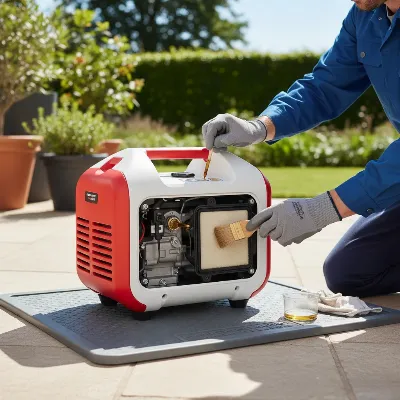 A person performing routine maintenance on a quiet portable generator, checking oil and air filter in a clean outdoor setting.
Maintenance and Safe Operation for Longevity
Proper maintenance and safe operating practices are crucial for extending your quiet portable generator’s lifespan and ensuring your safety, as well as the safety of those around you.
Routine Maintenance:
- Oil Changes: Regularly change the oil according to the manufacturer’s recommendations. Fresh oil ensures smooth engine operation, which in turn helps maintain lower noise levels.
- Air Filter Cleaning: A clean air filter is vital for engine efficiency. A clogged filter can make the engine work harder, increasing noise and fuel consumption.
- Spark Plug Inspection: Check and replace spark plugs as needed to ensure efficient combustion.
- Fuel System Care: If storing a gasoline generator for an extended period, drain the fuel or use a fuel stabilizer to prevent gumming and clogs. For propane, simply ensure the tank is properly disconnected.
Safety Measures:
- Carbon Monoxide (CO) Awareness: Generators produce carbon monoxide, an odorless, colorless, and deadly gas. ALWAYS operate generators outdoors in a well-ventilated area, at least 20 feet away from your RV or any open windows. Point the exhaust away from living spaces. Consider investing in a portable CO detector for added safety.
- Refueling Safety: Turn off the generator and allow it to cool completely before refueling. Spilled fuel on a hot engine can ignite.
- Grounding: Always follow the manufacturer’s instructions for grounding your generator to prevent electric shock.
- Secure Placement: Place the generator on a level, stable surface to prevent tipping, which could cause fuel spills or damage.
- Water Protection: Never operate a generator in rain or wet conditions unless it is specifically designed for such use and properly protected from moisture.
By adhering to these maintenance and safety guidelines, you can ensure your quiet portable generator remains a reliable and safe power source for many adventures to come.
Conclusion
Choosing the best quiet portable generator for your RV and tailgating needs is an investment in comfort, convenience, and respecting your surroundings. Inverter generators, with their advanced technology and variable engine speeds, stand out as the top choice for their minimal noise output and clean power delivery. Battery power stations offer an even quieter, emission-free alternative for lighter demands.
When making your selection, prioritize models that fall within the 50-60 dB range, provide sufficient wattage for your essential appliances, and offer convenient features like remote start and fuel efficiency modes. Remember to always practice safe operation and routine maintenance to ensure your generator serves you reliably for years. With the right quiet portable generator, you can power your adventures without disturbing the peace, making every RV trip and tailgate truly enjoyable.
What will be your next adventure powered by peace and quiet?
Frequently Asked Questions
What decibel level is considered quiet for a portable generator?
A portable generator is generally considered quiet if its noise level is between 50 and 60 decibels (dB) at a quarter load from 23 feet away. Many campgrounds enforce limits around 60 dB at 50 feet, so aiming for lower decibel ratings ensures compliance and a more peaceful experience.
Can a quiet portable generator power an RV air conditioner?
Yes, many quiet inverter portable generators, especially those in the 3000-4500 watt range, can power an RV air conditioner. You need to check the starting and running wattage requirements of your specific AC unit and ensure the generator’s output can handle both.
Are battery power stations a good alternative to fuel-powered quiet generators?
Battery power stations are an excellent, completely silent, and emission-free alternative for powering smaller RV and tailgating needs like charging devices, running lights, or small appliances. However, they typically have lower power output and shorter runtimes compared to fuel-powered generators, making them less suitable for high-draw items like air conditioners unless specifically designed for it.
What is “Economy Mode” on a portable generator?
Economy Mode (or Eco-Throttle) is a feature on many inverter generators that automatically adjusts the engine speed to match the electrical load. This means the engine doesn’t run at full throttle unnecessarily, leading to significantly quieter operation, improved fuel efficiency, and extended engine life when powering lighter loads.
How far away should I place my portable generator from my RV or tailgating setup?
Always place your portable generator outdoors in a well-ventilated area, at least 20 feet away from your RV, tent, or tailgating area. This distance is crucial to prevent dangerous carbon monoxide fumes from entering your living space and also helps to further reduce perceived noise levels.
