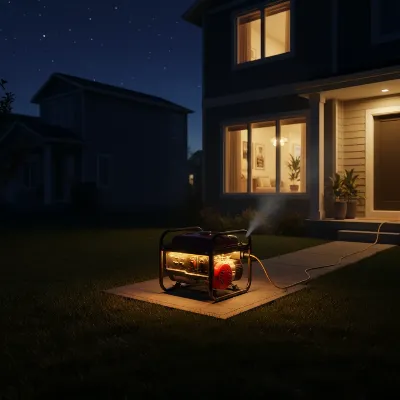
When the unexpected strikes, a reliable power source can be the difference between comfort and chaos. Power outages, whether from severe weather or unforeseen grid failures, can leave homes in the dark, without heat or air conditioning, and critical appliances shut down. For homeowners seeking dependable backup power, a dual fuel portable generator offers an unparalleled blend of versatility and peace of mind. These robust machines are engineered to keep your essential devices and systems running, ensuring your family stays safe and comfortable when the main power grid goes offline. This comprehensive guide will explore the advantages of dual fuel generators, detail crucial selection criteria, compare top models, and provide essential tips for buying, using, and maintaining your emergency power solution.
What is a Portable Generator?
A portable generator is a self-contained power unit designed to provide electricity where and when the main grid is unavailable. These devices typically consist of an engine, an alternator, a fuel tank, and various outlets for connecting electrical loads. Unlike permanent standby generators, portable models are designed for mobility, allowing them to be moved as needed for various applications.
There are several types of portable generators, each suited for different needs. Traditional open-frame generators offer raw power at a generally louder operating volume. Inverter generators, on the other hand, produce clean, stable power ideal for sensitive electronics and are typically much quieter and more fuel-efficient. Dual fuel generators, a highly advantageous subset, stand out by offering the flexibility to run on more than one type of fuel, typically gasoline and propane. Some advanced models, known as tri fuel generators, even add natural gas to their capabilities. This adaptability makes them incredibly versatile for various situations, from powering essential home appliances during an emergency to supplying electricity for remote job sites, RVs, or camping trips.
Why Choose a Dual Fuel Portable Generator for Emergencies?
Dual fuel portable generators offer distinct advantages that make them particularly well-suited for emergency preparedness. The ability to switch between fuel sources, primarily gasoline and propane, provides critical flexibility during unforeseen events.
Gasoline is readily available and offers high energy density, often providing slightly more power output. However, its shelf life is relatively short, typically 6-12 months, and it can degrade over time. Propane, in contrast, boasts an indefinite shelf life, making it ideal for long-term storage and ensuring you always have a viable fuel option. While propane might offer slightly less runtime compared to gasoline, its clean-burning nature leads to less engine wear and fewer emissions. This extended storage benefit is crucial in emergencies when gasoline might be scarce or difficult to acquire. Additionally, propane tends to perform more consistently in cold weather conditions, while gasoline often facilitates easier starting in chillier temperatures, allowing users to start on gasoline and then switch to propane for extended, cleaner operation. This dual capability ensures greater reliability, providing a backup fuel source if one becomes unavailable or runs low. The versatility of dual fuel generators minimizes the risk of a complete power loss, making them an indispensable tool for maintaining continuous power during prolonged outages.
Key Factors When Selecting a Dual Fuel Portable Generator
Choosing the right dual fuel portable generator involves carefully evaluating several technical specifications and practical considerations to match your specific emergency needs.
Power Output (Wattage)
|
Our Picks for the Best Portable Generator in 2026
As an Amazon Associate I earn from qualifying purchases.
|
||
| Num | Product | Action |
|---|---|---|
| 1 | Champion Power Equipment 2500-Watt Dual Fuel Portable Inverter Generator with Quiet Technology and CO Shield |

|
| 2 | Anker SOLIX C1000 Gen 2 Portable Power Station, 2,000W (Peak 3,000W) Solar Generator, Full Charge in 49 Min, 1,024Wh LiFePO4 Battery for Home Backup, Power Outages, and Camping (Optional Solar Panel) |
|
| 3 | GENMAX Portable Inverter Generator, 6000W open frame Gas Powered High Speed Engine with Electric Start, Ultra Lightweight for Backup Home Use & Job Site,EPA Compliant (GM6000XiE) |
|
| 4 | 5000 Watts Portable Dual Fuel Inverter Generator– Small Gasoline LPG Powered for Home Backup, Camping, RV, Tailgating with CO Protection, Eco Mode, Recoil/Electric/Remote Start, Parallel Capable |
|
| 5 | Anker SOLIX C1000 Portable Power Station, 1800W (Peak 2400W) Solar Generator, Full Charge in 58 Min, 1056wh LiFePO4 Battery for Home Backup, Power Outages, and Outdoor Camping (Optional Solar Panel) |
|
| 6 | maXpeedingrods 2400 Watt Portable Inverter Generator Gas Powered, Bluetooth® App Remote Data Monitor,Only 33lbs, Compact and Lightweight for Outdoor Camping, Home Use |
|
| 7 | BLUETTI Portable Power Station AC180, 1152Wh LiFePO4 Battery Backup w/ 2 1800W (2700W peak) AC Outlets, 0-80% in 45Min, Solar Generator for Camping, Off-grid, Power Outage |
|
| 8 | Westinghouse 155Wh 150 Peak Watt Portable Power Station & Solar Generator, Modified Sine Wave AC Outlet, Backup Lithium Battery for Camping, Home, Travel, Indoor/Outdoor Use (Solar Panel Not Included) |
|
| 9 | Generac 2,500-Watt Gas Powered Portable Inverter Generator - Lightweight and Compact Design - Produces Clean, Stable Power - Quiet Operation - Great for Home Backup, Camping, and RV Use |
|
| 10 | Honda 664240 EU2200i 2200 Watt Portable Inverter Generator with Co-Minder |
|
The most critical factor is determining the power output you require, measured in watts. Generators have two wattage ratings: running watts (the continuous power needed to operate appliances) and starting watts (a momentary surge of power required to kick-start motors like those in refrigerators or air conditioners). You’ll need to calculate the total running watts of all essential devices you plan to operate simultaneously, then identify the single highest starting wattage requirement among those devices. Your generator’s starting wattage must exceed this peak demand. Prioritize critical appliances like your refrigerator, sump pump, lights, and potentially a furnace fan or medical equipment to ensure uninterrupted operation during an outage. Running a generator continuously at its maximum capacity can reduce its lifespan, so it’s always advisable to choose a model with a slightly higher output than your calculated needs.
Fuel Type Considerations
While all dual fuel generators use both gasoline and propane, understanding the nuances of each is vital. Gasoline provides slightly higher efficiency and power density, making it a good choice when readily available. However, its limited shelf life necessitates regular rotation or the use of fuel stabilizers. Propane offers superior long-term storage capabilities, burns cleaner, reducing engine maintenance, and produces fewer carbon emissions. However, it typically offers 10-20% less runtime than gasoline for the same energy content and can be less efficient. The choice of which fuel to prioritize often depends on local availability during an emergency and your long-term storage preferences.
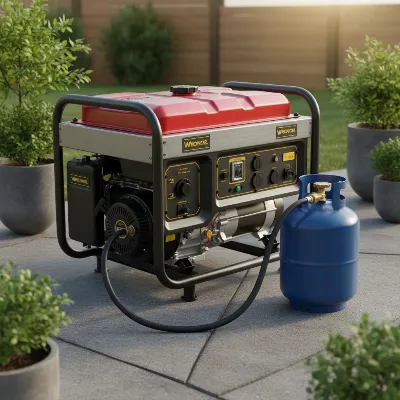 A dual fuel portable generator with separate gasoline tank and propane cylinder, highlighting fuel flexibility.
Run Time and Fuel Capacity
A generator’s run time is directly influenced by its fuel tank capacity and fuel efficiency. For gasoline, larger tanks provide longer operation before refueling. For propane, the size of the connected propane tank (e.g., 20-lb, 30-lb, 100-lb) dictates runtime. The ability to switch between fuels means you can extend overall run time by depleting one fuel source and then switching to the other without interruption. During extended blackouts, a generator capable of long run times is crucial to maintaining power without constant refueling.
Noise Level
Generators can be noisy, an important consideration, especially in residential areas or during quiet hours. Noise levels are measured in decibels (dB), with typical portable generators ranging from 65 to 75 dB—comparable to a vacuum cleaner or normal conversation, but some can be louder. Inverter generators are generally significantly quieter, often operating in the 50-60 dB range, which is similar to a dishwasher. If noise is a primary concern, particularly for residential use, prioritize models with lower decibel ratings or those with inverter technology.
Portability and Design
Despite being called “portable,” many higher-wattage generators are substantial, often weighing 100 to over 200 pounds. Look for models equipped with robust wheel kits, sturdy handles, and a balanced design to facilitate easier movement across varied terrain. The overall size and footprint also matter for storage when not in use. A generator designed for practical portability ensures you can deploy it quickly and safely when an emergency strikes.
Safety Features
Modern generators incorporate several essential safety features that should not be overlooked. An automatic low-oil shutdown prevents engine damage by turning off the unit if oil levels drop too low. Built-in circuit breakers protect the generator and connected appliances from overloads. Crucially, carbon monoxide (CO) detection systems are now standard on many models, automatically shutting down the generator if dangerous levels of CO are detected, mitigating the risk of CO poisoning when operated in poorly ventilated areas. Always prioritize models with comprehensive safety mechanisms.
Outlets and Connectivity
Ensure the generator offers the necessary outlets for your appliances. Common options include multiple 120V household outlets, a 120V/240V twist-lock outlet (often for larger appliances or transfer switches), and sometimes RV-ready outlets or USB ports. For home backup, check if the generator is “transfer switch ready,” meaning it can be safely connected to your home’s electrical panel by a qualified electrician, allowing you to power select circuits directly from the generator.
Comparing Popular Dual Fuel Portable Generators
Dual fuel technology offers a practical solution for emergency power, combining the benefits of gasoline and propane. Here’s a comparative look at how these two fuel types perform in a portable generator context:
Detailed Fuel Type Comparison
| Feature | Gasoline (Petrol) | Propane (LPG) |
|---|---|---|
| Availability | Widely available at gas stations | Available in tanks at hardware stores, gas stations |
| Storage Life | Short (6-12 months without stabilizer) | Long (indefinite if stored properly) |
| Energy Efficiency | Higher BTU content, often more efficient | Slightly lower BTU, 10-20% less runtime than gasoline |
| Emissions | Higher carbon emissions, stronger odor | Cleaner burning, lower emissions |
| Cold Weather Start | Generally easier to start in cold | Can be harder to start in very cold weather; performs well once running |
| Fuel Delivery | Internal tank, requires refueling | External tanks, can be swapped for extended run |
| Cost | Price fluctuates seasonally, regionally | Price fluctuates, can be cheaper or more expensive than gas |
Your Buying Guide for a Dual Fuel Portable Generator
Navigating the market for a dual fuel portable generator requires a thoughtful approach. By focusing on your specific needs, budget, and brand reputation, you can make an informed decision that provides reliable power for years to come.
Determine Your Specific Power Needs
Begin by making a comprehensive list of all the essential appliances and devices you absolutely need to power during an outage. This might include your refrigerator, freezer, well pump, furnace fan, lights, a few phone chargers, and possibly a medical device. For each item, note its running wattage and, crucially, its starting (surge) wattage. These figures are usually found on the appliance’s label or in its manual. Add up the running watts for all devices you expect to use concurrently, and then identify the highest single starting wattage among them. This total will guide you toward a generator with appropriate capacity. It’s often wise to round up your wattage calculation to provide a buffer and prevent overloading the generator, which can extend its lifespan.
Set Your Budget
Portable generators vary widely in price, from a few hundred to several thousand dollars. Your budget will influence the wattage, features, and brand quality you can access. While it might be tempting to opt for the cheapest model, consider the long-term value. Investing in a generator with sufficient power, robust safety features, and a reputable brand often pays off in reliability and durability during critical times. Compare models within your price range, prioritizing those that offer the best balance of performance, safety, and essential features over unnecessary extras. Remember to factor in the cost of fuel storage (e.g., propane tanks) and any necessary accessories like extension cords or a transfer switch installation.
Research Brands and User Reviews
The reputation of a brand is a strong indicator of a generator’s quality and the manufacturer’s commitment to customer support. Brands like DuroMax, Westinghouse, Champion, WEN, and Pulsar are frequently praised for their reliable dual fuel models. Take the time to read detailed user reviews and expert assessments. Pay close attention to comments regarding ease of use, starting reliability, noise levels, customer service, and the availability of parts. A strong warranty and accessible customer support network can be invaluable if you encounter any issues down the line. Choosing a trusted brand ensures you’re investing in a product backed by a history of performance and support.
Top-Rated Dual Fuel Portable Generators for Emergencies
Based on their performance, features, and reliability, several dual fuel portable generators consistently stand out as excellent choices for emergency home backup.
DuroMax XP15000EH/XP13000HX/XP5500HX Series: DuroMax generators are renowned for their robust construction and significant power output, making them ideal for backing up a wide range of household essentials, and even entire homes with higher wattage models like the XP15000EH. Models like the XP5500HX offer a great balance of power for a 4000-watt class. They typically feature an electric start for convenience and can be transfer switch-ready, allowing for direct connection to your home’s electrical panel. While some higher-output models can be louder and heavier, their sheer power and dual fuel flexibility are major advantages for comprehensive home backup.
Westinghouse WGen12500DFc Dual Fuel Portable Generator: This model is a powerhouse designed for serious home backup. With high starting and running watts, it can handle large appliances, heating and cooling systems, and all your essential electronics simultaneously. Key features often include remote start capability, a variety of outlets including a 240V twist-lock, and transfer switch readiness. Its sturdy build ensures durability, making it a top contender for those needing extensive emergency power.
Champion 4750-Watt Dual-Fuel Portable Generator: Champion generators are highly regarded for their balance of performance and value. The 4750-watt dual-fuel model is a popular choice for homeowners needing to power essential items like a refrigerator, lights, and some small electronics. It typically features a reliable engine, IntelliGauge for monitoring voltage and runtime, and a convenient fuel selector switch. Its relatively compact size and robust wheel kit enhance its portability, making it a versatile option for both home emergencies and recreational use.
WEN DF360iX Dual Fuel Inverter Generator: For those prioritizing quiet operation and clean power for sensitive electronics, the WEN DF360iX is an excellent option. As an inverter generator, it produces a pure sine wave, making it safe for laptops, smartphones, and medical devices. It’s significantly quieter than conventional generators, often operating at lower decibel levels. While its wattage is typically lower, it offers sufficient power for core essentials and camping needs, combining the benefits of dual fuel with the advantages of inverter technology in a portable and budget-friendly package.
These models represent a range of power outputs and features, ensuring there’s a dual fuel option to fit various emergency preparedness strategies.
Maintaining and Operating Your Dual Fuel Portable Generator Safely
Proper maintenance and safe operation are paramount to ensuring your dual fuel portable generator performs reliably during an emergency and extends its lifespan.
Regular Maintenance to Prolong Lifespan
Just like a car, your generator requires routine maintenance. Regularly check and change the oil according to the manufacturer’s schedule, typically after the first 20-30 hours and then every 50-100 hours of operation. Inspect and clean or replace the air filter periodically, especially if operating in dusty conditions. Spark plugs should be checked for wear and replaced as needed to ensure easy starting. For gasoline, always use fresh, stabilized fuel to prevent carburetor issues; consider running the generator dry or using a fuel stabilizer if it will be stored for an extended period. For propane, ensure tanks are correctly connected and hoses are free from leaks or damage. Running the generator for 15-30 minutes every few months, under a light load, helps keep components lubricated and ensures it’s ready when you need it most.
Essential Safety Measures for Generator Use
Safety should always be your top priority. NEVER operate a portable generator indoors, in a garage, carport, or any enclosed or partially enclosed space. Generators produce carbon monoxide (CO), an odorless, colorless, and deadly gas. Always operate your generator outdoors in a well-ventilated area, at least 20 feet away from windows, doors, and vents to prevent exhaust fumes from entering your home. Ensure you have working carbon monoxide detectors installed inside your home. Always connect appliances directly to the generator using heavy-duty, outdoor-rated extension cords, or have a qualified electrician install a transfer switch for safe home integration. Never backfeed power into your home’s electrical system by plugging the generator into a wall outlet, as this can be extremely dangerous for utility workers. Finally, always keep the generator dry, refuel only when it’s cool, and store fuel safely in approved containers away from living areas.
Troubleshooting Common Generator Issues
Many common generator issues can be resolved with basic troubleshooting. If your generator won’t start, check the fuel level (both gasoline and propane), ensure the fuel valve is open, and the choke is engaged correctly. Verify that the spark plug is clean and properly connected. If there’s no power output, check the circuit breakers on the generator, ensure no outlets are overloaded, and that the low-oil shutdown hasn’t been triggered. Refer to your generator’s manual for specific troubleshooting steps, as different models may have unique features or requirements. Regular maintenance can prevent many of these issues from occurring in the first place, ensuring your generator is a reliable emergency partner.
Conclusion
Choosing the best dual fuel portable generator for emergencies is a strategic decision that provides essential security for your home and family. The flexibility to switch between gasoline and propane offers unparalleled reliability and extended operational time, ensuring you’re never left without power when it matters most. By carefully evaluating factors such as wattage requirements, fuel storage, noise levels, and vital safety features, you can select a model perfectly suited to your specific needs. Brands like DuroMax, Westinghouse, Champion, and WEN offer robust options that blend performance with peace of mind. Remember, a well-chosen dual fuel generator, coupled with proper maintenance and safe operating practices, is not just a purchase—it’s an investment in your home’s resilience and comfort during unforeseen power outages.
What steps will you take today to ensure your home is prepared for the next power emergency?
Frequently Asked Questions
What is the difference between running watts and starting watts?
Running watts are the continuous power an appliance needs to operate, while starting watts (or surge watts) are the temporary burst of power required to get motor-driven appliances, like refrigerators or air conditioners, initially running. Generators must meet both these demands.
Can I run my dual fuel generator indoors?
No, never. Dual fuel Portable Generators, like all combustion engine generators, produce carbon monoxide (CO), a deadly gas. They must always be operated outdoors in a well-ventilated area, at least 20 feet away from any doors, windows, or vents to your home.
How long can a dual fuel generator run on a tank of propane/gasoline?
The runtime varies significantly based on the generator’s wattage, the load it’s powering, and the size of the fuel tank (for gasoline) or propane cylinder. Generally, gasoline provides a longer runtime per unit of fuel than propane, but switching between fuels extends overall operation.
Is propane more expensive than gasoline for generators?
The cost of propane and gasoline fluctuates based on market conditions and location. While propane might sometimes be more expensive per gallon, its indefinite shelf life and cleaner burning properties can offer long-term savings in terms of fuel storage and engine maintenance.
What safety features should I look for in a dual fuel generator?
Essential safety features include an automatic low-oil shutdown to protect the engine, built-in circuit breakers to prevent overloads, and critically, carbon monoxide (CO) detection systems that automatically shut down the generator if CO levels become unsafe.