The Jackery Explorer 1000 Portable Power Station is a reliable off-grid power solution, offering a substantial 1002 Watt-hour (Wh) capacity and 1000W continuous output for emergency home backup, camping, and remote job sites. This portable power station can run a 60W mini-fridge for approximately 17 hours or fully charge a smartphone over 80 times, making it a versatile choice for various power needs.
What is a Portable Generator? (Definition and Applications)
A portable generator traditionally refers to an engine-driven device that produces electricity, often fueled by gasoline or propane. However, the term has evolved to encompass “portable power stations,” which are essentially large, rechargeable battery packs designed to provide electricity for various devices. Unlike their noisy, fuel-guzzling counterparts, these battery-powered units offer a clean, quiet, and emission-free energy solution.
The Jackery Explorer 1000 is a prime example of such a modern portable power station. It functions as a sophisticated, high-capacity battery system capable of storing a substantial amount of electrical energy, which can then be dispensed through multiple output ports. It’s akin to a smartphone power bank, but significantly more robust and versatile, built to power everything from small electronics to larger appliances. For more portable generator guides on this site.
The applications for a portable power station like the Jackery Explorer 1000 are incredibly diverse. For homeowners, it serves as a crucial emergency backup during power outages, keeping essential items like lights, refrigerators, and medical devices running. Outdoor enthusiasts find it indispensable for camping, RV trips, and tailgating, providing power for cooking appliances, lights, and charging gadgets far from any wall outlet. On job sites, it can power tools in remote locations where grid power is unavailable. Its silent operation and lack of fumes make it ideal for indoor use or in quiet outdoor settings where traditional generators would be disruptive.
Key Factors When Choosing a Portable Generator
Selecting the right portable generator involves evaluating several critical factors to ensure it meets your specific power demands and lifestyle. Understanding these aspects will help you make an informed decision, ensuring your investment truly serves its purpose.
Power Output (Wattage)
The most crucial factor is power output, measured in watts. You need to identify the total wattage of the devices you plan to power simultaneously. The Jackery Explorer 1000 boasts a substantial 1002 Watt-hour (Wh) capacity and can deliver a continuous output, making it capable of running a wide array of electronics and small appliances. This capacity is sufficient for extended use of laptops, mini-fridges, lights, and even some power tools. Always calculate your cumulative power needs to avoid overloading the unit.
Fuel Type and Efficiency
|
Our Picks for the Best Portable Generator in 2026
As an Amazon Associate I earn from qualifying purchases.
|
||
| Num | Product | Action |
|---|---|---|
| 1 | Honda 664240 EU2200i 2200 Watt Portable Inverter Generator with Co-Minder |

|
| 2 | BLUETTI Portable Power Station AC180, 1152Wh LiFePO4 Battery Backup w/ 2 1800W (2700W peak) AC Outlets, 0-80% in 45Min, Solar Generator for Camping, Off-grid, Power Outage |
|
| 3 | Anker SOLIX C1000 Gen 2 Portable Power Station, 2,000W (Peak 3,000W) Solar Generator, Full Charge in 49 Min, 1,024Wh LiFePO4 Battery for Home Backup, Power Outages, and Camping (Optional Solar Panel) |
|
| 4 | Westinghouse 155Wh 150 Peak Watt Portable Power Station & Solar Generator, Modified Sine Wave AC Outlet, Backup Lithium Battery for Camping, Home, Travel, Indoor/Outdoor Use (Solar Panel Not Included) |
|
| 5 | Anker SOLIX C1000 Portable Power Station, 1800W (Peak 2400W) Solar Generator, Full Charge in 58 Min, 1056wh LiFePO4 Battery for Home Backup, Power Outages, and Outdoor Camping (Optional Solar Panel) |
|
| 6 | maXpeedingrods 2400 Watt Portable Inverter Generator Gas Powered, Bluetooth® App Remote Data Monitor,Only 33lbs, Compact and Lightweight for Outdoor Camping, Home Use |
|
| 7 | Champion Power Equipment 2500-Watt Dual Fuel Portable Inverter Generator with Quiet Technology and CO Shield |
|
| 8 | Generac 2,500-Watt Gas Powered Portable Inverter Generator - Lightweight and Compact Design - Produces Clean, Stable Power - Quiet Operation - Great for Home Backup, Camping, and RV Use |
|
| 9 | GENMAX Portable Inverter Generator, 6000W open frame Gas Powered High Speed Engine with Electric Start, Ultra Lightweight for Backup Home Use & Job Site,EPA Compliant (GM6000XiE) |
|
| 10 | 5000 Watts Portable Dual Fuel Inverter Generator– Small Gasoline LPG Powered for Home Backup, Camping, RV, Tailgating with CO Protection, Eco Mode, Recoil/Electric/Remote Start, Parallel Capable |
|
Portable generators come in various fuel types, each with pros and cons. The Jackery Explorer 1000 operates on a clean, rechargeable lithium-ion battery. This eliminates the need for gasoline or diesel, resulting in zero emissions, no fumes, and virtually silent operation. It can be recharged via a standard AC wall outlet, a 12V car adapter, or, most notably, through compatible solar panels. The efficiency of converting stored energy to usable power is excellent, with the unit effectively delivering its rated capacity.
Runtime
Runtime refers to how long a generator can power your devices before needing a recharge. This is directly tied to the power station’s capacity and the power draw of your connected devices. With its 1002Wh capacity, the Jackery Explorer 1000 offers significant runtime, capable of powering typical camping essentials for several days or critical home appliances for a shorter emergency period. For example, it can run a 60W mini-fridge for approximately 17 hours or fully charge a smartphone over 80 times. Recharge times vary: around 7 hours from an AC outlet, 8 hours with two 100W solar panels under direct sunlight, or about 12-14 hours from a 12V car adapter.
Noise Level
Traditional gasoline generators are notoriously loud, often making them unsuitable for campsites or residential areas. Battery-powered stations like the Jackery Explorer 1000 are a game-changer in this regard. They operate with minimal noise, typically only a faint hum from cooling fans, making them ideal for environments where quiet is essential. This makes them perfect for serene outdoor experiences or for use indoors during a power outage without disturbing the peace.
Additional Features
Modern portable power stations come equipped with a host of convenient features. The Jackery Explorer 1000 includes a clear, detailed display screen that shows battery level, input/output wattage, and remaining runtime. It offers a variety of output ports, including multiple AC outlets, USB-A, USB-C (some models, like the 1000 Pro, offer faster USB-C charging), and 12V DC ports, ensuring compatibility with almost any device. Other valuable features include pass-through charging, which allows you to charge the power station while it’s simultaneously powering other devices, and a sturdy, integrated folding handle for easy transport.
Comparing Popular Portable Generators
Understanding the differences between various portable power solutions can help clarify why a specific model like the Jackery Explorer 1000 might be the best choice for you. Here’s a comparison focusing on different types of portable generators, including the Jackery Explorer 1000 and its “Pro” sibling, alongside a typical small gasoline generator.
Comparison Table
| Feature | Jackery Explorer 1000 (Battery Power Station) | Jackery Explorer 1000 Pro (Battery Power Station) | Small Gasoline Generator (e.g., 1000W Inverter) |
|---|---|---|---|
| Power Output | 1000W (Continuous), 1002Wh Capacity | 1000W (Continuous), 1002Wh Capacity (often slightly more efficient output) | 800-900W (Running), 1000-1200W (Surge) |
| Fuel Type | Rechargeable Lithium-ion Battery (Solar/AC/Car) | Rechargeable Lithium-ion Battery (Solar/AC/Car – faster AC charging) | Unleaded Gasoline (requires regular refueling) |
| Runtime (50% Load) | ~17 hours for 60W device (longer for smaller loads) | Similar to Explorer 1000, optimized for efficiency | 5-6.3 hours on 0.55-1.2 gallon tank |
| Noise Level | Very Quiet (minimal fan noise) | Very Quiet (low operational volume) | Moderate to Loud (typically 56-70+ dB) |
| Weight | 22 lbs (10 kg) | 25.4 lbs (11.5 kg) | 25-35 lbs (11-16 kg) |
| Maintenance | Minimal (battery health, clean ports) | Minimal (battery health, clean ports) | Regular (oil changes, spark plugs, fuel stabilizers, air filters) |
| Emissions | Zero | Zero | Produces carbon monoxide and other pollutants |
| Special Features | Multiple AC/DC/USB ports, clear display, solar compatibility, pass-through charging. | Faster AC/USB-C charging, UPS function, energy-saving mode, robust folding handle. | Often includes 120V AC and 12V DC outlets, some with inverter technology for clean power. |
| Price Range | ~$900-$1100 | ~$1000-$1200 | ~$250-$400 |
The Jackery Explorer 1000 and 1000 Pro offer a clean, quiet, and convenient power solution, ideal for those seeking an eco-friendly and low-maintenance option. Their portability and versatility make them perfect for both outdoor adventures and indoor emergency backup. In contrast, a small gasoline generator, while often more affordable upfront and capable of continuous power as long as fuel is available, comes with significant drawbacks such as noise, fumes, and ongoing fuel costs and maintenance. The choice largely depends on your priorities: quiet, clean power versus raw, long-duration fuel-based power.
Portable Generator Buying Guide
Navigating the market for a portable generator can feel daunting with so many options available. To simplify your decision, consider these key steps, ensuring you invest in a unit that perfectly aligns with your needs.
Determine Usage Needs
Start by making a comprehensive list of all the devices you intend to power. This could range from small items like smartphones and laptops to larger appliances such as mini-fridges, blenders, CPAP machines, or power tools. For each device, note its running wattage and surge (starting) wattage. Sum these up to calculate your total power requirements. It’s always wise to add a 10-20% buffer to your total wattage to accommodate any unforeseen needs or future purchases. For instance, if you plan to run a 60W light, a 500W blender, and charge a 45W laptop simultaneously, your running wattage would be 605W. The Jackery Explorer 1000, with its 1000W continuous output, would comfortably handle this load.
Budget
Portable power stations represent a significant investment, so establishing a budget upfront is crucial. While the Jackery Explorer 1000 falls into a mid-to-high price bracket for portable power stations, its features and reliability offer excellent value. Cheaper alternatives might exist, but often compromise on capacity, output quality, or build durability. Consider not just the initial purchase price but also long-term costs like fuel (for gas generators) or potential solar panel additions (for battery stations). Investing a bit more in a reputable brand like Jackery often translates to superior performance, longevity, and better customer support.
Brand and Reputation
The manufacturer’s reputation and customer reviews are strong indicators of a product’s quality and reliability. Jackery is widely recognized as a leader in the portable power station market, renowned for its robust products and excellent customer service. Thousands of positive reviews attest to the satisfaction of their user base. Before making a purchase, take the time to research brands, read user testimonials, and check for any recurring issues or praise. A strong brand reputation often means a better warranty and more readily available support, offering peace of mind for your investment.
Top Portable Generator Models Currently Popular
Among the myriad of portable power solutions, the Jackery Explorer 1000 stands out as a highly popular and well-regarded model, particularly for its balance of power, portability, and eco-friendliness.
The Jackery Explorer 1000 Portable Power Station is praised for its robust build and user-friendly design. It features a solid housing and a sturdy carry handle that ensures balanced weight distribution, making its 22-pound (10 kg) frame surprisingly manageable. Its 1002Wh capacity is ample for a variety of uses, from extended camping trips to essential home backup during power outages. Users appreciate the clear digital display that provides real-time information on power consumption and battery life. With multiple AC, DC, and USB outputs, it offers versatile connectivity for almost any device. While it lacks water resistance, a common limitation for such devices, its overall performance, quiet operation, and ability to integrate with solar panels make it an invaluable tool for off-grid power.
For those seeking minor but impactful upgrades, the Jackery Explorer 1000 Pro Portable Power Station offers enhanced features. While maintaining a similar capacity, the Pro version includes faster AC charging, reducing full charge time significantly. It also often features faster USB-C charging ports and can function as an Uninterruptible Power Supply (UPS), providing seamless power transfer during outages for sensitive electronics. The Pro model also boasts an improved, robust folding handle for even greater portability and easier storage. However, some users note the absence of a dedicated mobile app for remote monitoring and report that buttons can be hard to locate in the dark. Despite these minor drawbacks, the Jackery Explorer 1000 Pro builds upon the success of its predecessor by adding convenient features that further enhance its utility.
Both the Jackery Explorer 1000 and 1000 Pro represent excellent choices within the portable power station category, offering clean, reliable power without the noise and emissions of traditional generators. Their stellar reputation and customer satisfaction further solidify their position as top contenders for anyone seeking a dependable mobile power solution.
Maintenance and Use of Portable Generators
Proper care and safe usage are paramount to maximizing the lifespan and ensuring the reliable performance of your portable power station. Adhering to simple guidelines can make a significant difference.
Guiding Your Investment
> “A portable power station is an investment in freedom and security. Treat it well, and it will serve you faithfully, wherever the grid ends.” – Admin, ReviewMyHand.com, Portable Generator Specialist
Routine Maintenance for Longevity
Maintaining a battery-powered portable power station like the Jackery Explorer 1000 is considerably simpler than caring for a gasoline-fueled generator. The primary focus is on battery health and general cleanliness.
- Storage: Store your power station in a cool, dry place, away from direct sunlight and extreme temperatures. Ideally, keep the battery charged to about 50-80% for long-term storage, checking and topping it up every 3-6 months. Avoid draining the battery completely for extended periods.
- Cleaning: Periodically wipe down the exterior with a dry cloth. Ensure vents are clear of dust and debris to prevent overheating. Keep ports free of dust and moisture.
- Charging Cycles: While lithium-ion batteries have many charge cycles, try to avoid consistently deep discharges followed by full recharges if possible. Partial charges are generally fine.
Safe Operation Practices
Safety should always be your top priority when using any power generating equipment.
- Ventilation: Although battery power stations produce no fumes, their cooling fans still need adequate airflow to prevent overheating. Always operate the unit in a well-ventilated area, avoiding enclosed spaces or direct sunlight that can cause it to heat up excessively.
- Moisture Protection: Portable power stations are generally not waterproof. Keep your Jackery Explorer 1000 away from rain, snow, and excessive moisture to prevent electrical hazards and damage.
- Overloading: Always stay within the unit’s rated continuous and surge wattage. Overloading can trip internal circuit breakers or, in severe cases, damage the unit or connected devices. The display screen helps monitor real-time power draw.
- Cable Management: Use appropriate, well-maintained cables for charging and connecting devices. Avoid frayed or damaged cords.
- Children and Pets: Keep the power station out of reach of children and pets to prevent accidental tampering or injury.
Troubleshooting Common Issues
Most issues with portable power stations are minor and easily resolved:
- No Power Output: Check if the AC/DC/USB output buttons are pressed. Ensure the battery has sufficient charge. Check for any tripped circuit breakers on the unit.
- Slow Charging: Verify that the charging cable and adapter are functioning correctly and that the power source (wall outlet, car, solar panels) is providing adequate power. For solar charging, ensure panels are in direct sunlight and unobstructed.
- Overheating: If the unit feels excessively hot, disconnect all devices, turn it off, and allow it to cool in a well-ventilated area. Check that vents are not blocked.
By following these simple maintenance and safety guidelines, your Jackery Explorer 1000 will provide reliable, clean power for years to come.
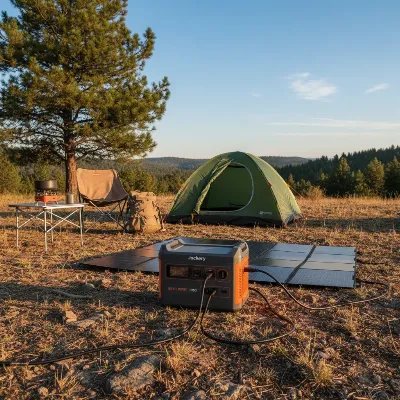 Jackery Explorer 1000 Portable Power Station set up in a vibrant outdoor camping scene with solar panels.
Conclusion
The Jackery Explorer 1000 Portable Power Station undeniably stands as a robust and reliable solution for anyone in need of dependable off-grid power. Its significant 1002Wh capacity, versatile array of output ports, and quiet, emission-free operation make it an exceptional choice for emergency home backup, adventurous outdoor excursions, and remote work environments. While its initial investment may be higher than some traditional generators, the long-term benefits of convenience, safety, and environmental friendliness offer unparalleled value.
Choosing the Jackery Explorer 1000 means opting for peace of mind, knowing you have a powerful and portable energy source at your fingertips. From keeping your essential appliances running during a blackout to powering your entire campsite, it consistently delivers. Have you considered how a portable power station could transform your next adventure or enhance your home’s preparedness?
Frequently Asked Questions
What can the Jackery Explorer 1000 power?
The Jackery Explorer 1000 can power a wide range of devices up to 1000 watts continuously, including smartphones (over 80 charges), laptops (12+ charges), mini-fridges (17+ hours), lights, blenders, CPAP machines, and small power tools. Its 1002Wh capacity makes it suitable for both critical home appliances during outages and extended outdoor use.
How long does it take to charge the Jackery Explorer 1000?
The Jackery Explorer 1000 can be fully recharged in approximately 7 hours from an AC wall outlet. Using two 100W Jackery SolarSaga solar panels, it can recharge in about 8 hours under direct sunlight. A 12V car adapter will fully charge the unit in roughly 12-14 hours.
Is the Jackery Explorer 1000 waterproof?
No, the Jackery Explorer 1000 is not waterproof. It should be kept away from rain, snow, and excessive moisture to prevent damage and ensure safe operation. Always use it in a dry environment and protect it from the elements.
Can the Jackery Explorer 1000 be used indoors?
Yes, the Jackery Explorer 1000 is safe to use indoors because it is battery-powered and produces no fumes, carbon monoxide, or significant noise like gasoline generators. Ensure proper ventilation for its cooling fans to operate efficiently and prevent overheating.
What is the difference between the Jackery Explorer 1000 and the 1000 Pro?
The Jackery Explorer 1000 Pro offers several enhancements over the standard 1000, including faster AC charging (reducing charge time significantly), often faster USB-C charging ports, an Uninterruptible Power Supply (UPS) function for seamless power transfer, and a more robust folding handle for improved portability and durability.
Frequently Asked Questions
What devices can the Jackery Explorer 1000 power effectively?
The Jackery Explorer 1000 can power a wide range of devices up to 1000 watts continuously, including smartphones (over 80 charges), laptops (12+ charges), mini-fridges (17+ hours), lights, blenders, CPAP machines, and small power tools. Its 1002Wh capacity makes it suitable for both critical home appliances during outages and extended outdoor use.
How long does it take to fully recharge the Jackery Explorer 1000?
The Jackery Explorer 1000 can be fully recharged in approximately 7 hours from an AC wall outlet. Using two 100W Jackery SolarSaga solar panels, it can recharge in about 8 hours under direct sunlight. A 12V car adapter will fully charge the unit in roughly 12-14 hours.
Is the Jackery Explorer 1000 portable power station waterproof?
No, the Jackery Explorer 1000 is not waterproof. It should be kept away from rain, snow, and excessive moisture to prevent damage and ensure safe operation. Always use it in a dry environment and protect it from the elements.
Can the Jackery Explorer 1000 be safely used inside a home or tent?
Yes, the Jackery Explorer 1000 is safe to use indoors because it is battery-powered and produces no fumes, carbon monoxide, or significant noise like gasoline generators. Ensure proper ventilation for its cooling fans to operate efficiently and prevent overheating.
What are the main differences between the Jackery Explorer 1000 and the 1000 Pro?
The Jackery Explorer 1000 Pro offers several enhancements over the standard 1000, including faster AC charging (reducing charge time significantly), often faster USB-C charging ports, an Uninterruptible Power Supply (UPS) function for seamless power transfer, and a more robust folding handle for improved portability and durability.
How to Choose a Portable Generator
Selecting the right portable generator involves evaluating several critical factors to ensure it meets your specific power demands and lifestyle. Understanding these aspects will help you make an informed decision.
List all devices you intend to power, noting their running and surge wattages. Sum these to calculate your total power requirements, adding a 10-20% buffer for unforeseen needs. For example, a 60W light, 500W blender, and 45W laptop simultaneously require 605W running wattage.
Set a budget upfront, considering that portable power stations are a significant investment. While the Jackery Explorer 1000 is in a mid-to-high price bracket, its features and reliability offer excellent value. Factor in long-term costs like fuel for gas generators or solar panel additions for battery stations.
Investigate the manufacturer's reputation and customer reviews as strong indicators of product quality. Jackery is a leader in the portable power station market, known for robust products and excellent customer service. A strong brand often means better warranty and support.

This portable power station is fantastic for off-grid living. I appreciate how clean and quiet it is compared to traditional generators. Being able to charge my smartphone over 80 times on a single charge is incredibly useful, and it handles my small appliances with ease. Definitely recommend it for anyone looking for a reliable, emission-free power source.
The Jackery Explorer 1000 is a solid unit for emergency home backup. I tested it out during a short power outage and it kept our essential electronics running without a hitch. The 1000W continuous output is plenty for what we need. My only minor complaint is that it’s a bit heavier than I expected, but that’s probably just the trade-off for the large capacity.
I got the Jackery Explorer 1000 for my remote job site, hoping to power some tools. While it does a good job with smaller items, I found the 1002 Watt-hour capacity wasn’t quite enough for my heavier-duty equipment for an entire day. It’s great for charging laptops and phones, but if you need sustained power for high-draw tools, you might need to recharge it more often than you’d like.
I’ve been using my Jackery Explorer 1000 for a few months now, mainly for camping trips, and it’s been a game-changer. It easily powers our mini-fridge for the whole weekend, just like it said it would, and keeps all our phones and lights charged. It’s so much quieter than the old gas generator we used to lug around, which is a huge plus for enjoying nature.