Experiencing a power outage can disrupt everything, from daily routines to essential home functions. Whether you’re facing a sudden storm, planning an off-grid adventure, or powering tools at a remote job site, a reliable portable generator is an indispensable asset. This comprehensive review delves into the DuroMax XP12000EH Dual Fuel Portable Generator, a powerhouse often referred to as “The Beast,” examining its features, performance, and value. With over a decade of hands-on experience in portable power solutions, I aim to provide practical insights to help you determine if this generator is the right choice to keep your world running smoothly.
What is a Portable Generator? (Definition and Applications)
A portable generator is a compact, self-contained power source designed to provide electricity temporarily, often during power outages or in locations without grid access. Unlike permanent standby generators, these units are easily moved, making them highly versatile for various scenarios. They typically house an internal combustion engine that converts fuel into electrical energy, delivering power through multiple outlets.
The market offers several types of portable generators, each suited for different needs. Conventional generators, like the DuroMax XP12000EH, are known for their robust power output, ideal for handling heavy-duty appliances. Inverter generators provide cleaner, more stable power, making them perfect for sensitive electronics, often with quieter operation. Dual-fuel generators, such as the XP12000EH, offer the flexibility to run on more than one fuel type, typically gasoline and propane, extending runtimes and providing options based on fuel availability. Solar generators, a newer category, utilize solar panels to charge a battery, offering silent and emission-free power for smaller applications.
Portable generators find applications across diverse settings. For homeowners, they serve as crucial backup power during emergencies, keeping essential appliances like refrigerators, lights, and even small air conditioners operational. Campers and RV enthusiasts rely on them for comfort and convenience, powering everything from microwaves to charging stations in remote locations. On construction sites, portable generators are invaluable for running power tools and equipment where conventional electricity is unavailable. They also provide power for outdoor events, tailgates, and other activities requiring temporary electrical supply.
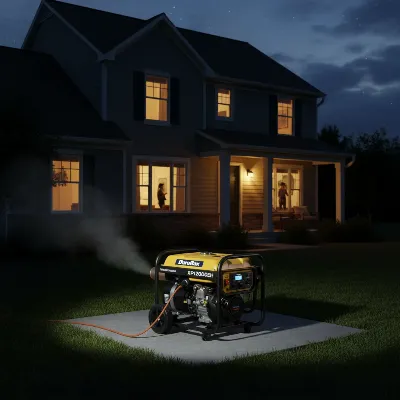 DuroMax XP12000EH Dual Fuel Portable Generator powering a typical home during an outage with family.
Key Factors When Choosing a Portable Generator
Selecting the right portable generator involves a careful evaluation of several crucial factors to ensure it meets your specific power requirements and usage scenarios. Making an informed decision upfront can save you from frustration and costly mistakes down the line.
Power Output (Wattage): This is arguably the most critical factor. Generators have two wattage ratings: starting watts (peak watts) – the extra power needed to start motor-driven appliances – and running watts (continuous watts) – the power required to keep them operating. To determine your needs, list all the appliances you plan to run simultaneously, identify their starting and running wattages, and calculate the total. Always choose a generator with a slightly higher capacity than your calculated peak demand to prevent overloads and ensure stable performance. For instance, the DuroMax XP12000EH offers a substantial 12,000 starting watts and 9,500 running watts on gasoline, making it capable of powering a wide array of household appliances, including high-demand items like air conditioners.
Fuel Type: Your choice of fuel impacts convenience, runtime, and cost.
- Gasoline generators are common and easily fueled, but gasoline has a limited shelf life and price fluctuations.
- Propane generators offer longer storage life and cleaner emissions but might require specific tanks.
- Diesel generators are durable and fuel-efficient but often heavier and louder.
- Dual-fuel generators, like the DuroMax XP12000EH, provide the best of both worlds, allowing you to switch between gasoline and propane. This flexibility is invaluable during extended outages or when one fuel type is scarce.
Runtime: This indicates how long a generator can operate on a full tank of fuel at a specific load. It depends on the fuel tank capacity and the engine’s efficiency. A larger fuel tank or an efficient engine will result in longer runtimes, reducing the frequency of refueling. The DuroMax XP12000EH, for example, can run for approximately 8 hours on its 8.3-gallon gasoline tank at a 50% load, and even longer on a 40-pound propane tank, providing ample power through most overnight outages.
Noise Level: Measured in decibels (dBA), a generator’s noise output can significantly impact its usability, especially in residential areas, campgrounds, or during late hours. While most powerful conventional generators tend to be louder, inverter generators are typically designed for quieter operation. The DuroMax XP12000EH has a noise level ranging from 74-90 dBA, which is on the louder side for some portable units, but understandable for its high power output. Features like “Idle Control” can help reduce noise and conserve fuel when the load is light.
Additional Features: Modern portable generators come with various enhancements that improve convenience, safety, and versatility.
- Electric Start: A push-button or key start, much easier than a manual pull start, especially for larger engines. The XP12000EH includes a convenient electric start.
- Display Screens: Provide essential information like voltage, frequency, and operating hours. Unfortunately, the XP12000EH lacks an hour meter.
- Portability: Wheels and folding handles make it easier to move heavy units. At 224 pounds, the XP12000EH benefits greatly from its included wheels.
- Multiple Outlets: A variety of outlets, including 120V, 240V, and 50A options for RVs or transfer switches, are crucial. The XP12000EH offers a good range, including a 50A outlet, but some users desire more standard 120V duplex outlets.
- Safety Features: Critical for safe operation, these include automatic low-oil shutoff, overload protection, circuit breakers, GFCI outlets, and carbon monoxide (CO) detectors. The XP12000EH is equipped with GFCI outlets and a built-in CO detector.
“Choosing the right generator isn’t just about power; it’s about peace of mind. Consider your specific needs—from the hum of your refrigerator to the surge of your power tools—and align those with a generator’s capabilities and features for optimal satisfaction.” – Maria Rodriguez, Power Systems Engineer
Comparing Popular Portable Generator Types
Understanding the different types of portable generators helps in appreciating the unique position of models like the DuroMax XP12000EH. While the XP12000EH is a heavy-duty conventional dual-fuel generator, it’s useful to see how it stacks up against other common types.
Detailed Comparison Table
|
Our Picks for the Best Portable Generator in 2026
As an Amazon Associate I earn from qualifying purchases.
|
||
| Num | Product | Action |
|---|---|---|
| 1 | Westinghouse 155Wh 150 Peak Watt Portable Power Station & Solar Generator, Modified Sine Wave AC Outlet, Backup Lithium Battery for Camping, Home, Travel, Indoor/Outdoor Use (Solar Panel Not Included) |

|
| 2 | Anker SOLIX C1000 Portable Power Station, 1800W (Peak 2400W) Solar Generator, Full Charge in 58 Min, 1056wh LiFePO4 Battery for Home Backup, Power Outages, and Outdoor Camping (Optional Solar Panel) |
|
| 3 | GENMAX Portable Inverter Generator, 6000W open frame Gas Powered High Speed Engine with Electric Start, Ultra Lightweight for Backup Home Use & Job Site,EPA Compliant (GM6000XiE) |
|
| 4 | 5000 Watts Portable Dual Fuel Inverter Generator– Small Gasoline LPG Powered for Home Backup, Camping, RV, Tailgating with CO Protection, Eco Mode, Recoil/Electric/Remote Start, Parallel Capable |
|
| 5 | Anker SOLIX C1000 Gen 2 Portable Power Station, 2,000W (Peak 3,000W) Solar Generator, Full Charge in 49 Min, 1,024Wh LiFePO4 Battery for Home Backup, Power Outages, and Camping (Optional Solar Panel) |
|
| 6 | Generac 2,500-Watt Gas Powered Portable Inverter Generator - Lightweight and Compact Design - Produces Clean, Stable Power - Quiet Operation - Great for Home Backup, Camping, and RV Use |
|
| 7 | Champion Power Equipment 2500-Watt Dual Fuel Portable Inverter Generator with Quiet Technology and CO Shield |
|
| 8 | maXpeedingrods 2400 Watt Portable Inverter Generator Gas Powered, Bluetooth® App Remote Data Monitor,Only 33lbs, Compact and Lightweight for Outdoor Camping, Home Use |
|
| 9 | BLUETTI Portable Power Station AC180, 1152Wh LiFePO4 Battery Backup w/ 2 1800W (2700W peak) AC Outlets, 0-80% in 45Min, Solar Generator for Camping, Off-grid, Power Outage |
|
| 10 | Honda 664240 EU2200i 2200 Watt Portable Inverter Generator with Co-Minder |
|
| Feature | Conventional Generator (e.g., DuroMax XP12000EH) | Inverter Generator | Dual-Fuel Generator (e.g., DuroMax XP12000EH) | Solar Generator / Portable Power Station |
|---|---|---|---|---|
| Power Output | High (e.g., 5,000-15,000+ watts) | Low to Medium (e.g., 1,000-7,000 watts) | High (gasoline: 12kW peak, propane: 10.2kW peak) | Low to Medium (e.g., 500-3,000 watts) |
| Fuel | Gasoline, Diesel | Gasoline | Gasoline & Propane | Solar, Grid (battery) |
| Runtime | Moderate to Long | Long (fuel-efficient) | Long (flexibility extends options) | Varies (battery capacity, solar input) |
| Noise Level | Moderate to Loud (70-90 dBA) | Quiet (50-65 dBA) | Moderate to Loud (74-90 dBA) | Silent (0 dBA) |
| Power Quality | Raw AC power (higher THD) | Clean sine wave (low THD, safe for electronics) | Raw AC power (higher THD, <12% THD on XP12000EH) | Clean sine wave |
| Portability | Heavy, often with wheels | Lightweight to Moderate, often with wheels | Heavy, with wheels | Moderate, often handheld or wheeled |
| Price | Moderate to High | High | Moderate to High | High |
| Best Use | Home backup, construction, heavy tools | Sensitive electronics, camping, quiet areas | Extended home backup, fuel versatility | Camping, emergency charging, indoor use |
The DuroMax XP12000EH shines in its high power output and dual-fuel capability, offering robust performance for diverse and demanding applications. While it’s not as quiet or electronically sensitive-friendly as an inverter generator, its capacity to power a substantial portion of a home during an outage on either gasoline or propane makes it a formidable choice. Its MX2 Power Boost feature further enhances its utility by allowing users to get maximum 120-volt power from a single receptacle or run it at both 120V and 240V simultaneously, catering to a wider range of appliances and RV needs.
Buying Guide for Portable Generators
Navigating the market for a portable generator can be daunting, but a structured approach ensures you make a choice that perfectly aligns with your expectations. This buying guide will walk you through the essential steps to consider before making your purchase.
Determine Your Usage Needs
Before anything else, identify what you intend to power. This crucial step prevents buying an underpowered or unnecessarily oversized generator.
- List Your Devices: Make a comprehensive list of all appliances, tools, and electronics you anticipate powering. This might include your refrigerator, freezer, well pump, furnace fan, lights, TVs, computers, power tools, or even an air conditioning unit.
- Calculate Wattage Requirements: For each item on your list, find its running wattage and starting wattage. These figures are usually on the appliance’s label or in its manual. Sum up all the running watts, then identify the single appliance with the highest starting wattage. Add this highest starting wattage to your total running watts to get your estimated peak wattage demand. Always add a small buffer (10-20%) for safety and future needs. The DuroMax XP12000EH, with its 12,000 starting watts, can comfortably handle the initial surge of many large appliances.
- Choose the Right Type: Based on your wattage needs, decide if a conventional, inverter, or dual-fuel model is best. If you need robust power for home backup and versatility in fuel, a heavy-duty unit like the XP12000EH is a strong contender.
Consider Your Budget
Portable generators range widely in price, influenced by power output, features, and brand reputation.
- Set a Realistic Price Range: Determine how much you are willing and able to spend. Remember to factor in not just the purchase price but also ongoing costs like fuel and maintenance.
- Compare Value and Quality: While it’s tempting to go for the cheapest option, prioritize value and quality. A more expensive model from a reputable brand might offer better durability, more features, and a longer lifespan, leading to better long-term savings. The DuroMax XP12000EH often provides a competitive price point for its significant 12,000-watt capacity, making it an attractive option for budget-conscious buyers seeking high power.
- Look for Sales and Warranties: Keep an eye out for seasonal sales or bundled offers. A good warranty can also provide peace of mind and protect your investment.
Research Brands and Reputation
A generator is a significant investment, often purchased for critical situations. Trust in the manufacturer and product quality is paramount.
- Investigate Reputable Brands: Research well-known brands in the generator industry. Brands like DuroMax have established a presence, particularly in powerful conventional generators. Reading customer reviews and professional evaluations can offer valuable insights into product reliability and customer service.
- Read User Reviews: Pay attention to reviews from actual users. These can highlight common issues, strengths, and real-world performance. For the DuroMax XP12000EH, reviews often praise its power and dual-fuel flexibility, though some mention noise and the number of 120V outlets as areas for improvement.
- Check Dealer Support: Ensure the manufacturer has accessible customer support and a network for parts and service. A reliable supplier can provide ongoing assistance.
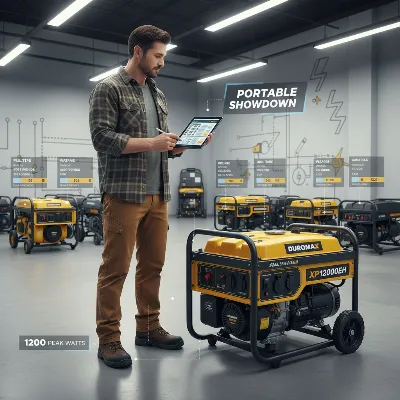 A person carefully evaluating different portable generators based on features, wattage, and fuel type.
Top Models: DuroMax XP12000EH Dual Fuel Generator Tested
In the realm of high-power portable generators, the DuroMax XP12000EH Dual Fuel Portable Generator stands out as a strong contender, particularly for those needing robust home backup or substantial power for demanding tasks. Often nicknamed “The Beast,” this generator is designed to handle significant electrical loads with versatility.
The DuroMax XP12000EH delivers a formidable 12,000 peak watts and 9,500 running watts when operating on gasoline. For propane, the output is slightly adjusted, providing 10,200 peak watts and 8,075 running watts. This dual-fuel capability is a major advantage, offering flexibility to switch fuel sources based on availability or preference, thereby extending operational time during long outages. Its heart is a powerful 457cc 4-cycle air-cooled DuroMax engine, built for durability and reliable performance.
One of its most appreciated features is the electric start, which provides a hassle-free ignition with the turn of a key, a significant convenience compared to strenuous pull-starts, especially for a unit of this size. The generator also includes an Idle Control switch, which can reduce engine speed when no load is applied. This not only conserves fuel but also helps to lower the noise level during periods of lower power demand.
For connectivity, the XP12000EH is well-equipped with a variety of outlets to accommodate diverse needs. These include a crucial 50-amp outlet, which is transfer switch-ready, making it suitable for direct connection to a home’s electrical panel. It also features a 120V 30-amp outlet, a 120/240V 30-amp outlet, and GFCI-protected 120V 20-amp outlets for standard household appliances. The MX2 Power Boost technology is another highlight, allowing users to choose between operating at 120V and 240V simultaneously or dedicating the full power to 120V outlets for heavy loads like RVs. Safety features are also integrated, including a built-in carbon monoxide detector and GFCI outlets, providing essential protection for users.
Pros:
- High Power Output: Excellent for powering most household essentials, including high-demand appliances and central AC units.
- Dual Fuel Capability: Offers flexibility to run on gasoline or propane, extending runtime and providing options during fuel shortages.
- Electric Start: Convenient and reliable ignition, especially for a powerful engine.
- MX2 Power Boost: Enhances versatility by optimizing power delivery for 120V or 240V applications.
- Value for Money: Often available at a competitive price for its wattage class, making it an affordable high-power option.
- Safety Features: Includes CO detector and GFCI outlets for user protection.
Cons:
- Noise Level: At 74-90 dBA, it’s a relatively noisy unit, which might be a concern in noise-sensitive environments.
- Lack of Hour Meter: No built-in way to track operational hours, making it difficult to adhere to maintenance schedules accurately.
- Limited Standard 120V Outlets: Only one duplex-style 120V outlet is available, which some users find insufficient for multiple standard devices.
- Exposed Outlets: The power panel outlets lack dust covers, potentially exposing them to elements.
- Weight: At 224 pounds dry, it’s a heavy unit, though wheels are included for portability.
Despite a few minor drawbacks, the DuroMax XP12000EH delivers on its promise of robust, versatile power. It’s an excellent choice for homeowners seeking reliable backup power that can handle demanding loads, as well as for those needing substantial power on job sites or for large RVs. Its ability to switch between gasoline and propane adds a layer of security and convenience that is highly valued during extended power disruptions.
Maintaining and Using Portable Generators Correctly
Proper maintenance and safe operation are paramount for any portable generator, ensuring its longevity, reliability, and safe use. Neglecting these aspects can lead to breakdowns, reduced efficiency, and dangerous situations.
Regular Maintenance for Longevity
Consistent upkeep extends the life of your generator and ensures it’s ready when you need it most.
- Read the Owner’s Manual: This is the most crucial first step. Your manual contains specific maintenance schedules and instructions tailored to your model.
- Oil Changes: Regularly check the oil level before each use. Change the oil after the first 20-30 hours of operation (break-in period) and then every 50-100 hours or at least every six months, even with infrequent use. Use the oil type specified by the manufacturer.
- Air Filter Inspection: Clean or replace the air filter regularly (every 50-100 hours or annually). A clogged air filter restricts airflow, reducing efficiency and power output.
- Spark Plug Check: Inspect the spark plug every 100 hours or annually. Clean it or replace it if it’s fouled or discolored.
- Fuel Management: Always use fresh, clean fuel. For gasoline, consider adding a fuel stabilizer if you plan to store the generator for more than a month to prevent fuel degradation and clogging. For long-term storage, it’s best to run the generator until the fuel tank is empty.
- Battery Maintenance (for Electric Start): Keep the battery charged and ensure terminals are clean and tight. Disconnect the battery when storing the generator for extended periods.
- General Cleaning: Keep the generator’s exterior clean, especially air intake grilles, to prevent overheating and maintain efficiency.
- Periodic Operation: Run your generator under a moderate load for 15-30 minutes every month or two. This circulates oil, keeps components lubricated, and ensures the engine remains ready for operation.
Safe Operation Practices
Safety is non-negotiable when operating a portable generator, primarily due to the risks of carbon monoxide poisoning and electrical hazards.
- Outdoor Use ONLY: Never operate a portable generator indoors, in a garage, shed, crawl space, or any partially enclosed area. Generators emit carbon monoxide (CO), an odorless, colorless, and deadly gas. Position the generator at least 20 feet away from windows, doors, and vents, directing the exhaust away from any structures.
- Carbon Monoxide Detectors: Install battery-operated CO alarms on every level of your home and test them regularly. The DuroMax XP12000EH includes a built-in CO detector for added safety.
- Proper Connections: Use heavy-duty, outdoor-rated extension cords that are properly grounded and in good condition. Inspect cords for damage before each use. For powering home circuits, a professionally installed manual transfer switch or interlock kit is essential to safely isolate your home’s electrical system from the utility grid, preventing dangerous backfeeding.
- Refueling Safety: Always shut down the generator and allow it to cool completely before refueling. Gasoline and propane are highly flammable. Store fuel in approved containers in a cool, dry, well-ventilated area away from living spaces and heat sources.
- Stable Surface: Place the generator on a dry, level surface to prevent tipping and ensure proper airflow. In wet conditions, use a generator tent or canopy that allows for ample ventilation while protecting the unit from rain and moisture. Never operate a generator with wet hands or while standing in water.
- Overload Protection: Avoid overloading the generator. If circuit breakers trip frequently, you’re trying to draw too much power. Distribute loads evenly and start high-draw appliances one at a time.
Troubleshooting Common Issues
- Generator Won’t Start: Check fuel levels, oil levels, spark plug condition, and battery charge (for electric start). Ensure the choke is properly set.
- No Power Output: Check circuit breakers on the generator and any connected devices. Ensure all connections are secure.
- Overheating: Clean air vents, check oil levels, and ensure the generator is not overloaded or operating in an enclosed space.
By adhering to these maintenance guidelines and safety protocols, you can ensure your DuroMax XP12000EH, or any portable generator, remains a reliable and safe source of power for years to come.
Conclusion
The DuroMax XP12000EH Dual Fuel Portable Generator truly lives up to its reputation as “The Beast,” offering formidable power and exceptional versatility for both emergency home backup and demanding off-grid applications. Its robust 12,000-watt capacity on gasoline, combined with the flexibility of dual-fuel operation, provides a secure and adaptive power solution when you need it most. While it requires careful consideration of its noise output and the number of standard 120V outlets, features like the electric start, MX2 Power Boost, and integrated safety measures such as the CO detector significantly enhance its user experience and value.
For those prioritizing sheer power and fuel options in a portable package, the XP12000EH stands out as a strong contender. With proper maintenance and strict adherence to safety guidelines, this generator can be a long-lasting, reliable partner against power outages and a powerful asset for any project. Are you prepared to harness “The Beast” for your power needs?
Frequently Asked Questions
What is the primary advantage of a dual-fuel generator like the DuroMax XP12000EH?
The main advantage of a dual-fuel generator is its versatility in fuel sources. The DuroMax XP12000EH can run on both gasoline and propane, offering greater flexibility during power outages or in remote areas where one fuel type might be more readily available or easier to store than the other. This significantly extends your operational options.
Is the DuroMax XP12000EH suitable for powering an entire home?
With 12,000 starting watts and 9,500 running watts on gasoline, the DuroMax XP12000EH is capable of powering many essential household appliances, including refrigerators, lights, and even some central air conditioning units or well pumps. While it might not power every single item simultaneously, it provides substantial backup for critical loads, making it an excellent choice for home emergency preparedness.
How loud is the DuroMax XP12000EH compared to other portable generators?
The DuroMax XP12000EH operates at a noise level between 74-90 dBA. This puts it on the louder side compared to inverter generators, which are typically much quieter (50-65 dBA). However, for a conventional generator with such a high power output, this noise level is often expected. Features like idle control can help mitigate noise when under light loads.
Can I connect the DuroMax XP12000EH directly to my home’s electrical panel?
Yes, the DuroMax XP12000EH comes equipped with a 50-amp outlet that is transfer switch-ready. To safely power your home’s circuits, you must have a professionally installed manual transfer switch or an interlock kit. This setup isolates your home’s electrical system from the utility grid, preventing dangerous backfeeding and protecting utility workers.
What kind of maintenance does the DuroMax XP12000EH require?
Like all portable generators, the DuroMax XP12000EH requires regular maintenance to ensure optimal performance and longevity. Key tasks include checking and changing the engine oil every 50-100 hours of use (or every six months), inspecting and cleaning the air filter and spark plug, and proper fuel management (using fresh fuel, adding stabilizer for storage, or draining the tank). Regular exercise of the unit is also recommended.
Does the DuroMax XP12000EH have a carbon monoxide (CO) shutoff feature?
Yes, the DuroMax XP12000EH includes a built-in carbon monoxide detector, which is a crucial safety feature. This detector is designed to monitor CO levels and automatically shut down the generator if dangerous concentrations are detected, providing an important layer of protection against accidental CO poisoning.
How long can the DuroMax XP12000EH run on a full tank of gasoline or propane?
On a full 8.3-gallon tank of gasoline, the DuroMax XP12000EH can run for approximately 8 hours at a 50% load, with some sources indicating up to 19 hours at lighter loads. When using a 20-pound propane tank, it can operate for about 7 hours. Actual runtimes will vary depending on the load applied and environmental conditions.
