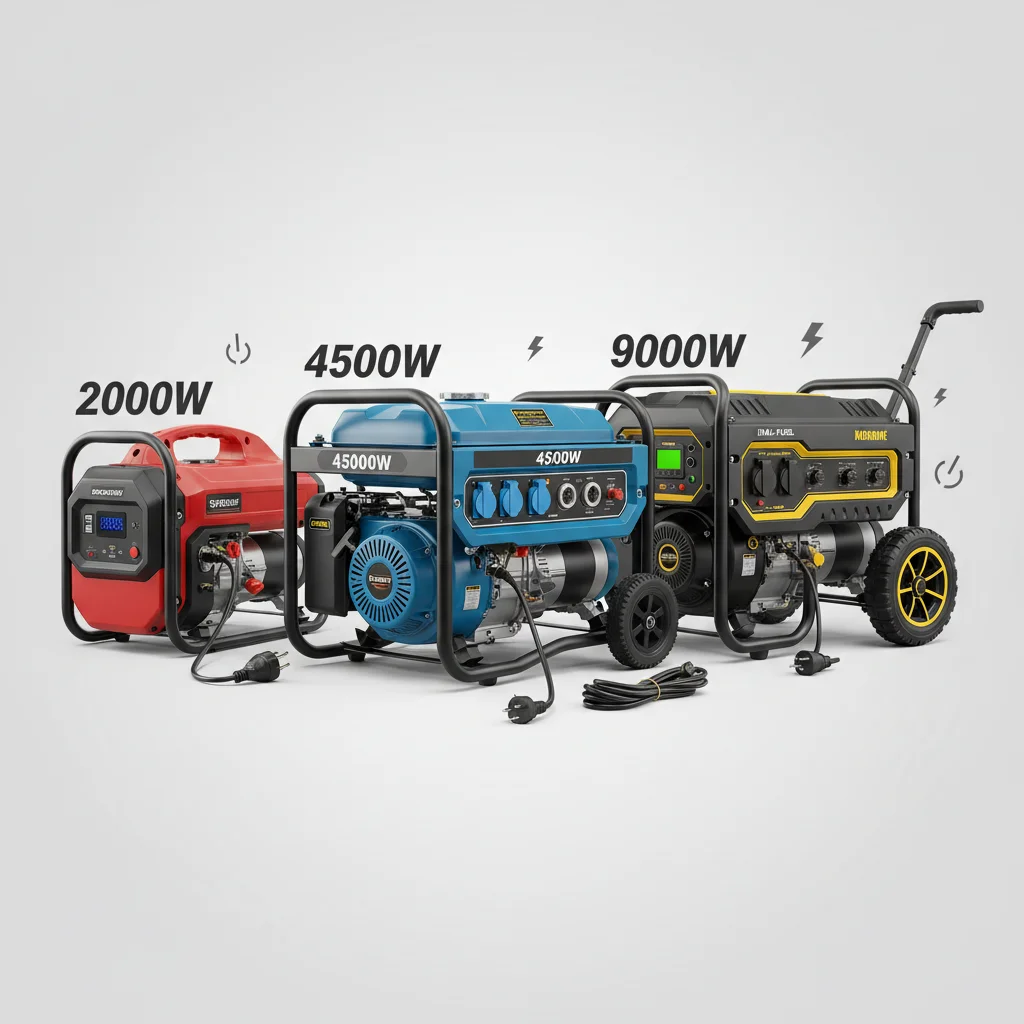
Determining the right portable generator wattage for your needs is crucial for efficient power delivery and avoiding overspending. On average, a typical household requires between 3,000 to 7,500 watts to power essential appliances during an outage, while RVs and campsites might need less, around 2,000 to 4,000 watts. This range accounts for starting and running wattages of common devices, ensuring you have enough power without unnecessary excess.
Understanding Starting vs. Running Watts
When selecting a portable generator, it’s vital to differentiate between starting watts and running watts. Starting watts, also known as surge watts, refer to the brief burst of power an appliance needs to start its motor. This can be significantly higher than its continuous running wattage. For example, a refrigerator might run on 800 watts but require 2,200 watts to start. Always calculate the highest starting wattage of any single appliance you plan to run simultaneously, and ensure your generator can meet that demand.
Running watts, on the other hand, are the continuous power an appliance uses once it’s operating. To determine your total running wattage needs, sum up the running watts of all devices you intend to power at the same time. This total, combined with the highest starting wattage of any single appliance, will give you a clear picture of the minimum generator size required.
Calculating Your Specific Power Needs
To accurately calculate your power requirements, make a list of all the appliances you want to power. For each item, note its starting watts and running watts. This information is usually found on the appliance’s label or in its owner’s manual. If you can’t find specific numbers, a quick online search for ‘appliance name + starting watts’ will often provide a good estimate. Prioritize essential items like refrigerators, lights, and medical equipment during an outage.
Once you have your list, add up the running watts of all the items you expect to use simultaneously. Then, identify the appliance with the highest starting wattage. Add this highest starting wattage to your total running watts (excluding the running watts of that specific appliance, as its starting surge is already accounted for). This sum will be your minimum required generator wattage.
Common Wattage Requirements for Different Scenarios
|
Our Picks for the Best Portable Generator in 2026
As an Amazon Associate I earn from qualifying purchases.
|
||
| Num | Product | Action |
|---|---|---|
| 1 | Anker SOLIX C1000 Gen 2 Portable Power Station, 2,000W (Peak 3,000W) Solar Generator, Full Charge in 49 Min, 1,024Wh LiFePO4 Battery for Home Backup, Power Outages, and Camping (Optional Solar Panel) |

|
| 2 | Honda 664240 EU2200i 2200 Watt Portable Inverter Generator with Co-Minder |
|
| 3 | 5000 Watts Portable Dual Fuel Inverter Generator– Small Gasoline LPG Powered for Home Backup, Camping, RV, Tailgating with CO Protection, Eco Mode, Recoil/Electric/Remote Start, Parallel Capable |
|
| 4 | Champion Power Equipment 2500-Watt Dual Fuel Portable Inverter Generator with Quiet Technology and CO Shield |
|
| 5 | BLUETTI Portable Power Station AC180, 1152Wh LiFePO4 Battery Backup w/ 2 1800W (2700W peak) AC Outlets, 0-80% in 45Min, Solar Generator for Camping, Off-grid, Power Outage |
|
| 6 | GENMAX Portable Inverter Generator, 6000W open frame Gas Powered High Speed Engine with Electric Start, Ultra Lightweight for Backup Home Use & Job Site,EPA Compliant (GM6000XiE) |
|
| 7 | Westinghouse 155Wh 150 Peak Watt Portable Power Station & Solar Generator, Modified Sine Wave AC Outlet, Backup Lithium Battery for Camping, Home, Travel, Indoor/Outdoor Use (Solar Panel Not Included) |
|
| 8 | maXpeedingrods 2400 Watt Portable Inverter Generator Gas Powered, Bluetooth® App Remote Data Monitor,Only 33lbs, Compact and Lightweight for Outdoor Camping, Home Use |
|
| 9 | Generac 2,500-Watt Gas Powered Portable Inverter Generator - Lightweight and Compact Design - Produces Clean, Stable Power - Quiet Operation - Great for Home Backup, Camping, and RV Use |
|
| 10 | Anker SOLIX C1000 Portable Power Station, 1800W (Peak 2400W) Solar Generator, Full Charge in 58 Min, 1056wh LiFePO4 Battery for Home Backup, Power Outages, and Outdoor Camping (Optional Solar Panel) |
|
The ideal generator wattage varies significantly based on its intended use. For camping or tailgating, a smaller inverter generator in the 1,000-3,000 watt range is often sufficient to power lights, small electronics, and perhaps a mini-fridge. For home backup during an outage, a 3,000-7,500 watt generator can handle essential appliances like a refrigerator, some lights, a TV, and a few small electronics. Larger homes or those with central air conditioning might require 7,500 watts or more.
- Camping/Tailgating: 1,000-3,000 watts (lights, phone chargers, small appliances)
- RV Use: 2,000-4,000 watts (AC unit, microwave, lights, entertainment)
- Essential Home Backup: 3,000-7,500 watts (refrigerator, furnace fan, lights, TV)
- Construction Site: 5,000-10,000+ watts (power tools, air compressors, lighting)
- Whole Home Backup (with AC): 7,500-15,000+ watts (most home appliances, central AC)
Factors Influencing Generator Size Selection
Beyond just wattage, several other factors should influence your generator selection. Fuel type is a major consideration; gasoline is common, but propane, natural gas, and dual-fuel options offer versatility. Noise level is another critical factor, especially for residential use or camping, with inverter generators typically being quieter. Portability, run time, and the number and type of outlets are also important. Consider your budget and the frequency of use when making your final decision.
Always err on the side of slightly more wattage than you calculate, as it provides a buffer for unexpected needs and prevents overloading the generator. Overloading can damage the generator and shorten its lifespan.Investing in a generator with a little extra capacity can save you headaches and ensure reliable power when you need it most.
Safety Considerations and Generator Placement
Regardless of the wattage, always operate your portable generator safely. Never run a generator indoors or in an enclosed space, as it produces carbon monoxide, a colorless, odorless, and deadly gas. Place the generator at least 20 feet away from your home, with the exhaust pointed away from windows and doors. Ensure it’s on a level, dry surface and protected from direct rain or snow. Proper grounding is also essential to prevent electrical shock. Always read the manufacturer’s manual for specific safety instructions and maintenance guidelines.
