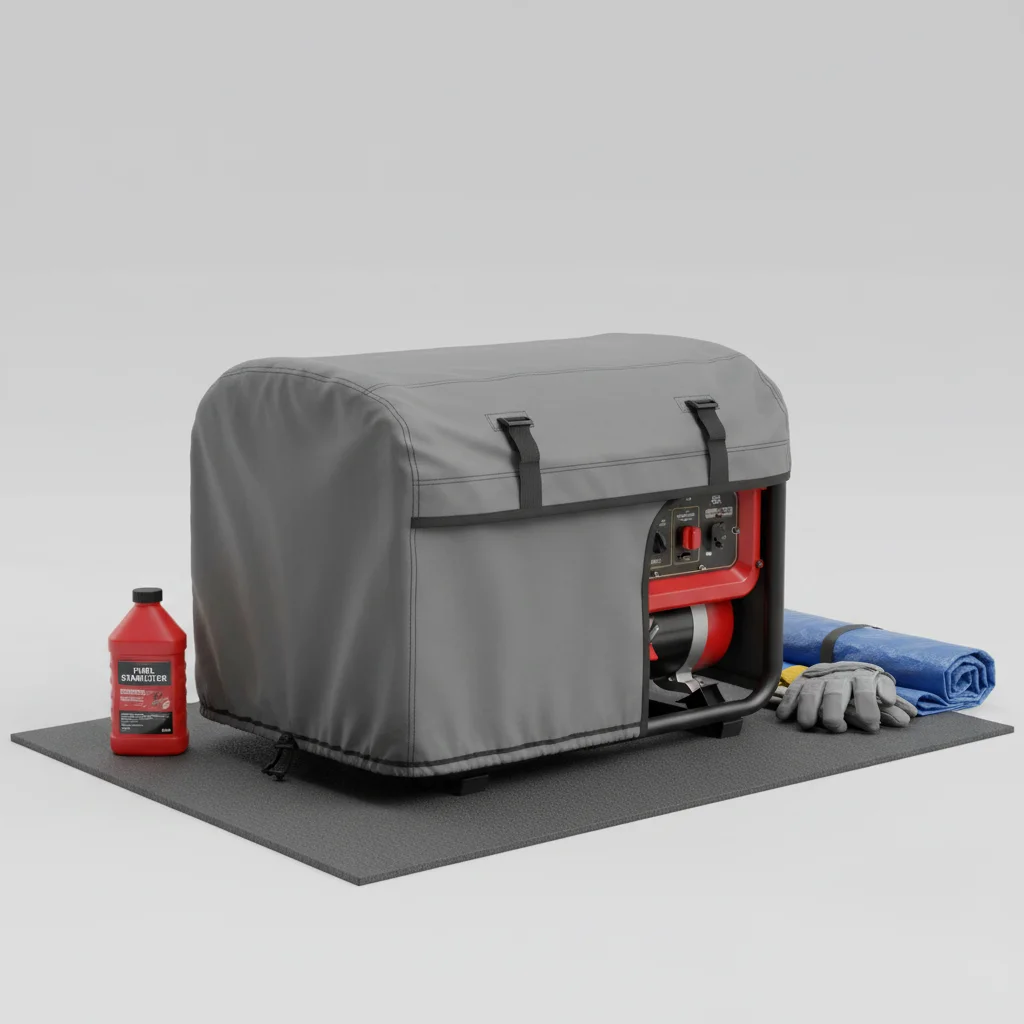
Proper portable generator storage is crucial for maintaining its longevity and ensuring it’s ready when you need it. For long-term storage, which is typically defined as anything over 30 days, there are five essential steps to follow to prevent common issues like fuel degradation, battery discharge, and engine corrosion.
Prepare the Fuel System for Storage
One of the most critical steps in long-term portable generator storage is managing the fuel. Gasoline can degrade over time, forming gummy deposits that clog the carburetor and fuel lines. You have two primary options: either completely drain the fuel tank and carburetor or stabilize the fuel. To drain, run the generator until it runs out of fuel, then open the carburetor drain screw. If stabilizing, add a fuel stabilizer according to the product’s instructions and run the generator for a few minutes to circulate the treated fuel throughout the system. This prevents stale fuel issues and ensures easier starting later.
Change the Oil and Spark Plug
Before storing your portable generator, it’s highly recommended to perform an oil change. Used oil can contain contaminants and acids that can corrode internal engine components over time. Replace the old oil with fresh, manufacturer-recommended oil. While you’re at it, inspect the spark plug. If it’s fouled or worn, replace it with a new one. A fresh spark plug ensures reliable ignition when you retrieve the generator from storage. This simple maintenance step can save you significant troubleshooting later.
Protect Internal Engine Components
|
Our Picks for the Best Portable Generator in 2026
As an Amazon Associate I earn from qualifying purchases.
|
||
| Num | Product | Action |
|---|---|---|
| 1 | maXpeedingrods 2400 Watt Portable Inverter Generator Gas Powered, Bluetooth® App Remote Data Monitor,Only 33lbs, Compact and Lightweight for Outdoor Camping, Home Use |

|
| 2 | Westinghouse 155Wh 150 Peak Watt Portable Power Station & Solar Generator, Modified Sine Wave AC Outlet, Backup Lithium Battery for Camping, Home, Travel, Indoor/Outdoor Use (Solar Panel Not Included) |
|
| 3 | Honda 664240 EU2200i 2200 Watt Portable Inverter Generator with Co-Minder |
|
| 4 | Generac 2,500-Watt Gas Powered Portable Inverter Generator - Lightweight and Compact Design - Produces Clean, Stable Power - Quiet Operation - Great for Home Backup, Camping, and RV Use |
|
| 5 | 5000 Watts Portable Dual Fuel Inverter Generator– Small Gasoline LPG Powered for Home Backup, Camping, RV, Tailgating with CO Protection, Eco Mode, Recoil/Electric/Remote Start, Parallel Capable |
|
| 6 | GENMAX Portable Inverter Generator, 6000W open frame Gas Powered High Speed Engine with Electric Start, Ultra Lightweight for Backup Home Use & Job Site,EPA Compliant (GM6000XiE) |
|
| 7 | Anker SOLIX C1000 Portable Power Station, 1800W (Peak 2400W) Solar Generator, Full Charge in 58 Min, 1056wh LiFePO4 Battery for Home Backup, Power Outages, and Outdoor Camping (Optional Solar Panel) |
|
| 8 | Anker SOLIX C1000 Gen 2 Portable Power Station, 2,000W (Peak 3,000W) Solar Generator, Full Charge in 49 Min, 1,024Wh LiFePO4 Battery for Home Backup, Power Outages, and Camping (Optional Solar Panel) |
|
| 9 | Champion Power Equipment 2500-Watt Dual Fuel Portable Inverter Generator with Quiet Technology and CO Shield |
|
| 10 | BLUETTI Portable Power Station AC180, 1152Wh LiFePO4 Battery Backup w/ 2 1800W (2700W peak) AC Outlets, 0-80% in 45Min, Solar Generator for Camping, Off-grid, Power Outage |
|
To prevent rust and corrosion inside the engine cylinders, remove the spark plug and pour about a teaspoon of engine oil into the cylinder. Slowly pull the recoil starter cord a few times to distribute the oil, then reinstall the spark plug. This creates a protective coating on the cylinder walls and piston rings, which is especially important in humid environments. This step is often overlooked but is vital for preserving the engine’s health during extended periods of inactivity.
Battery Maintenance for Electric Start Models
If your portable generator has an electric start, the battery needs attention during storage. Disconnect the battery terminals to prevent parasitic drain. For optimal battery health, connect it to a trickle charger or a battery maintainer. This will keep the battery fully charged and prevent sulfation, which can permanently damage the battery. If you don’t have a trickle charger, periodically charge the battery every few months.
Choose the Right Storage Location and Cover
The environment where you store your portable generator significantly impacts its condition. Choose a cool, dry, and well-ventilated area, away from direct sunlight and extreme temperature fluctuations. Garages, sheds, or basements are often suitable. Avoid damp or dusty locations. Cover the generator with a breathable, waterproof cover to protect it from dust, dirt, and moisture. Ensure the cover allows for some air circulation to prevent condensation buildup. Proper covering also deters pests from nesting in the generator’s components. Consider these covers for optimal protection:
- Heavy-duty waterproof generator cover
- UV-resistant outdoor generator cover
- Breathable fabric generator cover
- Custom-fit generator enclosure
- All-weather generator tarp
By following these five steps, you can ensure your portable generator remains in excellent condition, ready to provide power whenever an outage or outdoor adventure calls. Regular maintenance before storage is an investment in your generator’s lifespan and reliability.
