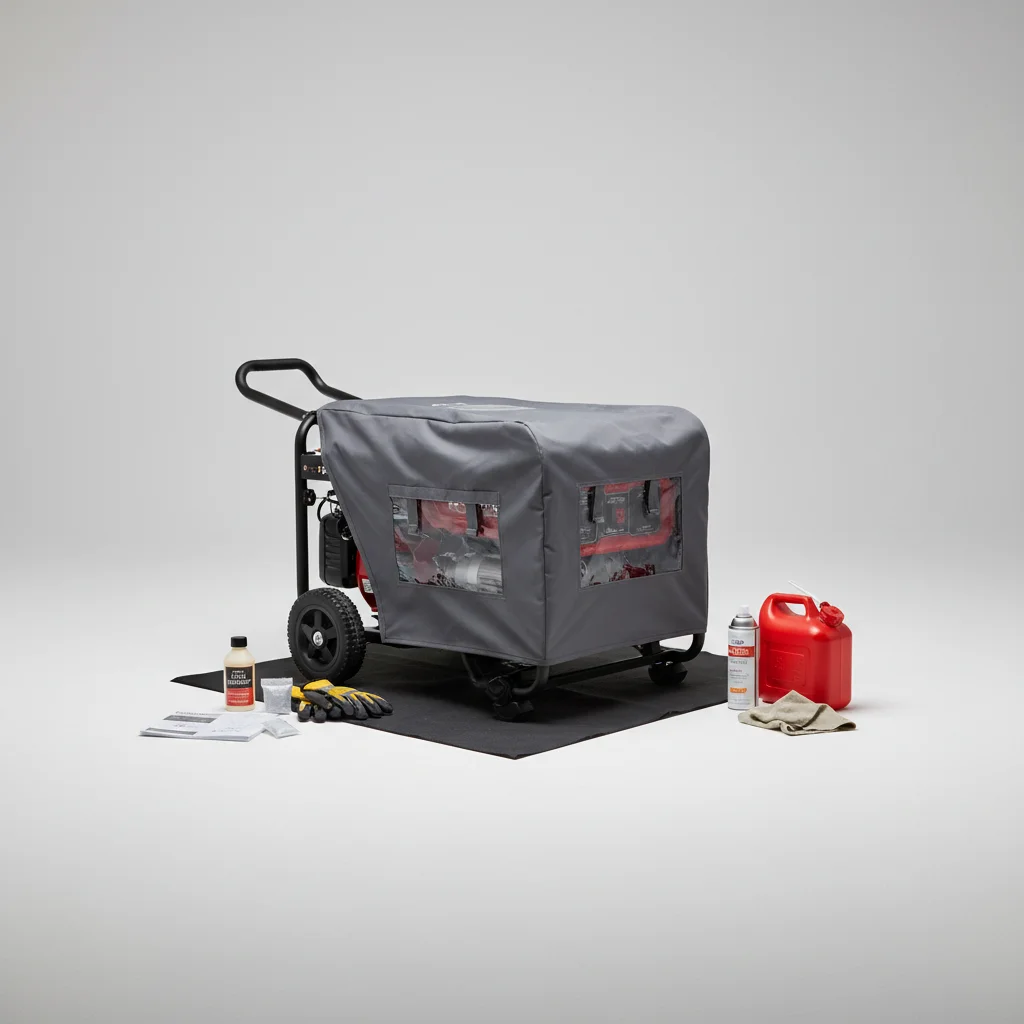
Proper portable generator storage is crucial for extending its lifespan and ensuring it’s ready when you need it. For optimal long-term preservation, you should aim to store your generator in a dry, climate-controlled environment, ideally with a full fuel tank treated with stabilizer or completely drained, and with the spark plug removed and a small amount of oil added to the cylinder.
Preparing Your Generator for Storage
Before putting your portable generator into long-term storage, several steps are essential to prevent common issues like fuel degradation and engine corrosion. Start by thoroughly cleaning the exterior of the generator, removing any dirt, debris, or oil residue. This not only keeps it looking good but also prevents corrosive elements from damaging components over time. Inspect all parts for wear and tear, making note of anything that might need replacement before its next use.
One of the most critical steps involves managing the fuel system. For gasoline generators, you have two main options: either completely drain the fuel tank and carburetor or fill the tank and add a high-quality fuel stabilizer. Draining prevents stale fuel from gumming up the carburetor, while stabilization keeps the fuel fresh for up to 12 months. Consult your generator’s manual for specific recommendations regarding fuel management.
Engine Preservation Techniques
To protect the internal components of your generator’s engine during storage, a few key actions are necessary. First, change the engine oil and filter. Fresh oil provides better lubrication and protection against rust and corrosion. Next, remove the spark plug and pour about a teaspoon of clean engine oil into the cylinder. Slowly pull the recoil starter a few times to distribute the oil, then reinstall the spark plug. This ‘fogging’ process prevents rust from forming on the cylinder walls and piston rings.
- Clean the exterior thoroughly.
- Manage fuel: drain or stabilize.
- Change engine oil and filter.
- Fog the cylinder with oil.
- Remove the battery if applicable.
Choosing the Right Storage Location
|
Our Picks for the Best Portable Generator in 2026
As an Amazon Associate I earn from qualifying purchases.
|
||
| Num | Product | Action |
|---|---|---|
| 1 | Champion Power Equipment 2500-Watt Dual Fuel Portable Inverter Generator with Quiet Technology and CO Shield |

|
| 2 | 5000 Watts Portable Dual Fuel Inverter Generator– Small Gasoline LPG Powered for Home Backup, Camping, RV, Tailgating with CO Protection, Eco Mode, Recoil/Electric/Remote Start, Parallel Capable |
|
| 3 | Anker SOLIX C1000 Portable Power Station, 1800W (Peak 2400W) Solar Generator, Full Charge in 58 Min, 1056wh LiFePO4 Battery for Home Backup, Power Outages, and Outdoor Camping (Optional Solar Panel) |
|
| 4 | Generac 2,500-Watt Gas Powered Portable Inverter Generator - Lightweight and Compact Design - Produces Clean, Stable Power - Quiet Operation - Great for Home Backup, Camping, and RV Use |
|
| 5 | maXpeedingrods 2400 Watt Portable Inverter Generator Gas Powered, Bluetooth® App Remote Data Monitor,Only 33lbs, Compact and Lightweight for Outdoor Camping, Home Use |
|
| 6 | Westinghouse 155Wh 150 Peak Watt Portable Power Station & Solar Generator, Modified Sine Wave AC Outlet, Backup Lithium Battery for Camping, Home, Travel, Indoor/Outdoor Use (Solar Panel Not Included) |
|
| 7 | Honda 664240 EU2200i 2200 Watt Portable Inverter Generator with Co-Minder |
|
| 8 | Anker SOLIX C1000 Gen 2 Portable Power Station, 2,000W (Peak 3,000W) Solar Generator, Full Charge in 49 Min, 1,024Wh LiFePO4 Battery for Home Backup, Power Outages, and Camping (Optional Solar Panel) |
|
| 9 | GENMAX Portable Inverter Generator, 6000W open frame Gas Powered High Speed Engine with Electric Start, Ultra Lightweight for Backup Home Use & Job Site,EPA Compliant (GM6000XiE) |
|
| 10 | BLUETTI Portable Power Station AC180, 1152Wh LiFePO4 Battery Backup w/ 2 1800W (2700W peak) AC Outlets, 0-80% in 45Min, Solar Generator for Camping, Off-grid, Power Outage |
|
The environment where you store your portable generator significantly impacts its condition. An ideal location is dry, well-ventilated, and has a stable temperature, avoiding extreme heat or cold. Garages, sheds, or basements can work, provided they meet these criteria. Avoid storing generators in areas with high humidity, as this can lead to rust and corrosion on metal parts and electrical components. Always ensure the storage area is away from living spaces, especially if there’s any residual fuel or fumes.
If your generator has a battery, it’s often best to remove it and store it separately in a cool, dry place. Consider using a trickle charger to maintain its charge, especially for lead-acid batteries, to prevent sulfation and extend its life. Covering the generator with a breathable, waterproof cover can also protect it from dust and moisture while allowing air circulation.
Post-Storage Preparation
When it’s time to retrieve your portable generator from storage, a few checks will ensure it starts and runs smoothly. If you drained the fuel, refill it with fresh, clean gasoline. If you used a fuel stabilizer, simply check the fuel level. Inspect the oil level and top it off if necessary. Check the air filter for any signs of damage or blockage and clean or replace it as needed. Finally, reconnect the battery if it was removed and ensure all connections are secure.
Following these steps for proper portable generator storage will help ensure your unit remains reliable and ready for use, whether for emergencies or recreational activities.Investing a little time in preparation can save you significant hassle and expense down the road.
