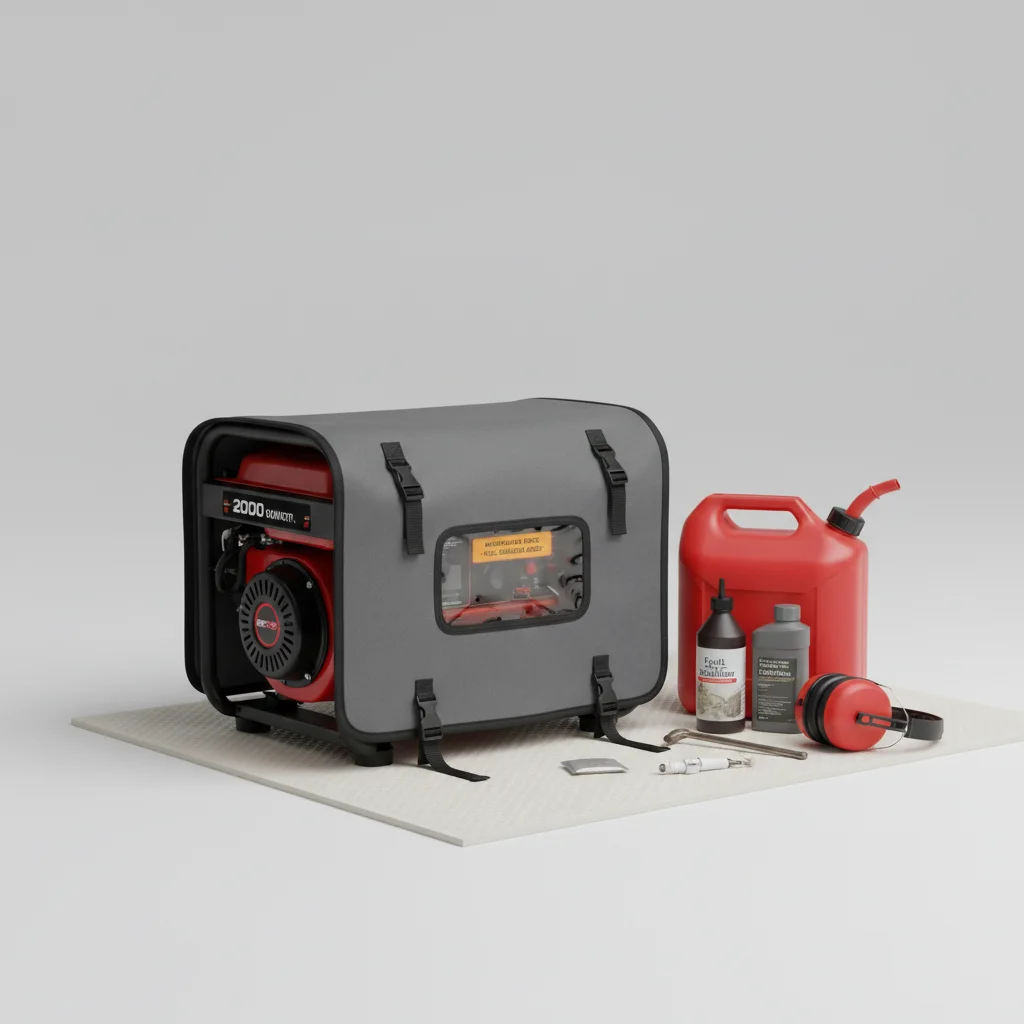
Proper portable generator storage is crucial for maintaining its functionality and extending its lifespan. When storing your generator for an extended period, there are five essential tips you should follow to prevent common issues like fuel degradation, battery discharge, and engine corrosion.
1. Fuel Stabilization and Draining
One of the most critical steps in portable generator storage is managing the fuel. Gasoline can degrade over time, leading to gum and varnish deposits that clog the carburetor and fuel lines. To prevent this, add a fuel stabilizer to the tank and run the generator for about 10-15 minutes to circulate it through the system. For even longer storage (over a few months), it’s best to completely drain the fuel tank and carburetor. Consult your generator’s manual for specific draining procedures, as some models have a drain screw on the carburetor bowl.
2. Oil Change and Spark Plug Inspection
Before storing your generator, perform an oil change. Old oil can contain contaminants that can cause internal engine damage over time. Replace it with fresh, manufacturer-recommended oil. While you’re at it, remove the spark plug and inspect it for wear or carbon buildup. If it looks dirty, clean it with a wire brush; if it’s heavily worn, replace it. Add a small amount (about a teaspoon) of fresh oil into the spark plug hole, then slowly pull the recoil cord a few times to distribute the oil, which helps lubricate the cylinder walls and prevent rust. Reinstall the spark plug.
3. Battery Maintenance for Electric Start Models
|
Our Picks for the Best Portable Generator in 2026
As an Amazon Associate I earn from qualifying purchases.
|
||
| Num | Product | Action |
|---|---|---|
| 1 | GENMAX Portable Inverter Generator, 6000W open frame Gas Powered High Speed Engine with Electric Start, Ultra Lightweight for Backup Home Use & Job Site,EPA Compliant (GM6000XiE) |

|
| 2 | Champion Power Equipment 2500-Watt Dual Fuel Portable Inverter Generator with Quiet Technology and CO Shield |
|
| 3 | Honda 664240 EU2200i 2200 Watt Portable Inverter Generator with Co-Minder |
|
| 4 | BLUETTI Portable Power Station AC180, 1152Wh LiFePO4 Battery Backup w/ 2 1800W (2700W peak) AC Outlets, 0-80% in 45Min, Solar Generator for Camping, Off-grid, Power Outage |
|
| 5 | Anker SOLIX C1000 Portable Power Station, 1800W (Peak 2400W) Solar Generator, Full Charge in 58 Min, 1056wh LiFePO4 Battery for Home Backup, Power Outages, and Outdoor Camping (Optional Solar Panel) |
|
| 6 | Westinghouse 155Wh 150 Peak Watt Portable Power Station & Solar Generator, Modified Sine Wave AC Outlet, Backup Lithium Battery for Camping, Home, Travel, Indoor/Outdoor Use (Solar Panel Not Included) |
|
| 7 | Anker SOLIX C1000 Gen 2 Portable Power Station, 2,000W (Peak 3,000W) Solar Generator, Full Charge in 49 Min, 1,024Wh LiFePO4 Battery for Home Backup, Power Outages, and Camping (Optional Solar Panel) |
|
| 8 | Generac 2,500-Watt Gas Powered Portable Inverter Generator - Lightweight and Compact Design - Produces Clean, Stable Power - Quiet Operation - Great for Home Backup, Camping, and RV Use |
|
| 9 | maXpeedingrods 2400 Watt Portable Inverter Generator Gas Powered, Bluetooth® App Remote Data Monitor,Only 33lbs, Compact and Lightweight for Outdoor Camping, Home Use |
|
| 10 | 5000 Watts Portable Dual Fuel Inverter Generator– Small Gasoline LPG Powered for Home Backup, Camping, RV, Tailgating with CO Protection, Eco Mode, Recoil/Electric/Remote Start, Parallel Capable |
|
If your portable generator has an electric start, proper battery maintenance is vital. Disconnect the battery terminals to prevent parasitic drains. For lead-acid batteries, it’s highly recommended to connect it to a trickle charger or battery maintainer. This device will keep the battery at an optimal charge level without overcharging, ensuring it’s ready to go when you need it. Check the battery’s water levels (if applicable) and top off with distilled water if necessary before connecting to the maintainer.
4. Cleaning and Covering Your Generator
Before putting your generator away, give it a thorough cleaning. Remove any dirt, dust, or debris from the exterior, cooling fins, and air filter. A clean generator is less likely to attract pests and allows for better air circulation, preventing rust and corrosion. Once clean and dry, cover the generator with a breathable, weather-resistant cover. This protects it from dust, moisture, and accidental bumps. Avoid using non-breathable covers, as they can trap moisture and promote rust.
5. Choosing the Right Storage Location
The environment where you store your portable generator significantly impacts its longevity. Always store it in a dry, well-ventilated area, away from direct sunlight and extreme temperature fluctuations. A garage, shed, or basement can be suitable, provided it’s not excessively humid. Never store a generator in a living space due to potential fuel fumes. Ensure the storage area is free from flammable materials. Elevating the generator off the ground, perhaps on a pallet, can also help protect it from ground moisture.
- Always consult your generator’s owner’s manual for specific storage instructions.
- Label your generator with the date of storage and any maintenance performed.
- Periodically check on your stored generator, especially the battery and fuel system.
- Ensure all vents and openings are clear of obstructions before and during storage.
- Consider using desiccant packs in the storage area if humidity is a concern.
