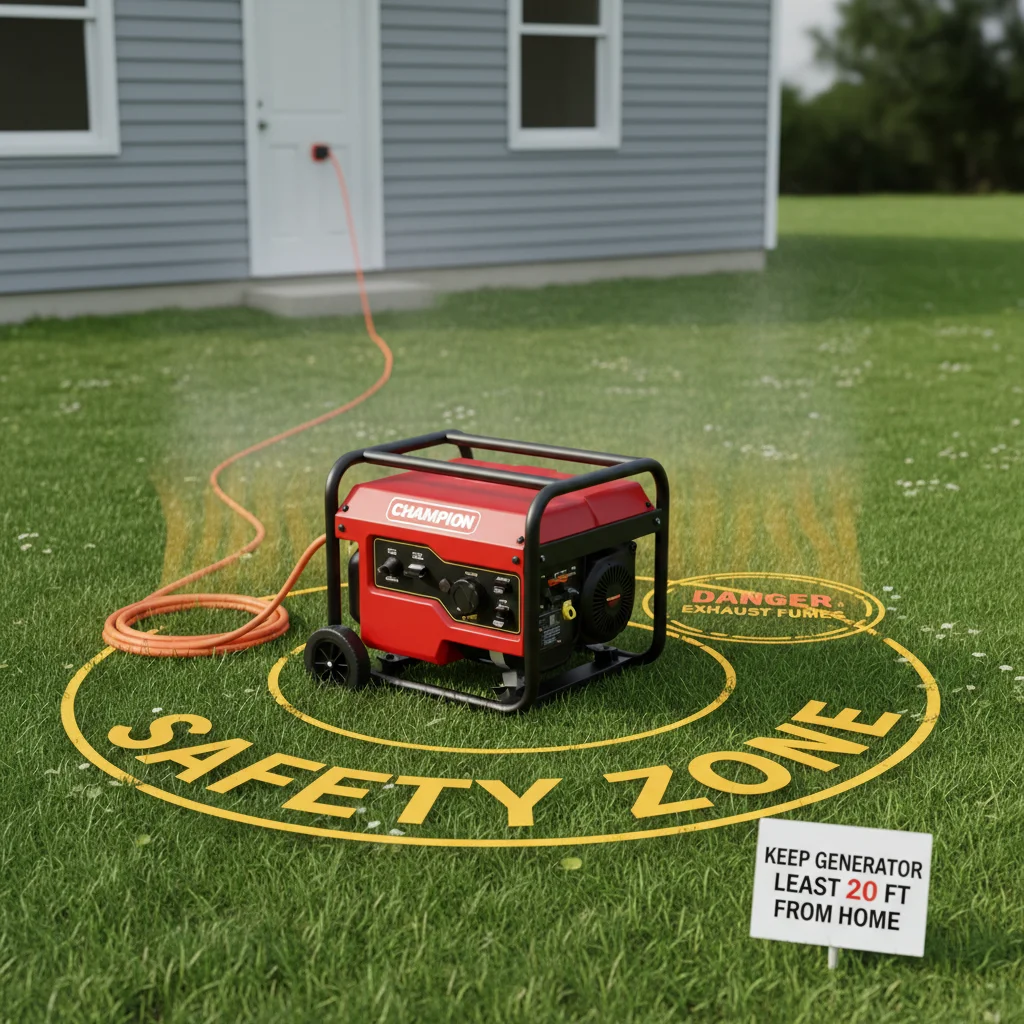
For optimal portable generator safety, your unit should be placed at least 20 feet (approximately 6 meters) away from your home or any other occupied structure. This critical distance helps prevent carbon monoxide poisoning, a silent and deadly threat, and reduces fire hazards associated with generator operation.
Understanding Carbon Monoxide Risks
Carbon monoxide (CO) is an odorless, colorless gas produced by burning fuels like gasoline, propane, and natural gas. When a portable generator operates, it emits CO, which can quickly accumulate in enclosed or partially enclosed spaces. Even seemingly open areas like carports or garages can trap dangerous levels of CO. Symptoms of CO poisoning include headaches, dizziness, nausea, and confusion, and prolonged exposure can be fatal. Placing your generator far from your home ensures that exhaust fumes dissipate safely into the open air, minimizing the risk of CO entering your living spaces through windows, doors, or vents.
Fire Hazard Prevention
Portable generators operate at high temperatures and contain flammable fuels. Sparks, fuel spills, or contact with combustible materials can easily ignite a fire. Maintaining a 20-foot clearance from your home, fences, and other structures provides a buffer zone, reducing the chance of a fire spreading to your property. Always ensure the generator is placed on a stable, level surface, away from dry leaves, grass, or other flammable debris. Regularly inspect fuel lines and connections for leaks and never refuel a hot or running generator.
Proper Ventilation and Placement
|
Our Picks for the Best Portable Generator in 2026
As an Amazon Associate I earn from qualifying purchases.
|
||
| Num | Product | Action |
|---|---|---|
| 1 | Anker SOLIX C1000 Portable Power Station, 1800W (Peak 2400W) Solar Generator, Full Charge in 58 Min, 1056wh LiFePO4 Battery for Home Backup, Power Outages, and Outdoor Camping (Optional Solar Panel) |

|
| 2 | 5000 Watts Portable Dual Fuel Inverter Generator– Small Gasoline LPG Powered for Home Backup, Camping, RV, Tailgating with CO Protection, Eco Mode, Recoil/Electric/Remote Start, Parallel Capable |
|
| 3 | Honda 664240 EU2200i 2200 Watt Portable Inverter Generator with Co-Minder |
|
| 4 | Anker SOLIX C1000 Gen 2 Portable Power Station, 2,000W (Peak 3,000W) Solar Generator, Full Charge in 49 Min, 1,024Wh LiFePO4 Battery for Home Backup, Power Outages, and Camping (Optional Solar Panel) |
|
| 5 | Generac 2,500-Watt Gas Powered Portable Inverter Generator - Lightweight and Compact Design - Produces Clean, Stable Power - Quiet Operation - Great for Home Backup, Camping, and RV Use |
|
| 6 | BLUETTI Portable Power Station AC180, 1152Wh LiFePO4 Battery Backup w/ 2 1800W (2700W peak) AC Outlets, 0-80% in 45Min, Solar Generator for Camping, Off-grid, Power Outage |
|
| 7 | Champion Power Equipment 2500-Watt Dual Fuel Portable Inverter Generator with Quiet Technology and CO Shield |
|
| 8 | maXpeedingrods 2400 Watt Portable Inverter Generator Gas Powered, Bluetooth® App Remote Data Monitor,Only 33lbs, Compact and Lightweight for Outdoor Camping, Home Use |
|
| 9 | GENMAX Portable Inverter Generator, 6000W open frame Gas Powered High Speed Engine with Electric Start, Ultra Lightweight for Backup Home Use & Job Site,EPA Compliant (GM6000XiE) |
|
| 10 | Westinghouse 155Wh 150 Peak Watt Portable Power Station & Solar Generator, Modified Sine Wave AC Outlet, Backup Lithium Battery for Camping, Home, Travel, Indoor/Outdoor Use (Solar Panel Not Included) |
|
Beyond the 20-foot rule, consider the direction of the exhaust. Always position the generator so its exhaust is directed away from your home and any neighboring properties. Wind direction can play a role, so observe prevailing winds to ensure fumes are carried away effectively. Never operate a generator in a basement, crawl space, or any area where ventilation is restricted. The goal is maximum airflow around the unit to disperse exhaust gases quickly and safely.
- Ensure the generator is on a dry, level surface.
- Keep the area around the generator clear of all combustible materials.
- Install carbon monoxide detectors inside your home, especially near sleeping areas.
- Never operate a generator in rain or wet conditions without proper, open-air shelter.
- Always follow the manufacturer’s specific safety guidelines and recommendations.
Refueling and Maintenance Considerations
Safe operation extends to refueling and maintenance. Always turn off the generator and allow it to cool completely before adding fuel. Spilled fuel on a hot engine can ignite instantly. Store fuel in approved containers in a well-ventilated area, away from ignition sources and out of reach of children. Regular maintenance, such as checking oil levels and air filters, ensures the generator runs efficiently and safely, reducing the likelihood of malfunctions that could lead to hazards. For reliable fuel storage solutions, consider options like.
Securing Your Generator
While safety is paramount, securing your generator from theft is also important, especially when placed a distance from your home. Use heavy-duty chains and locks to secure the unit to an immovable object. Consider a generator cover to protect it from the elements while still allowing for proper ventilation. For robust security accessories, check out.
