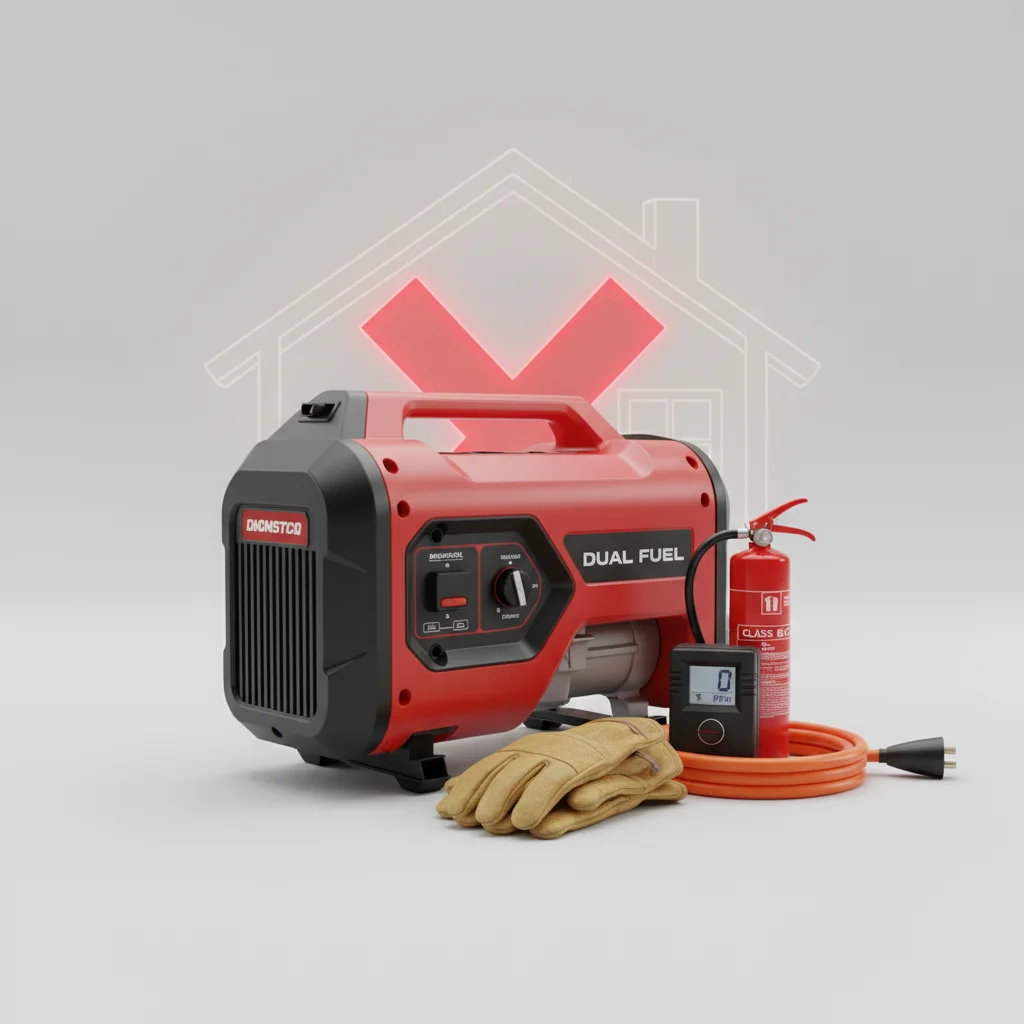
Using a portable generator indoors is extremely dangerous and can be fatal due to carbon monoxide poisoning. The only safe place to operate a portable generator is outdoors, at least 20 feet away from your home, with the exhaust directed away from windows and doors. This critical distance helps prevent the accumulation of deadly carbon monoxide gas inside your living spaces.
Understanding Carbon Monoxide Risks
Carbon monoxide (CO) is a colorless, odorless, and tasteless gas produced by burning fuels like gasoline, propane, natural gas, and charcoal. When inhaled, CO replaces oxygen in the blood, leading to symptoms such as headaches, dizziness, nausea, and ultimately, unconsciousness and death. Because it’s undetectable by human senses, CO is often called the ‘silent killer.’ Even brief exposure to high levels can be lethal, making proper generator placement paramount. For compare top portable generator on this site.
Never operate a portable generator in a garage, basement, shed, or any partially enclosed area, even with doors and windows open. These spaces do not provide adequate ventilation to disperse CO effectively. Always ensure your generator is placed in an open-air environment where exhaust fumes can dissipate freely into the atmosphere.
Proper Placement and Ventilation
As mentioned, the golden rule for portable generator operation is to keep it outdoors and at least 20 feet from any building openings. This includes windows, doors, and vents that could draw exhaust fumes inside. Orient the generator so its exhaust port points away from your home and any neighboring structures. Consider prevailing wind directions to further minimize the risk of fumes drifting back towards your property.
For extended power outages, regularly check the generator’s position to ensure it hasn’t shifted and that exhaust remains clear. If you must refuel, always turn off the generator and allow it to cool down before adding fuel to prevent fire hazards. Always have working carbon monoxide detectors installed inside your home, especially near sleeping areas, as an additional layer of protection.
Essential Safety Accessories
|
Our Picks for the Best Portable Generator in 2026
As an Amazon Associate I earn from qualifying purchases.
|
||
| Num | Product | Action |
|---|---|---|
| 1 | Honda 664240 EU2200i 2200 Watt Portable Inverter Generator with Co-Minder |

|
| 2 | Westinghouse 155Wh 150 Peak Watt Portable Power Station & Solar Generator, Modified Sine Wave AC Outlet, Backup Lithium Battery for Camping, Home, Travel, Indoor/Outdoor Use (Solar Panel Not Included) |
|
| 3 | Champion Power Equipment 2500-Watt Dual Fuel Portable Inverter Generator with Quiet Technology and CO Shield |
|
| 4 | GENMAX Portable Inverter Generator, 6000W open frame Gas Powered High Speed Engine with Electric Start, Ultra Lightweight for Backup Home Use & Job Site,EPA Compliant (GM6000XiE) |
|
| 5 | 5000 Watts Portable Dual Fuel Inverter Generator– Small Gasoline LPG Powered for Home Backup, Camping, RV, Tailgating with CO Protection, Eco Mode, Recoil/Electric/Remote Start, Parallel Capable |
|
| 6 | Anker SOLIX C1000 Gen 2 Portable Power Station, 2,000W (Peak 3,000W) Solar Generator, Full Charge in 49 Min, 1,024Wh LiFePO4 Battery for Home Backup, Power Outages, and Camping (Optional Solar Panel) |
|
| 7 | Anker SOLIX C1000 Portable Power Station, 1800W (Peak 2400W) Solar Generator, Full Charge in 58 Min, 1056wh LiFePO4 Battery for Home Backup, Power Outages, and Outdoor Camping (Optional Solar Panel) |
|
| 8 | BLUETTI Portable Power Station AC180, 1152Wh LiFePO4 Battery Backup w/ 2 1800W (2700W peak) AC Outlets, 0-80% in 45Min, Solar Generator for Camping, Off-grid, Power Outage |
|
| 9 | maXpeedingrods 2400 Watt Portable Inverter Generator Gas Powered, Bluetooth® App Remote Data Monitor,Only 33lbs, Compact and Lightweight for Outdoor Camping, Home Use |
|
| 10 | Generac 2,500-Watt Gas Powered Portable Inverter Generator - Lightweight and Compact Design - Produces Clean, Stable Power - Quiet Operation - Great for Home Backup, Camping, and RV Use |
|
To enhance your portable generator safety, several accessories are highly recommended. A high-quality carbon monoxide detector with a digital display is crucial for monitoring CO levels inside your home. Look for models that are battery-operated with a long lifespan and an audible alarm.
Another vital accessory is a heavy-duty, outdoor-rated extension cord specifically designed for generator use. These cords are thicker, more durable, and can handle higher wattages without overheating. Ensure the cord is long enough to reach your appliances while maintaining the 20-foot distance from your home. Never use indoor extension cords outdoors or with a generator, as they are not designed for such loads and can pose a fire risk.
Safe Fuel Handling and Storage
Fuel for portable generators, typically gasoline or propane, must be handled and stored with extreme care. Always store fuel in approved containers, away from living areas, heat sources, and direct sunlight. Gasoline should be stored in red containers, while kerosene is typically stored in blue, and diesel in yellow. Never store fuel inside your home or garage.
When refueling, always turn off the generator and allow it to cool completely before adding fuel. Spilled fuel on a hot engine can ignite, leading to severe burns or a fire. Use a funnel to prevent spills and wipe up any drips immediately. For propane generators, ensure the tank is securely connected and check for leaks before starting the unit.
Pre-Operation Checklist for Safety
- Read your generator’s owner’s manual thoroughly before first use.
- Inspect the generator for any damage or loose parts before each operation.
- Ensure the generator is placed on a level, dry surface outdoors, at least 20 feet from your home.
- Check oil and fuel levels before starting.
- Have working carbon monoxide detectors installed inside your home.
