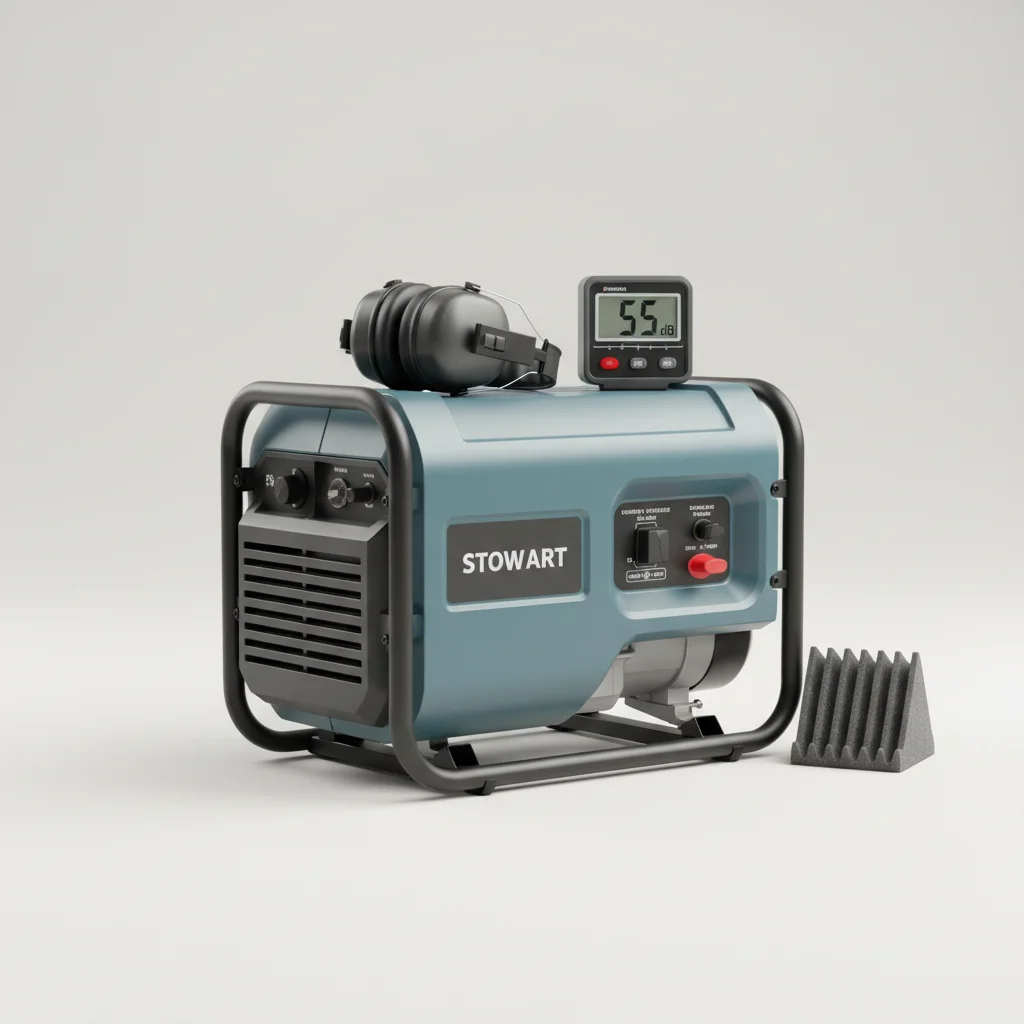
Understanding portable generator noise levels is crucial for residential use, as excessive noise can lead to complaints and even fines. Generally, a portable generator operating at 60-70 decibels (dB) at 23 feet is considered acceptable for most residential areas, with some quieter inverter models achieving as low as 50 dB. This range is comparable to a normal conversation or a running dishwasher, minimizing disturbance to neighbors and your own peace.
Understanding Decibel Ratings and Noise Perception
Decibels are a logarithmic unit, meaning a small increase in dB represents a significant increase in sound intensity. For instance, a 10 dB increase is perceived as roughly twice as loud. Most portable generators list their noise output at a specific distance, typically 7 meters (23 feet). It’s important to check this specification, as a generator rated at 75 dB at 7 feet will be much louder than one rated at 75 dB at 23 feet. Inverter generators are generally the quietest option, often operating in the 50-60 dB range, making them ideal for camping or residential backup where noise is a concern. Conventional open-frame generators, while powerful, tend to be louder, often exceeding 70 dB. For complete portable generator library on this site.
Local Noise Ordinances and Regulations
Before purchasing a portable generator, it’s vital to research your local noise ordinances. These regulations vary significantly by municipality and can dictate acceptable noise levels, operating hours, and even the type of generator allowed in residential zones. Some areas have stricter rules for nighttime operation. Ignoring these ordinances can result in fines or forced shutdown of your generator. Always prioritize models that fall well within your local limits, especially if you plan to use it frequently for home backup or recreational activities.
Strategies for Reducing Generator Noise
|
Our Picks for the Best Portable Generator in 2026
As an Amazon Associate I earn from qualifying purchases.
|
||
| Num | Product | Action |
|---|---|---|
| 1 | maXpeedingrods 2400 Watt Portable Inverter Generator Gas Powered, Bluetooth® App Remote Data Monitor,Only 33lbs, Compact and Lightweight for Outdoor Camping, Home Use |

|
| 2 | BLUETTI Portable Power Station AC180, 1152Wh LiFePO4 Battery Backup w/ 2 1800W (2700W peak) AC Outlets, 0-80% in 45Min, Solar Generator for Camping, Off-grid, Power Outage |
|
| 3 | Champion Power Equipment 2500-Watt Dual Fuel Portable Inverter Generator with Quiet Technology and CO Shield |
|
| 4 | Honda 664240 EU2200i 2200 Watt Portable Inverter Generator with Co-Minder |
|
| 5 | Anker SOLIX C1000 Gen 2 Portable Power Station, 2,000W (Peak 3,000W) Solar Generator, Full Charge in 49 Min, 1,024Wh LiFePO4 Battery for Home Backup, Power Outages, and Camping (Optional Solar Panel) |
|
| 6 | Anker SOLIX C1000 Portable Power Station, 1800W (Peak 2400W) Solar Generator, Full Charge in 58 Min, 1056wh LiFePO4 Battery for Home Backup, Power Outages, and Outdoor Camping (Optional Solar Panel) |
|
| 7 | 5000 Watts Portable Dual Fuel Inverter Generator– Small Gasoline LPG Powered for Home Backup, Camping, RV, Tailgating with CO Protection, Eco Mode, Recoil/Electric/Remote Start, Parallel Capable |
|
| 8 | Westinghouse 155Wh 150 Peak Watt Portable Power Station & Solar Generator, Modified Sine Wave AC Outlet, Backup Lithium Battery for Camping, Home, Travel, Indoor/Outdoor Use (Solar Panel Not Included) |
|
| 9 | GENMAX Portable Inverter Generator, 6000W open frame Gas Powered High Speed Engine with Electric Start, Ultra Lightweight for Backup Home Use & Job Site,EPA Compliant (GM6000XiE) |
|
| 10 | Generac 2,500-Watt Gas Powered Portable Inverter Generator - Lightweight and Compact Design - Produces Clean, Stable Power - Quiet Operation - Great for Home Backup, Camping, and RV Use |
|
Even with a relatively quiet generator, there are several strategies you can employ to further reduce its noise output. Proper placement is key; positioning the generator as far as possible from your home and neighbors, and directing the exhaust away from living areas, can make a noticeable difference. Using sound-dampening enclosures or baffles can also be effective, though care must be taken to ensure adequate ventilation to prevent overheating and carbon monoxide buildup. Regular maintenance, such as keeping the muffler in good condition and ensuring all parts are secure, can also prevent unnecessary rattling and noise.
- Place the generator on a soft, absorbent surface like grass or rubber mats.
- Build or purchase a sound-dampening enclosure with proper ventilation.
- Ensure the muffler is in good condition and free of damage.
- Direct the exhaust away from living spaces and neighboring properties.
- Perform regular maintenance to prevent loose parts from vibrating.
Choosing the Right Generator for Your Noise Needs
When selecting a portable generator, consider its intended use and the importance of noise levels. For quiet operation in residential areas or campgrounds, an inverter generator is almost always the superior choice. While they may have a higher upfront cost, their lower noise output and fuel efficiency often justify the investment. For heavy-duty applications where noise is less of a concern, a conventional generator might be more suitable. Always compare the dB ratings at the same distance to make an informed decision.
Impact of Generator Noise on Health and Well-being
Beyond legal implications, prolonged exposure to high noise levels from a portable generator can have negative impacts on health and well-being. Constant noise can lead to stress, sleep disturbances, and even hearing damage over time. For neighbors, it can be a significant source of annoyance and conflict. Opting for a quieter generator not only ensures compliance with local regulations but also contributes to a more peaceful environment for everyone, making it a responsible choice for any homeowner.
