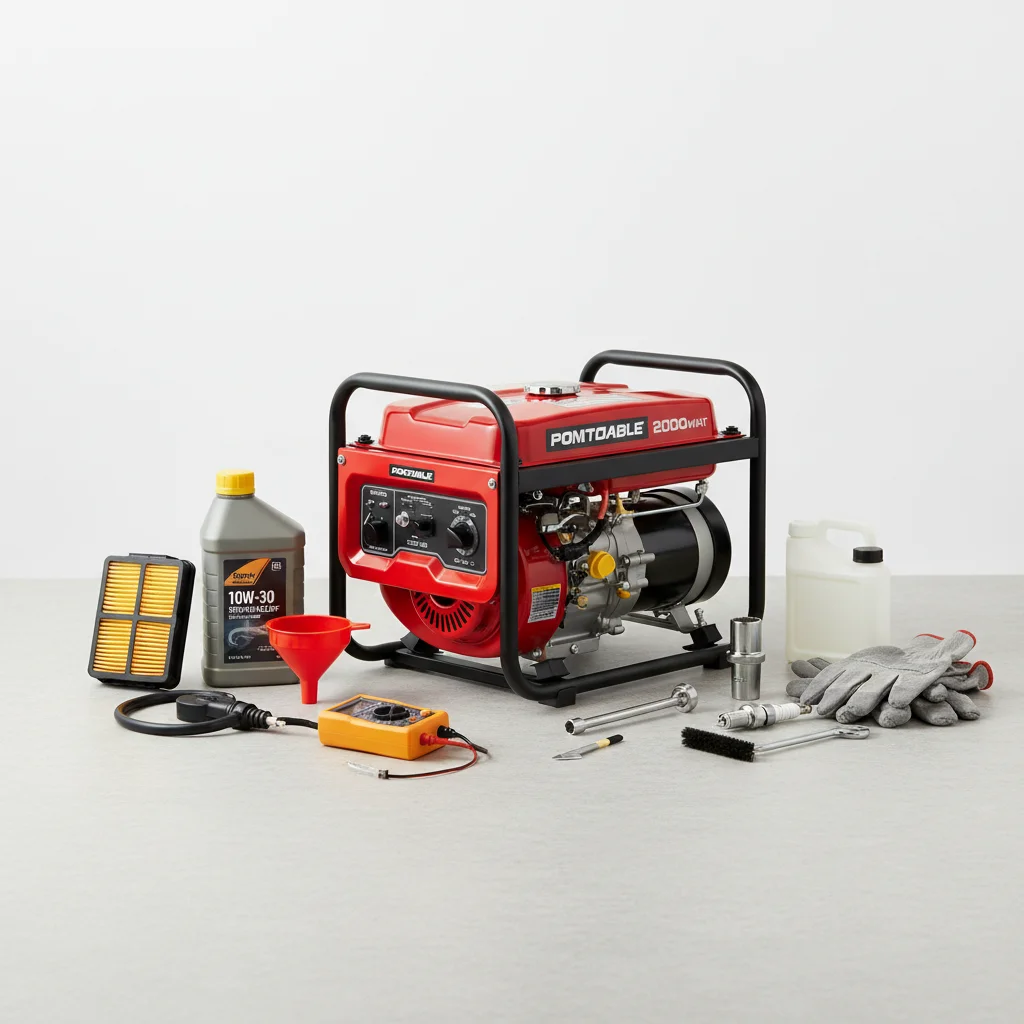
Maintaining your portable generator is crucial for ensuring its longevity and reliable performance, especially during power outages. A comprehensive maintenance checklist, performed regularly, can extend your generator’s lifespan by up to 50% and prevent costly repairs. This guide outlines the essential steps to keep your unit in top condition, covering everything from routine checks to seasonal preparations.
Why Regular Maintenance Matters for Your Portable Generator
Regular maintenance isn’t just about preventing breakdowns; it’s about optimizing efficiency and safety. Over time, components can wear down, fuel can degrade, and filters can clog, all of which impact your generator’s ability to produce power effectively. Neglecting maintenance can lead to reduced fuel efficiency, increased emissions, and even dangerous operating conditions. A well-maintained generator starts reliably and runs smoothly when you need it most.
Pre-Operation Checks: Before Every Use
Before starting your portable generator, a few quick checks can save you from potential issues. Always inspect the oil level and top it off if necessary, using the manufacturer’s recommended oil type. Check the fuel level and ensure the fuel is fresh, especially if the generator has been stored for an extended period. Examine the air filter for any dirt or debris and clean or replace it as needed. Finally, visually inspect the entire unit for loose connections, damaged cords, or any signs of leaks.
Seasonal Maintenance: Preparing for Storage and Use
Seasonal maintenance is vital for generators that are used intermittently. If you’re storing your generator for more than 30 days, it’s critical to stabilize the fuel or run the carburetor dry to prevent gumming. Change the oil and spark plug at least once a year, or every 50-100 hours of operation, whichever comes first. Clean the exterior of the generator, paying attention to cooling fins and air intakes, to ensure proper ventilation. For winter storage, ensure the battery (if applicable) is fully charged and disconnected.
- Check and maintain proper oil levels before each use.
- Inspect and clean or replace the air filter regularly.
- Stabilize fuel or run carburetor dry for long-term storage.
- Replace spark plug annually for optimal ignition.
- Clean cooling fins and air intakes to prevent overheating.
Troubleshooting Common Issues During Maintenance
|
Our Picks for the Best Portable Generator in 2026
As an Amazon Associate I earn from qualifying purchases.
|
||
| Num | Product | Action |
|---|---|---|
| 1 | Champion Power Equipment 2500-Watt Dual Fuel Portable Inverter Generator with Quiet Technology and CO Shield |

|
| 2 | Honda 664240 EU2200i 2200 Watt Portable Inverter Generator with Co-Minder |
|
| 3 | Anker SOLIX C1000 Portable Power Station, 1800W (Peak 2400W) Solar Generator, Full Charge in 58 Min, 1056wh LiFePO4 Battery for Home Backup, Power Outages, and Outdoor Camping (Optional Solar Panel) |
|
| 4 | Generac 2,500-Watt Gas Powered Portable Inverter Generator - Lightweight and Compact Design - Produces Clean, Stable Power - Quiet Operation - Great for Home Backup, Camping, and RV Use |
|
| 5 | BLUETTI Portable Power Station AC180, 1152Wh LiFePO4 Battery Backup w/ 2 1800W (2700W peak) AC Outlets, 0-80% in 45Min, Solar Generator for Camping, Off-grid, Power Outage |
|
| 6 | Westinghouse 155Wh 150 Peak Watt Portable Power Station & Solar Generator, Modified Sine Wave AC Outlet, Backup Lithium Battery for Camping, Home, Travel, Indoor/Outdoor Use (Solar Panel Not Included) |
|
| 7 | GENMAX Portable Inverter Generator, 6000W open frame Gas Powered High Speed Engine with Electric Start, Ultra Lightweight for Backup Home Use & Job Site,EPA Compliant (GM6000XiE) |
|
| 8 | 5000 Watts Portable Dual Fuel Inverter Generator– Small Gasoline LPG Powered for Home Backup, Camping, RV, Tailgating with CO Protection, Eco Mode, Recoil/Electric/Remote Start, Parallel Capable |
|
| 9 | maXpeedingrods 2400 Watt Portable Inverter Generator Gas Powered, Bluetooth® App Remote Data Monitor,Only 33lbs, Compact and Lightweight for Outdoor Camping, Home Use |
|
| 10 | Anker SOLIX C1000 Gen 2 Portable Power Station, 2,000W (Peak 3,000W) Solar Generator, Full Charge in 49 Min, 1,024Wh LiFePO4 Battery for Home Backup, Power Outages, and Camping (Optional Solar Panel) |
|
During your maintenance routine, you might encounter common issues. If your generator won’t start, check the fuel level, spark plug, and ensure the choke is set correctly. If it’s running rough, a dirty carburetor or old fuel is often the culprit. Overheating can be caused by clogged cooling fins or low oil. Addressing these issues promptly during maintenance can prevent them from escalating into more serious problems. Always consult your owner’s manual for specific troubleshooting steps and recommended parts.
For reliable parts and accessories to keep your generator running smoothly, consider checking out. They offer a wide range of genuine replacement parts that can significantly enhance your generator’s performance and lifespan. Investing in quality components is a key aspect of effective maintenance.
Post-Operation Care: After Each Use
After each use, allow your generator to cool down completely before storing it. Turn off the fuel valve and, if possible, run the engine until it runs out of fuel to prevent stale fuel issues. Clean any dirt or debris from the exterior, especially around the engine and exhaust. Store the generator in a dry, well-ventilated area, away from direct sunlight and extreme temperatures. These simple steps after each operation contribute significantly to its overall health.
To further protect your investment and ensure you have the right tools for all your maintenance needs, explore the selection at. From oil change kits to spark plug wrenches, having the right equipment makes routine maintenance tasks much easier and more efficient, ensuring your portable generator is always ready for action.
