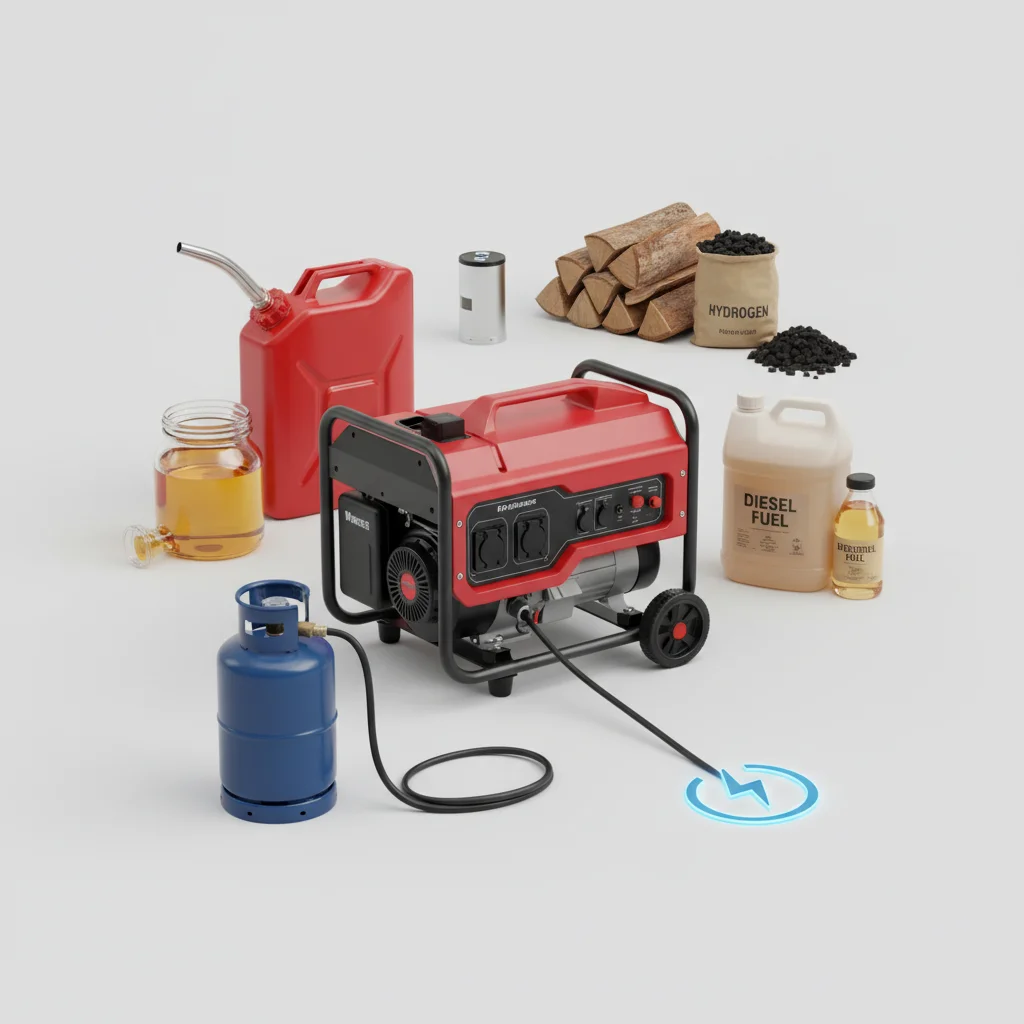
Understanding portable generator fuel types is crucial for making an informed purchase, as the right choice directly impacts convenience, cost, and performance. There are primarily four main fuel types for portable generators: gasoline, propane, natural gas, and diesel, with dual-fuel and tri-fuel options combining these for greater versatility. Each type offers distinct advantages and disadvantages regarding availability, storage, efficiency, and environmental impact, making it essential to match the fuel type to your specific power requirements and usage scenarios.
Gasoline Portable Generators: The Common Choice
Gasoline generators are the most common and widely available type, known for their portability and ease of refueling at almost any gas station. They typically offer a good balance of power output and cost-effectiveness for intermittent use, such as camping, tailgating, or short-term power outages. However, gasoline has a relatively short shelf life, usually 3-6 months without stabilizers, and its fumes can be strong. They also tend to be louder and produce more emissions compared to other fuel types.
For those prioritizing immediate availability and a lower upfront cost, a gasoline generator can be an excellent choice. Ensure you have a stable fuel supply and proper storage solutions if you plan to use it for emergency backup.
Propane Portable Generators: Clean and Long-Lasting
Propane generators are gaining popularity due to their cleaner burn, longer storage life, and reduced maintenance requirements. Propane (LPG) can be stored indefinitely without degradation, unlike gasoline, making it ideal for emergency preparedness. It also produces fewer emissions and runs quieter than gasoline models. The fuel is readily available in tanks of various sizes, from small BBQ cylinders to larger residential tanks.
One potential drawback is that propane generators can sometimes have a slightly lower power output compared to similarly sized gasoline models. Additionally, the cost per gallon of propane can fluctuate, and you need to manage tank refills. However, for extended outages or situations where clean operation is paramount, propane offers significant benefits.
Dual Fuel and Tri-Fuel Generators: The Best of Both Worlds
|
Our Picks for the Best Portable Generator in 2026
As an Amazon Associate I earn from qualifying purchases.
|
||
| Num | Product | Action |
|---|---|---|
| 1 | maXpeedingrods 2400 Watt Portable Inverter Generator Gas Powered, Bluetooth® App Remote Data Monitor,Only 33lbs, Compact and Lightweight for Outdoor Camping, Home Use |

|
| 2 | Generac 2,500-Watt Gas Powered Portable Inverter Generator - Lightweight and Compact Design - Produces Clean, Stable Power - Quiet Operation - Great for Home Backup, Camping, and RV Use |
|
| 3 | Anker SOLIX C1000 Portable Power Station, 1800W (Peak 2400W) Solar Generator, Full Charge in 58 Min, 1056wh LiFePO4 Battery for Home Backup, Power Outages, and Outdoor Camping (Optional Solar Panel) |
|
| 4 | Westinghouse 155Wh 150 Peak Watt Portable Power Station & Solar Generator, Modified Sine Wave AC Outlet, Backup Lithium Battery for Camping, Home, Travel, Indoor/Outdoor Use (Solar Panel Not Included) |
|
| 5 | BLUETTI Portable Power Station AC180, 1152Wh LiFePO4 Battery Backup w/ 2 1800W (2700W peak) AC Outlets, 0-80% in 45Min, Solar Generator for Camping, Off-grid, Power Outage |
|
| 6 | GENMAX Portable Inverter Generator, 6000W open frame Gas Powered High Speed Engine with Electric Start, Ultra Lightweight for Backup Home Use & Job Site,EPA Compliant (GM6000XiE) |
|
| 7 | Honda 664240 EU2200i 2200 Watt Portable Inverter Generator with Co-Minder |
|
| 8 | Anker SOLIX C1000 Gen 2 Portable Power Station, 2,000W (Peak 3,000W) Solar Generator, Full Charge in 49 Min, 1,024Wh LiFePO4 Battery for Home Backup, Power Outages, and Camping (Optional Solar Panel) |
|
| 9 | Champion Power Equipment 2500-Watt Dual Fuel Portable Inverter Generator with Quiet Technology and CO Shield |
|
| 10 | 5000 Watts Portable Dual Fuel Inverter Generator– Small Gasoline LPG Powered for Home Backup, Camping, RV, Tailgating with CO Protection, Eco Mode, Recoil/Electric/Remote Start, Parallel Capable |
|
Dual fuel generators offer the flexibility to run on both gasoline and propane, providing users with the best of both worlds. This allows you to switch between fuels based on availability, cost, or specific needs. For instance, you might use gasoline for everyday tasks and switch to propane for long-term storage or cleaner operation during an emergency. Tri-fuel generators take this a step further by adding natural gas as a third option, often requiring a conversion kit.
- Gasoline: Widely available, high power density.
- Propane: Long shelf life, cleaner burn, lower emissions.
- Natural Gas: Unlimited supply (if connected), no storage needed.
- Diesel: Fuel-efficient, durable, high torque.
- Battery/Electric: Quiet, zero emissions, instant power.
These multi-fuel options are particularly valuable for homeowners seeking maximum versatility and reliability for various scenarios, from recreational use to critical home backup.
Diesel and Natural Gas Generators: Specialized Power
Diesel generators are known for their durability, fuel efficiency, and high torque, making them a common choice for heavy-duty industrial applications and larger home backup systems. Diesel fuel is less flammable than gasoline, which can be a safety advantage, and diesel engines are built to last. However, diesel generators are typically heavier, louder, and more expensive upfront than gasoline or propane models. They also require more specialized maintenance.
Natural gas generators offer the unique advantage of an unlimited fuel supply if your home is connected to a natural gas line. This eliminates the need for fuel storage and refueling, providing continuous power during extended outages. They are also very clean-burning and quiet. The main limitation is the reliance on a fixed natural gas connection, which may not be available in all locations or suitable for portable use.
Making the Right Fuel Choice for Your Portable Generator
When selecting a portable generator, consider your primary use case, fuel availability in your area, storage capabilities, and budget. For occasional recreational use or short power outages, a gasoline generator might suffice. For longer-term emergency preparedness, propane or a dual-fuel model offers significant advantages with fuel stability and cleaner operation. If you need heavy-duty power or have access to a natural gas line, diesel or natural gas options provide robust and continuous solutions. Evaluate these factors carefully to ensure your portable generator reliably meets your power demands.
