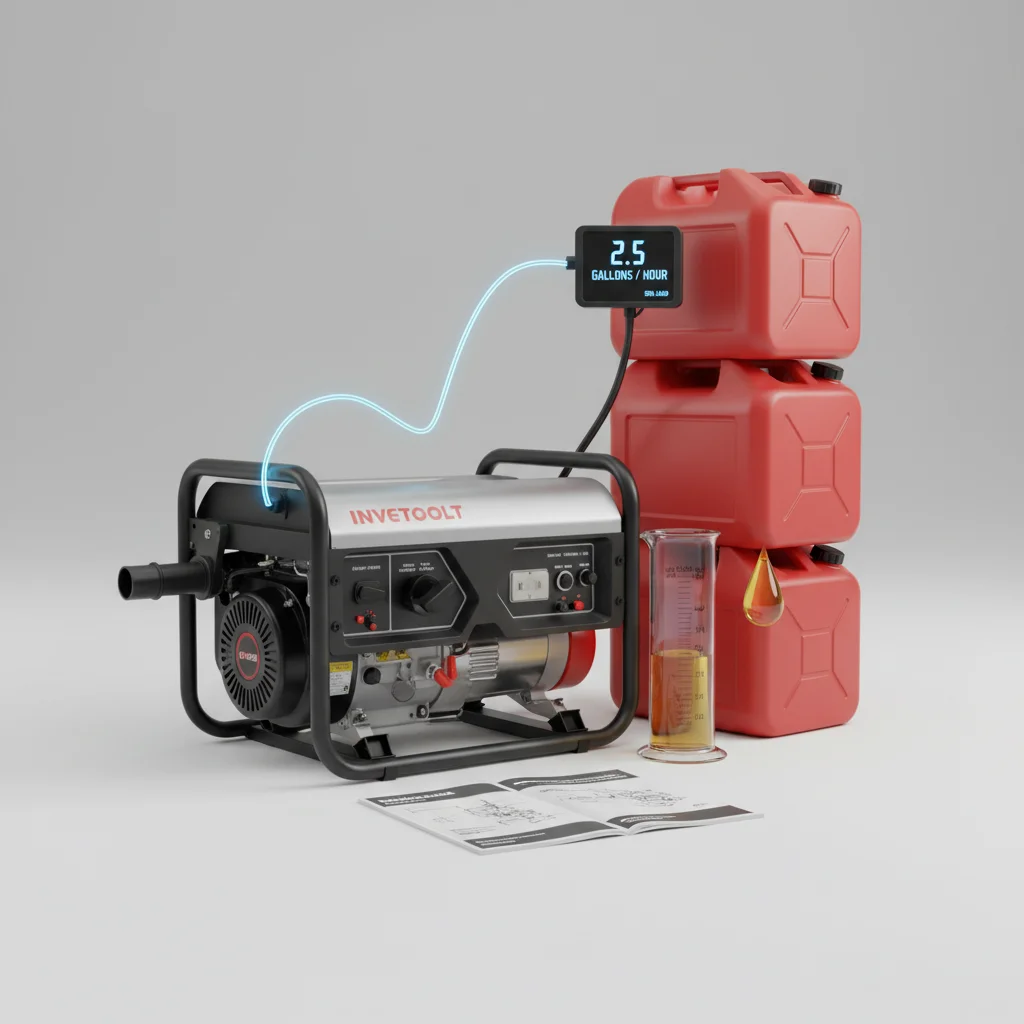
Understanding portable generator fuel consumption is crucial for efficient power management, and on average, a typical 3500-watt portable generator will consume approximately 0.5 to 1 gallon of gasoline per hour under a 50% load. This rate can vary significantly based on the generator’s wattage, engine size, and the actual load it’s supporting. Knowing these figures helps you accurately estimate fuel needs for emergencies, camping trips, or job sites, preventing unexpected power outages.
Factors Influencing Fuel Consumption
Several key factors dictate how much fuel your portable generator will use. The most significant is the generator’s wattage output; higher wattage generators generally have larger engines and thus consume more fuel. The load percentage also plays a critical role. A generator running at 75% capacity will burn fuel faster than one operating at 25% capacity. Engine efficiency, age, and maintenance status also contribute. A well-maintained engine with clean air filters and spark plugs will operate more efficiently than one that is neglected.
Environmental conditions, such as altitude and temperature, can also subtly affect fuel efficiency. Generators tend to be less efficient at higher altitudes due to thinner air, and extreme temperatures can impact engine performance. Understanding these variables allows for better planning and optimization of your generator’s operation.
Calculating Your Generator’s Fuel Needs
To accurately calculate your portable generator’s fuel needs, you’ll need to know its specific fuel consumption rate, usually provided in the owner’s manual (e.g., gallons per hour at a certain load). Multiply this rate by the estimated hours of operation. For example, if your 5000-watt generator consumes 0.75 gallons per hour at 50% load and you plan to run it for 10 hours, you’ll need 7.5 gallons of fuel. It’s always wise to add a buffer of 20-30% to your calculation for unforeseen circumstances or increased load demands.
Consider the types of appliances you’ll be powering and their starting and running wattages. This will help you determine the average load your generator will experience. For instance, a refrigerator might draw 600 watts running but require 1800 watts to start. Summing these up will give you a more realistic picture of your power requirements.
Tips for Optimizing Fuel Efficiency
|
Our Picks for the Best Portable Generator in 2026
As an Amazon Associate I earn from qualifying purchases.
|
||
| Num | Product | Action |
|---|---|---|
| 1 | BLUETTI Portable Power Station AC180, 1152Wh LiFePO4 Battery Backup w/ 2 1800W (2700W peak) AC Outlets, 0-80% in 45Min, Solar Generator for Camping, Off-grid, Power Outage |

|
| 2 | maXpeedingrods 2400 Watt Portable Inverter Generator Gas Powered, Bluetooth® App Remote Data Monitor,Only 33lbs, Compact and Lightweight for Outdoor Camping, Home Use |
|
| 3 | Generac 2,500-Watt Gas Powered Portable Inverter Generator - Lightweight and Compact Design - Produces Clean, Stable Power - Quiet Operation - Great for Home Backup, Camping, and RV Use |
|
| 4 | Westinghouse 155Wh 150 Peak Watt Portable Power Station & Solar Generator, Modified Sine Wave AC Outlet, Backup Lithium Battery for Camping, Home, Travel, Indoor/Outdoor Use (Solar Panel Not Included) |
|
| 5 | Honda 664240 EU2200i 2200 Watt Portable Inverter Generator with Co-Minder |
|
| 6 | Anker SOLIX C1000 Portable Power Station, 1800W (Peak 2400W) Solar Generator, Full Charge in 58 Min, 1056wh LiFePO4 Battery for Home Backup, Power Outages, and Outdoor Camping (Optional Solar Panel) |
|
| 7 | Champion Power Equipment 2500-Watt Dual Fuel Portable Inverter Generator with Quiet Technology and CO Shield |
|
| 8 | Anker SOLIX C1000 Gen 2 Portable Power Station, 2,000W (Peak 3,000W) Solar Generator, Full Charge in 49 Min, 1,024Wh LiFePO4 Battery for Home Backup, Power Outages, and Camping (Optional Solar Panel) |
|
| 9 | 5000 Watts Portable Dual Fuel Inverter Generator– Small Gasoline LPG Powered for Home Backup, Camping, RV, Tailgating with CO Protection, Eco Mode, Recoil/Electric/Remote Start, Parallel Capable |
|
| 10 | GENMAX Portable Inverter Generator, 6000W open frame Gas Powered High Speed Engine with Electric Start, Ultra Lightweight for Backup Home Use & Job Site,EPA Compliant (GM6000XiE) |
|
Maximizing your portable generator’s fuel efficiency can save you money and extend its run time. Here are some practical tips:
- Match Generator Size to Load: Avoid running a large generator for small loads. An oversized generator will consume more fuel than necessary.
- Regular Maintenance: Keep your generator well-maintained. Clean air filters, fresh oil, and properly gapped spark plugs ensure optimal engine performance and fuel economy.
- Avoid Overloading: Do not exceed your generator’s rated wattage. Overloading not only wastes fuel but can also damage the generator and connected appliances.
- Use Fuel Stabilizer: If storing fuel for extended periods, use a fuel stabilizer to prevent degradation, which can impact engine performance and efficiency.
- Turn Off Unnecessary Appliances: Only power essential items. Disconnect appliances when they are not in use to reduce the load on your generator.
Comparing Fuel Types and Their Efficiency
While gasoline is the most common fuel for portable generators, other options like propane and natural gas offer different efficiency profiles. Propane generators, for example, tend to have a slightly lower BTU content per gallon compared to gasoline, meaning they might consume more fuel by volume to produce the same amount of power. However, propane burns cleaner and has a longer shelf life, making it a popular choice for emergency backup.
Dual-fuel generators offer the flexibility of switching between gasoline and propane, providing a versatile solution. Natural gas generators are typically less portable but offer a continuous fuel supply if connected to a home’s gas line, eliminating the need for refueling. Each fuel type has its advantages and disadvantages regarding cost, availability, and efficiency, so choose based on your specific needs and priorities.
Safe Fuel Storage and Handling
Proper fuel storage and handling are paramount for safety and maintaining fuel quality. Always store gasoline in approved, clearly labeled containers in a cool, dry, well-ventilated area away from direct sunlight and heat sources. Never store fuel indoors or near living spaces. For propane, ensure tanks are stored upright and outdoors, away from ignition sources.
When refueling your generator, always turn it off and allow it to cool down completely to prevent fire hazards. Avoid spilling fuel, and if a spill occurs, clean it up immediately. Wearing appropriate safety gear, such as gloves and eye protection, is also recommended. Adhering to these safety guidelines will help prevent accidents and ensure your generator operates reliably.
