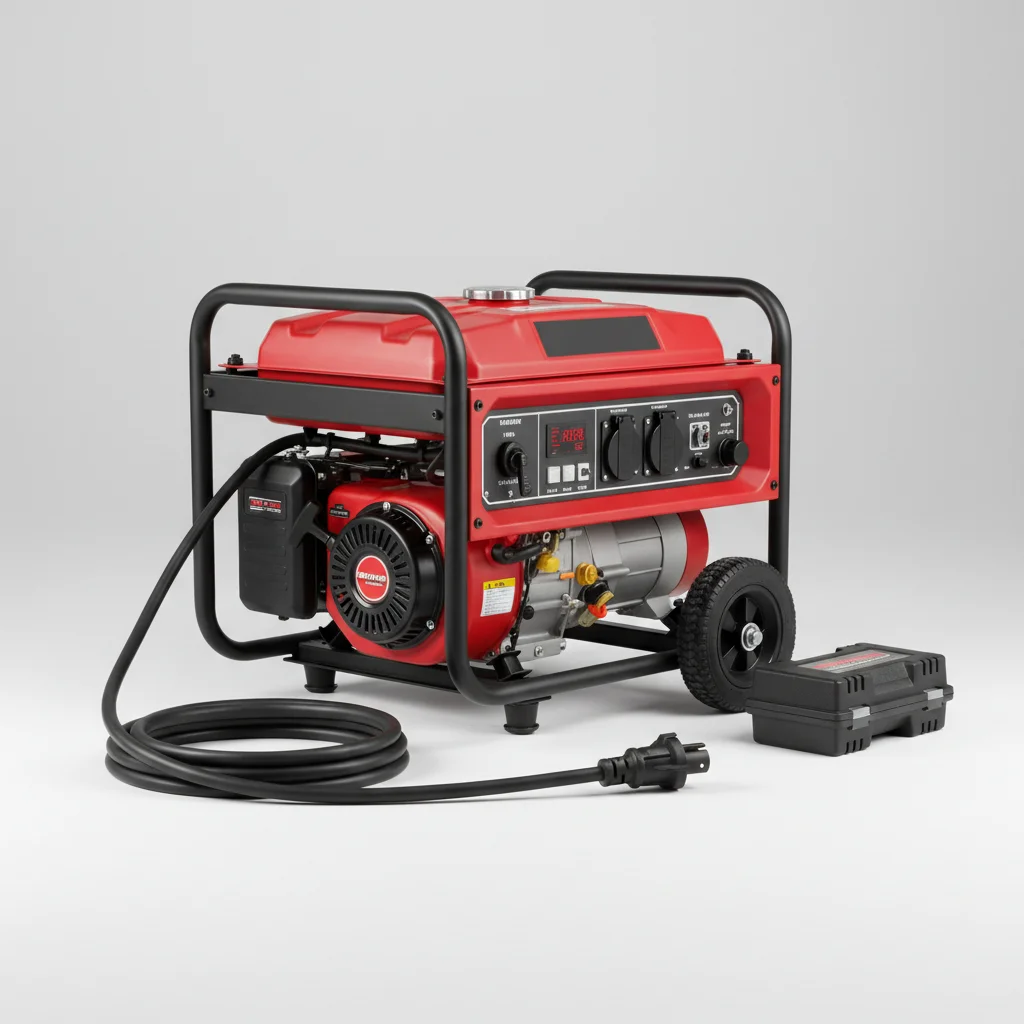
Determining the right size portable generator for your well pump is crucial for ensuring reliable water access during power outages. For most residential well pumps, you will need a portable generator with a running wattage of at least 2,000 to 4,000 watts, and a starting wattage significantly higher, often between 4,000 and 6,000 watts, to handle the initial surge.
Understanding Well Pump Power Requirements
Well pumps, especially submersible models, require a substantial amount of power to start up. This initial surge, known as starting wattage or surge wattage, can be two to three times their running wattage. Once the pump is running, it settles into a lower, more consistent running wattage. It’s essential to identify both these figures for your specific well pump. You can usually find this information on the pump’s nameplate, in its owner’s manual, or by contacting the manufacturer. Factors like the depth of your well, the horsepower (HP) of the pump motor, and whether it’s a 120V or 240V unit will all influence its power demands.
Calculating Your Generator Needs
To accurately size your portable generator, you need to consider the starting wattage of your well pump as the primary factor. If your well pump is 1 HP, it might have a running wattage of around 1,000-1,500 watts but a starting wattage of 3,000-4,500 watts. A 1.5 HP pump could require 1,500-2,000 running watts and 4,500-6,000 starting watts. Always err on the side of a slightly larger generator to prevent overloading and potential damage to both the generator and the pump. If you plan to power other essential appliances simultaneously, you must add their running and starting wattages to your total calculation.
- Identify your well pump’s running wattage.
- Determine your well pump’s starting wattage.
- Add the starting wattage of your well pump to the running wattages of any other essential appliances you need to power.
- Choose a generator with a starting wattage capacity that exceeds this total.
- Ensure the generator’s running wattage can handle the combined running watts of all connected devices.
Generator Types and Features for Well Pumps
|
Our Picks for the Best Portable Generator in 2026
As an Amazon Associate I earn from qualifying purchases.
|
||
| Num | Product | Action |
|---|---|---|
| 1 | maXpeedingrods 2400 Watt Portable Inverter Generator Gas Powered, Bluetooth® App Remote Data Monitor,Only 33lbs, Compact and Lightweight for Outdoor Camping, Home Use |

|
| 2 | Honda 664240 EU2200i 2200 Watt Portable Inverter Generator with Co-Minder |
|
| 3 | Anker SOLIX C1000 Gen 2 Portable Power Station, 2,000W (Peak 3,000W) Solar Generator, Full Charge in 49 Min, 1,024Wh LiFePO4 Battery for Home Backup, Power Outages, and Camping (Optional Solar Panel) |
|
| 4 | Anker SOLIX C1000 Portable Power Station, 1800W (Peak 2400W) Solar Generator, Full Charge in 58 Min, 1056wh LiFePO4 Battery for Home Backup, Power Outages, and Outdoor Camping (Optional Solar Panel) |
|
| 5 | Generac 2,500-Watt Gas Powered Portable Inverter Generator - Lightweight and Compact Design - Produces Clean, Stable Power - Quiet Operation - Great for Home Backup, Camping, and RV Use |
|
| 6 | Westinghouse 155Wh 150 Peak Watt Portable Power Station & Solar Generator, Modified Sine Wave AC Outlet, Backup Lithium Battery for Camping, Home, Travel, Indoor/Outdoor Use (Solar Panel Not Included) |
|
| 7 | 5000 Watts Portable Dual Fuel Inverter Generator– Small Gasoline LPG Powered for Home Backup, Camping, RV, Tailgating with CO Protection, Eco Mode, Recoil/Electric/Remote Start, Parallel Capable |
|
| 8 | BLUETTI Portable Power Station AC180, 1152Wh LiFePO4 Battery Backup w/ 2 1800W (2700W peak) AC Outlets, 0-80% in 45Min, Solar Generator for Camping, Off-grid, Power Outage |
|
| 9 | Champion Power Equipment 2500-Watt Dual Fuel Portable Inverter Generator with Quiet Technology and CO Shield |
|
| 10 | GENMAX Portable Inverter Generator, 6000W open frame Gas Powered High Speed Engine with Electric Start, Ultra Lightweight for Backup Home Use & Job Site,EPA Compliant (GM6000XiE) |
|
When selecting a portable generator for a well pump, consider models that offer a high surge capacity. Inverter generators, while often quieter and more fuel-efficient, may not always have the high starting wattage required for larger well pumps. Traditional open-frame generators often provide higher surge capabilities at a lower cost. Look for generators with a 240V outlet if your well pump operates on 240V. Dual fuel generators offer flexibility, allowing you to switch between gasoline and propane, which can be beneficial during extended outages.
Safety Considerations and Installation
Proper and safe connection of your portable generator to your well pump is paramount. Never backfeed power directly into your home’s electrical system without a transfer switch installed by a qualified electrician. For a well pump, you might connect it directly to the generator using a heavy-duty extension cord if the pump has a standard plug, or via a manual transfer switch if it’s hardwired. Ensure the generator is always operated outdoors in a well-ventilated area, far from windows and doors, to prevent carbon monoxide poisoning. Regularly check fuel levels and perform routine maintenance to ensure reliable operation when you need it most.
Testing Your Setup
Once you have your portable generator and well pump connected, it’s vital to test the setup before an actual emergency. Start the generator, then connect and start the well pump. Observe if the generator struggles or if the pump operates normally. This test will confirm if your generator is adequately sized and if all connections are secure. If the generator bogs down significantly or trips its circuit breaker, you may need a larger unit or need to reduce the number of other appliances powered simultaneously.
