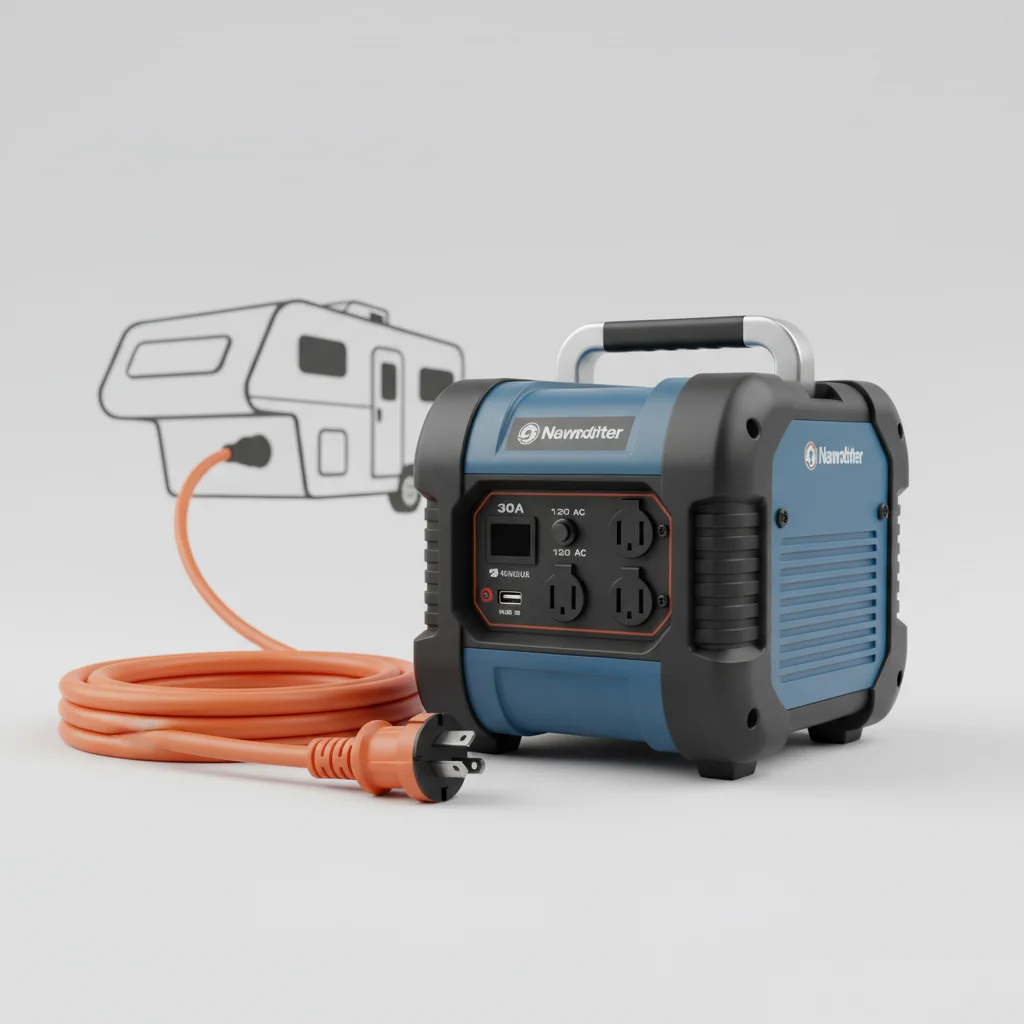
To power an RV air conditioner, you’ll typically need a portable generator with at least 2,000 running watts. The exact size depends on your specific AC unit’s BTU rating and whether it has a soft start capacitor. A 13,500 BTU RV air conditioner, for example, often requires around 2,000-2,200 running watts, while a larger 15,000 BTU unit might need 2,800-3,500 running watts to start and run efficiently.
Understanding RV AC Power Requirements
RV air conditioners have two main power ratings: starting watts (surge watts) and running watts. Starting watts are the brief, higher power draw needed to kick-start the compressor, while running watts are the continuous power required to keep it operating. It’s crucial to select a generator that can handle both, especially the starting surge, which can be 2-3 times higher than the running watts. Many modern RV AC units come with or can be retrofitted with a soft start capacitor, which significantly reduces the starting surge, allowing you to use a smaller generator.
Calculating Your Specific Needs
The best way to determine your exact generator size is to check the specifications plate on your RV air conditioner. This plate will usually list the amperage (amps) and voltage (volts). You can then calculate the running watts using the formula: Watts = Amps × Volts. For example, if your AC draws 15 amps at 120 volts, it requires 1,800 running watts. Remember to factor in the starting surge, which can be estimated by multiplying the running watts by 2 or 3, or by checking the AC unit’s manual. If you plan to run other appliances simultaneously, add their wattage to your total.
Generator Types for RV Air Conditioners
|
Our Picks for the Best Portable Generator in 2026
As an Amazon Associate I earn from qualifying purchases.
|
||
| Num | Product | Action |
|---|---|---|
| 1 | Champion Power Equipment 2500-Watt Dual Fuel Portable Inverter Generator with Quiet Technology and CO Shield |

|
| 2 | Anker SOLIX C1000 Gen 2 Portable Power Station, 2,000W (Peak 3,000W) Solar Generator, Full Charge in 49 Min, 1,024Wh LiFePO4 Battery for Home Backup, Power Outages, and Camping (Optional Solar Panel) |
|
| 3 | BLUETTI Portable Power Station AC180, 1152Wh LiFePO4 Battery Backup w/ 2 1800W (2700W peak) AC Outlets, 0-80% in 45Min, Solar Generator for Camping, Off-grid, Power Outage |
|
| 4 | GENMAX Portable Inverter Generator, 6000W open frame Gas Powered High Speed Engine with Electric Start, Ultra Lightweight for Backup Home Use & Job Site,EPA Compliant (GM6000XiE) |
|
| 5 | Generac 2,500-Watt Gas Powered Portable Inverter Generator - Lightweight and Compact Design - Produces Clean, Stable Power - Quiet Operation - Great for Home Backup, Camping, and RV Use |
|
| 6 | Westinghouse 155Wh 150 Peak Watt Portable Power Station & Solar Generator, Modified Sine Wave AC Outlet, Backup Lithium Battery for Camping, Home, Travel, Indoor/Outdoor Use (Solar Panel Not Included) |
|
| 7 | Anker SOLIX C1000 Portable Power Station, 1800W (Peak 2400W) Solar Generator, Full Charge in 58 Min, 1056wh LiFePO4 Battery for Home Backup, Power Outages, and Outdoor Camping (Optional Solar Panel) |
|
| 8 | Honda 664240 EU2200i 2200 Watt Portable Inverter Generator with Co-Minder |
|
| 9 | maXpeedingrods 2400 Watt Portable Inverter Generator Gas Powered, Bluetooth® App Remote Data Monitor,Only 33lbs, Compact and Lightweight for Outdoor Camping, Home Use |
|
| 10 | 5000 Watts Portable Dual Fuel Inverter Generator– Small Gasoline LPG Powered for Home Backup, Camping, RV, Tailgating with CO Protection, Eco Mode, Recoil/Electric/Remote Start, Parallel Capable |
|
Inverter generators are generally the preferred choice for RV air conditioners due to their clean power output, which is safer for sensitive electronics, and their quieter operation. They also tend to be more fuel-efficient as they can adjust engine speed to match the load. Traditional open-frame generators can also power RV ACs, but they are typically louder and produce a less stable power waveform, which might not be ideal for all RV electronics. Dual fuel generators offer the flexibility of running on either gasoline or propane, which can be convenient for extended trips.
Key Features to Look for in an RV AC Generator
When selecting a portable generator for your RV air conditioner, consider more than just wattage. Noise level is a significant factor, especially in campgrounds with strict quiet hours. Look for models with decibel ratings below 60 dB. Portability is also important; lighter units with wheels and telescoping handles are easier to move and store. Fuel efficiency and tank size will dictate how long the generator can run on a single tank. Finally, ensure the generator has appropriate outlets, such as a 30A RV outlet, to connect directly to your RV’s shore power inlet.
- Check your RV AC unit’s specific wattage requirements (running and starting).
- Consider an inverter generator for quieter operation and clean power.
- Look for a generator with a decibel rating below 60 dB for campground use.
- Ensure the generator has a 30A RV outlet for direct connection.
- Factor in the weight and portability for ease of transport and storage.
Recommended Generators for RV Air Conditioners
For a 13,500 BTU RV air conditioner, a generator like theis often a good fit, providing sufficient running and surge watts. If you have a larger 15,000 BTU unit or plan to run multiple appliances, you might need a more powerful option such as the. Always verify the generator’s specifications against your RV’s power needs before making a purchase to ensure compatibility and adequate power supply.
