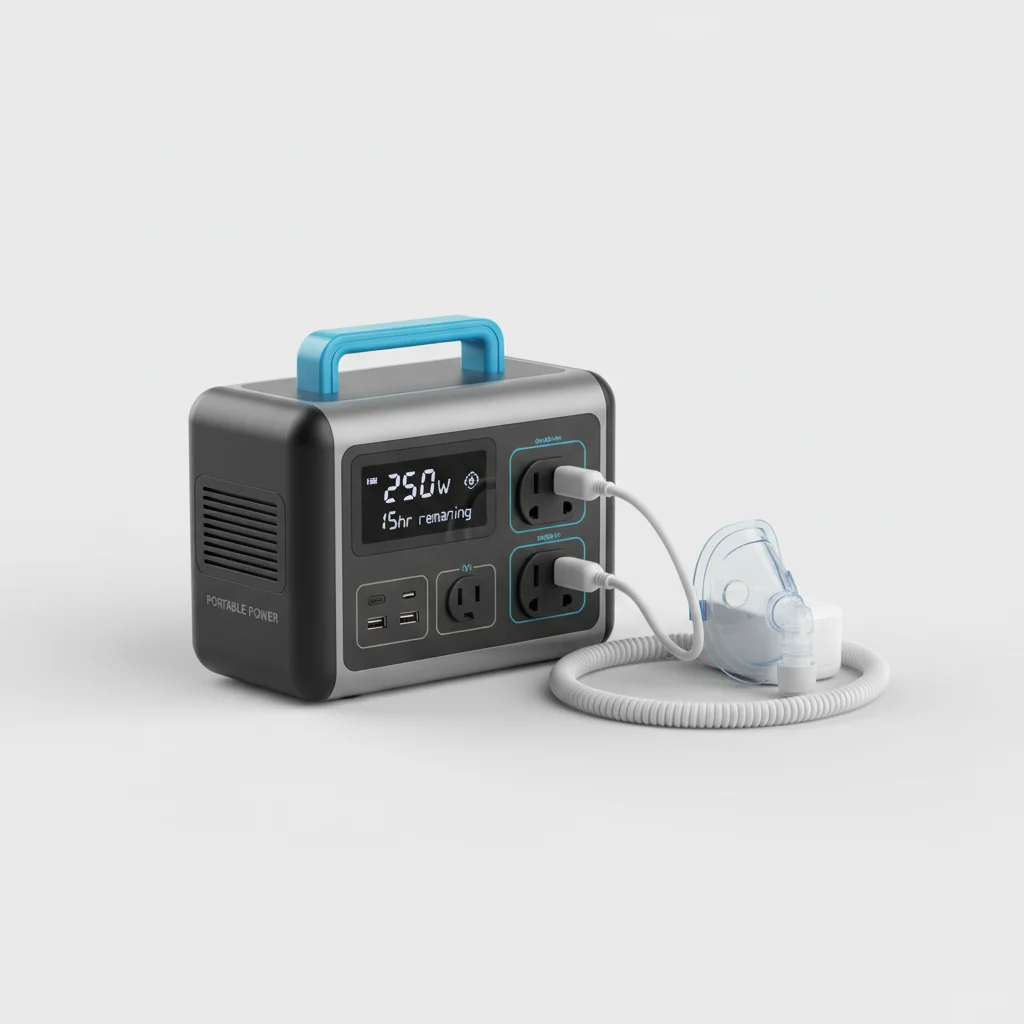
When selecting a portable generator for your CPAP machine, you’ll typically need a unit that can provide at least 300 to 500 watts of continuous power. This range accounts for the CPAP machine’s operational wattage, which usually falls between 30 and 60 watts, plus a buffer for humidifier and heated tubing if used. A 500-watt inverter generator offers a good balance of portability and sufficient power for most CPAP users, ensuring a full night’s sleep without interruption.
Understanding CPAP Power Requirements
CPAP machines are relatively low-power devices, but their continuous operation throughout the night makes reliable power crucial. Most standard CPAP machines consume between 30 and 60 watts. However, if you use a humidifier or heated tubing, the power draw can increase significantly, sometimes up to 150-200 watts. Always check your specific CPAP machine’s manual for its exact wattage requirements to make an informed decision. For browse all portable generator articles on this site.
Inverter Generators: The Ideal Choice for CPAP
For sensitive electronics like CPAP machines, an inverter generator is highly recommended. Inverter generators produce clean, stable power (pure sine wave), which is essential to prevent damage to your device and ensure its optimal performance. Traditional conventional generators can produce ‘dirty’ power with voltage fluctuations that may harm delicate electronics. Look for models specifically advertised as ‘inverter generators’ for this application.
Sizing Your Generator for Overnight Use
|
Our Picks for the Best Portable Generator in 2026
As an Amazon Associate I earn from qualifying purchases.
|
||
| Num | Product | Action |
|---|---|---|
| 1 | Westinghouse 155Wh 150 Peak Watt Portable Power Station & Solar Generator, Modified Sine Wave AC Outlet, Backup Lithium Battery for Camping, Home, Travel, Indoor/Outdoor Use (Solar Panel Not Included) |

|
| 2 | GENMAX Portable Inverter Generator, 6000W open frame Gas Powered High Speed Engine with Electric Start, Ultra Lightweight for Backup Home Use & Job Site,EPA Compliant (GM6000XiE) |
|
| 3 | 5000 Watts Portable Dual Fuel Inverter Generator– Small Gasoline LPG Powered for Home Backup, Camping, RV, Tailgating with CO Protection, Eco Mode, Recoil/Electric/Remote Start, Parallel Capable |
|
| 4 | Anker SOLIX C1000 Gen 2 Portable Power Station, 2,000W (Peak 3,000W) Solar Generator, Full Charge in 49 Min, 1,024Wh LiFePO4 Battery for Home Backup, Power Outages, and Camping (Optional Solar Panel) |
|
| 5 | Champion Power Equipment 2500-Watt Dual Fuel Portable Inverter Generator with Quiet Technology and CO Shield |
|
| 6 | Generac 2,500-Watt Gas Powered Portable Inverter Generator - Lightweight and Compact Design - Produces Clean, Stable Power - Quiet Operation - Great for Home Backup, Camping, and RV Use |
|
| 7 | BLUETTI Portable Power Station AC180, 1152Wh LiFePO4 Battery Backup w/ 2 1800W (2700W peak) AC Outlets, 0-80% in 45Min, Solar Generator for Camping, Off-grid, Power Outage |
|
| 8 | maXpeedingrods 2400 Watt Portable Inverter Generator Gas Powered, Bluetooth® App Remote Data Monitor,Only 33lbs, Compact and Lightweight for Outdoor Camping, Home Use |
|
| 9 | Honda 664240 EU2200i 2200 Watt Portable Inverter Generator with Co-Minder |
|
| 10 | Anker SOLIX C1000 Portable Power Station, 1800W (Peak 2400W) Solar Generator, Full Charge in 58 Min, 1056wh LiFePO4 Battery for Home Backup, Power Outages, and Outdoor Camping (Optional Solar Panel) |
|
To determine the appropriate generator size, consider not just the CPAP’s wattage but also the desired run time. A 500-watt inverter generator, for example, might run a 60-watt CPAP machine for 8-10 hours on a single tank of fuel, depending on the generator’s fuel efficiency and tank size. If you plan to power other small devices concurrently, factor those into your total wattage calculation. It’s always better to have a little extra capacity than to run short on power.
- Check your CPAP machine’s specific wattage, especially if using a humidifier or heated hose.
- Opt for an inverter generator to ensure clean, stable power for sensitive electronics.
- Calculate total wattage for all devices you plan to power simultaneously.
- Consider fuel tank size and efficiency for desired run time.
- Look for models with low noise output for undisturbed sleep.
Key Features to Look For
Beyond wattage, several features make a portable generator ideal for CPAP use. Noise level is paramount; look for generators with decibel ratings below 60 dB, or even lower if possible, to avoid disturbing your sleep or others. Portability is also key, especially if you plan to use it for camping or travel. Lightweight designs with carrying handles are a significant advantage. Finally, consider fuel type; dual-fuel generators offer flexibility, allowing you to switch between gasoline and propane.
Safety Considerations and Setup
Always operate your portable generator outdoors in a well-ventilated area, far away from windows, doors, and vents to prevent carbon monoxide poisoning. Never run a generator indoors, in a garage, or in any enclosed space. Ensure proper grounding of the generator according to the manufacturer’s instructions. Use appropriate extension cords that are rated for outdoor use and can handle the generator’s output. Regular maintenance, such as oil changes and air filter checks, will ensure reliable operation when you need it most.
