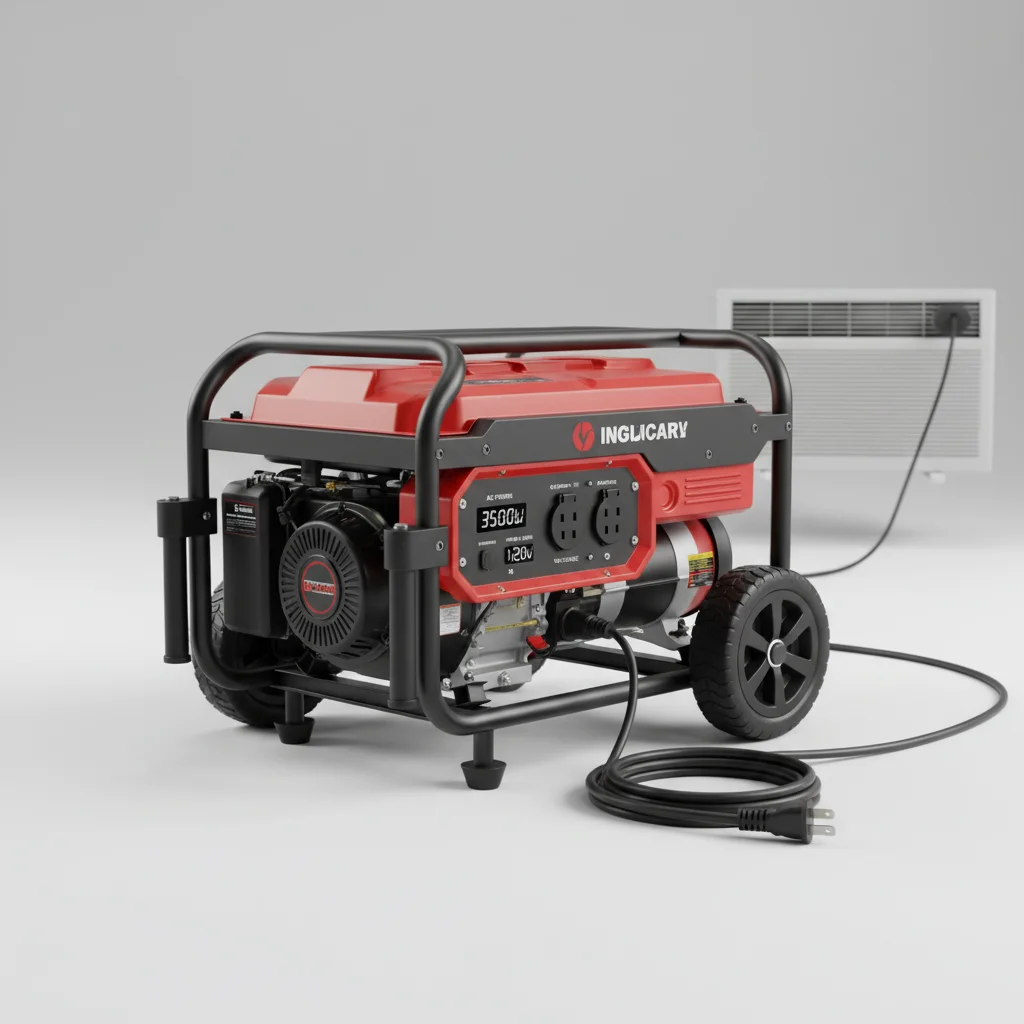
Choosing the right portable generator for your air conditioner is crucial for effective cooling without overloading your unit. For most standard residential air conditioners, you will need a portable generator with a running wattage of at least 3,000 to 4,000 watts, and a starting wattage of 5,000 to 7,000 watts. This range accommodates the significant surge in power required when an AC compressor kicks on.
Understanding AC Power Requirements
Air conditioners are unique in their power demands. While their running wattage indicates the continuous power needed to operate, their starting wattage, also known as surge wattage, is substantially higher. This momentary spike occurs when the compressor motor first engages. Failing to account for this surge can lead to tripped breakers, generator damage, or the AC unit simply not starting. Always check your air conditioner’s nameplate or owner’s manual for its specific running and starting wattage requirements. A typical 10,000 BTU window unit might run at 1,200 watts but surge to 3,000 watts.
Calculating Your Specific Needs
To accurately size your portable generator, you need to identify the exact wattage of your air conditioner. Look for a label on the unit itself, usually on the side or back, which will list both running and starting watts. If only amperage is listed, you can estimate wattage by multiplying amps by volts (e.g., 10 amps x 120 volts = 1,200 watts). Remember to factor in any other essential appliances you plan to run simultaneously, such as a refrigerator or lights. Add the running watts of all continuous items to the highest starting watts of any single item to determine your total required generator capacity.
Generator Features to Consider
|
Our Picks for the Best Portable Generator in 2026
As an Amazon Associate I earn from qualifying purchases.
|
||
| Num | Product | Action |
|---|---|---|
| 1 | Anker SOLIX C1000 Portable Power Station, 1800W (Peak 2400W) Solar Generator, Full Charge in 58 Min, 1056wh LiFePO4 Battery for Home Backup, Power Outages, and Outdoor Camping (Optional Solar Panel) |

|
| 2 | maXpeedingrods 2400 Watt Portable Inverter Generator Gas Powered, Bluetooth® App Remote Data Monitor,Only 33lbs, Compact and Lightweight for Outdoor Camping, Home Use |
|
| 3 | Generac 2,500-Watt Gas Powered Portable Inverter Generator - Lightweight and Compact Design - Produces Clean, Stable Power - Quiet Operation - Great for Home Backup, Camping, and RV Use |
|
| 4 | 5000 Watts Portable Dual Fuel Inverter Generator– Small Gasoline LPG Powered for Home Backup, Camping, RV, Tailgating with CO Protection, Eco Mode, Recoil/Electric/Remote Start, Parallel Capable |
|
| 5 | Westinghouse 155Wh 150 Peak Watt Portable Power Station & Solar Generator, Modified Sine Wave AC Outlet, Backup Lithium Battery for Camping, Home, Travel, Indoor/Outdoor Use (Solar Panel Not Included) |
|
| 6 | BLUETTI Portable Power Station AC180, 1152Wh LiFePO4 Battery Backup w/ 2 1800W (2700W peak) AC Outlets, 0-80% in 45Min, Solar Generator for Camping, Off-grid, Power Outage |
|
| 7 | GENMAX Portable Inverter Generator, 6000W open frame Gas Powered High Speed Engine with Electric Start, Ultra Lightweight for Backup Home Use & Job Site,EPA Compliant (GM6000XiE) |
|
| 8 | Champion Power Equipment 2500-Watt Dual Fuel Portable Inverter Generator with Quiet Technology and CO Shield |
|
| 9 | Anker SOLIX C1000 Gen 2 Portable Power Station, 2,000W (Peak 3,000W) Solar Generator, Full Charge in 49 Min, 1,024Wh LiFePO4 Battery for Home Backup, Power Outages, and Camping (Optional Solar Panel) |
|
| 10 | Honda 664240 EU2200i 2200 Watt Portable Inverter Generator with Co-Minder |
|
Beyond raw power output, several features can enhance your experience when using a portable generator for an air conditioner. Inverter generators are often a superior choice due to their clean power output, which is safer for sensitive electronics, and their quieter operation. Dual-fuel models offer flexibility, allowing you to switch between gasoline and propane. Look for generators with multiple outlets, including a 30-amp twist-lock outlet, which is commonly used for RVs and larger AC units. A robust frame and durable wheels are also beneficial for portability.
- Inverter Technology: Provides stable, clean power, ideal for sensitive AC electronics.
- Fuel Type: Gasoline is common, but dual-fuel (gasoline/propane) offers versatility.
- Outlet Configuration: Ensure it has the correct outlets for your AC unit, often a 30-amp twist-lock.
- Noise Level: Quieter inverter generators are preferable, especially in residential areas.
- Portability: Wheels and a handle make moving heavier units much easier.
Safety Precautions for AC Operation
Operating a portable generator with an air conditioner requires strict adherence to safety guidelines. Always run your generator outdoors in a well-ventilated area, far away from windows and doors, to prevent carbon monoxide poisoning. Never operate it in a garage or enclosed space. Ensure the generator is properly grounded according to the manufacturer’s instructions. Use heavy-duty, outdoor-rated extension cords that are appropriately sized for the load. Regularly check the generator’s oil level and fuel supply to prevent unexpected shutdowns, especially during hot weather when your AC is working hard.
Maintenance for Optimal Performance
Regular maintenance is key to ensuring your portable generator reliably powers your air conditioner. This includes routine oil changes, typically every 50-100 hours of operation, and checking or replacing the air filter. Spark plugs should be inspected and replaced as needed to ensure efficient combustion. Before long-term storage, especially if you won’t be using your AC for an extended period, it’s vital to stabilize the fuel or run the carburetor dry to prevent fuel system issues. A well-maintained generator will start more easily and deliver consistent power when you need it most.
