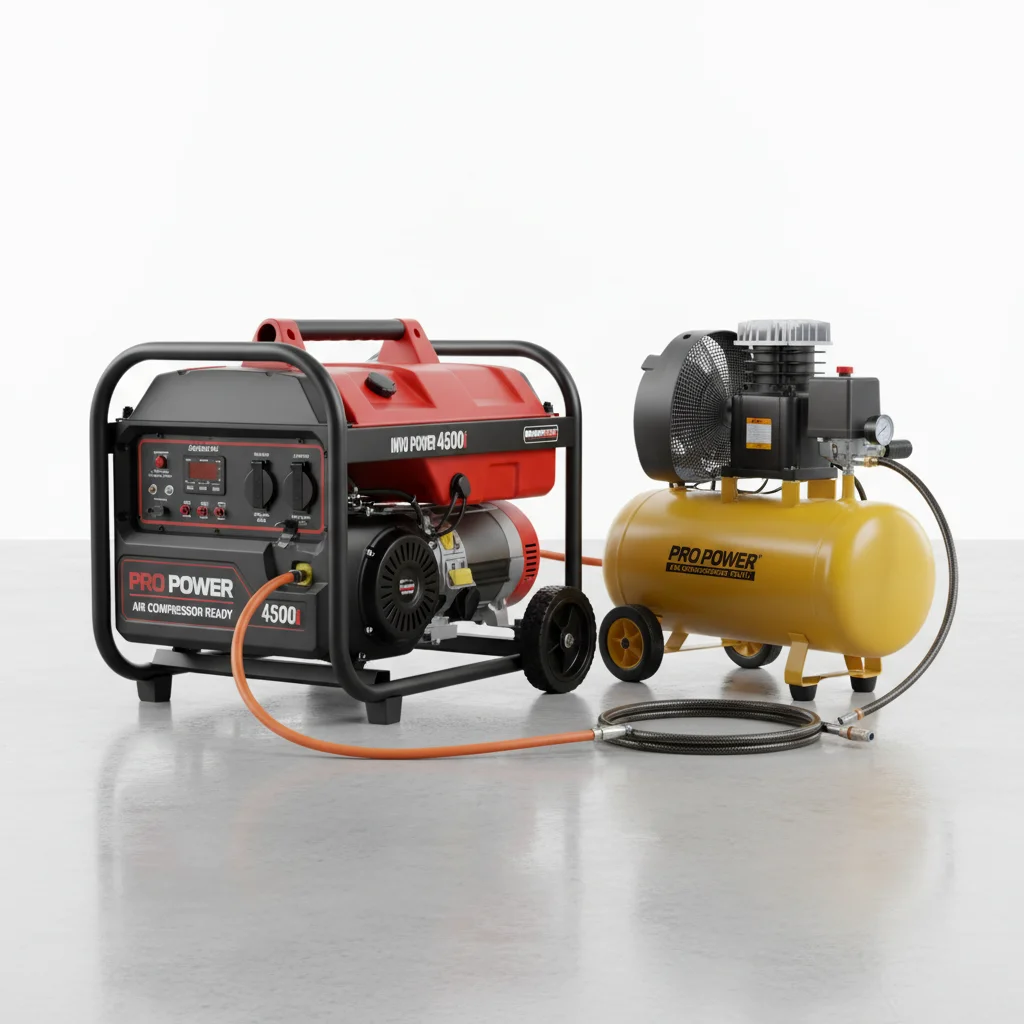
To power an air compressor with a portable generator, you typically need a generator that provides at least 2,000 running watts and 4,000 starting watts. The exact wattage required depends heavily on the specific air compressor’s motor size and whether it’s an induction or universal motor. Always check the compressor’s nameplate for its precise power requirements to ensure compatibility and prevent damage to both units.
Understanding Air Compressor Power Needs
Air compressors are unique in their power demands because they have a high initial surge of power when starting, known as starting watts, and then settle into a lower, continuous power draw, known as running watts. This surge can be two to three times higher than the running wattage. For example, a 2 HP air compressor might require around 1,500 running watts but could demand 4,500 starting watts. It’s crucial to account for this peak demand when selecting a generator.
Factors like the compressor’s tank size, motor type (induction motors generally have higher starting surges than universal motors), and whether it’s a single-stage or two-stage compressor also influence its power consumption. Always err on the side of a slightly larger generator to avoid overloading and potential damage.
Calculating Your Generator Size
The most reliable way to determine the correct generator size is to consult your air compressor’s manual or its data plate. Look for both the running wattage and the starting wattage. If only amperage and voltage are listed, you can estimate wattage using the formula: Watts = Amps × Volts. For starting watts, multiply the running watts by a factor of 2 to 3, depending on the motor type. Induction motors, common in larger compressors, will lean towards the higher end of this multiplier.
Once you have these figures, select a portable generator whose starting wattage capacity meets or exceeds your compressor’s starting wattage, and whose running wattage capacity meets or exceeds your compressor’s running wattage. Remember to also factor in any other tools or appliances you plan to run simultaneously.
Key Features to Look For in a Generator
|
Our Picks for the Best Portable Generator in 2026
As an Amazon Associate I earn from qualifying purchases.
|
||
| Num | Product | Action |
|---|---|---|
| 1 | Anker SOLIX C1000 Portable Power Station, 1800W (Peak 2400W) Solar Generator, Full Charge in 58 Min, 1056wh LiFePO4 Battery for Home Backup, Power Outages, and Outdoor Camping (Optional Solar Panel) |

|
| 2 | Anker SOLIX C1000 Gen 2 Portable Power Station, 2,000W (Peak 3,000W) Solar Generator, Full Charge in 49 Min, 1,024Wh LiFePO4 Battery for Home Backup, Power Outages, and Camping (Optional Solar Panel) |
|
| 3 | 5000 Watts Portable Dual Fuel Inverter Generator– Small Gasoline LPG Powered for Home Backup, Camping, RV, Tailgating with CO Protection, Eco Mode, Recoil/Electric/Remote Start, Parallel Capable |
|
| 4 | maXpeedingrods 2400 Watt Portable Inverter Generator Gas Powered, Bluetooth® App Remote Data Monitor,Only 33lbs, Compact and Lightweight for Outdoor Camping, Home Use |
|
| 5 | Champion Power Equipment 2500-Watt Dual Fuel Portable Inverter Generator with Quiet Technology and CO Shield |
|
| 6 | GENMAX Portable Inverter Generator, 6000W open frame Gas Powered High Speed Engine with Electric Start, Ultra Lightweight for Backup Home Use & Job Site,EPA Compliant (GM6000XiE) |
|
| 7 | Honda 664240 EU2200i 2200 Watt Portable Inverter Generator with Co-Minder |
|
| 8 | BLUETTI Portable Power Station AC180, 1152Wh LiFePO4 Battery Backup w/ 2 1800W (2700W peak) AC Outlets, 0-80% in 45Min, Solar Generator for Camping, Off-grid, Power Outage |
|
| 9 | Westinghouse 155Wh 150 Peak Watt Portable Power Station & Solar Generator, Modified Sine Wave AC Outlet, Backup Lithium Battery for Camping, Home, Travel, Indoor/Outdoor Use (Solar Panel Not Included) |
|
| 10 | Generac 2,500-Watt Gas Powered Portable Inverter Generator - Lightweight and Compact Design - Produces Clean, Stable Power - Quiet Operation - Great for Home Backup, Camping, and RV Use |
|
When choosing a portable generator for an air compressor, consider more than just wattage. An inverter generator is often a good choice due to its clean power output, which is safer for sensitive electronics, and its fuel efficiency. Look for models with a robust engine and a durable frame, especially if you’ll be using it on job sites. A larger fuel tank will provide longer run times, reducing the need for frequent refueling.
- High Starting Wattage: Essential for overcoming the initial power surge of an air compressor.
- Clean Power Output: Inverter generators provide stable power, protecting your compressor’s motor.
- Fuel Efficiency: Look for models with economy modes or larger fuel tanks for extended operation.
- Portability: Wheels and handles are crucial for moving heavier generators around.
- Reliable Engine: A reputable engine brand ensures longevity and consistent performance.
Safety Considerations and Best Practices
Operating a portable generator with an air compressor requires adherence to safety guidelines. Always operate the generator in a well-ventilated area to prevent carbon monoxide poisoning. Ensure the generator is properly grounded to prevent electrical shock. Use heavy-duty extension cords that are rated for outdoor use and can handle the amperage draw of your compressor.
Never overload your generator. If the generator struggles or the circuit breaker trips frequently, it’s a sign that the load is too high. Regularly check the generator’s oil level and fuel supply. Proper maintenance will ensure both your generator and air compressor operate safely and efficiently for years to come.For heavy-duty air compressors, consider a generator with a 240V outlet if your compressor requires it.
