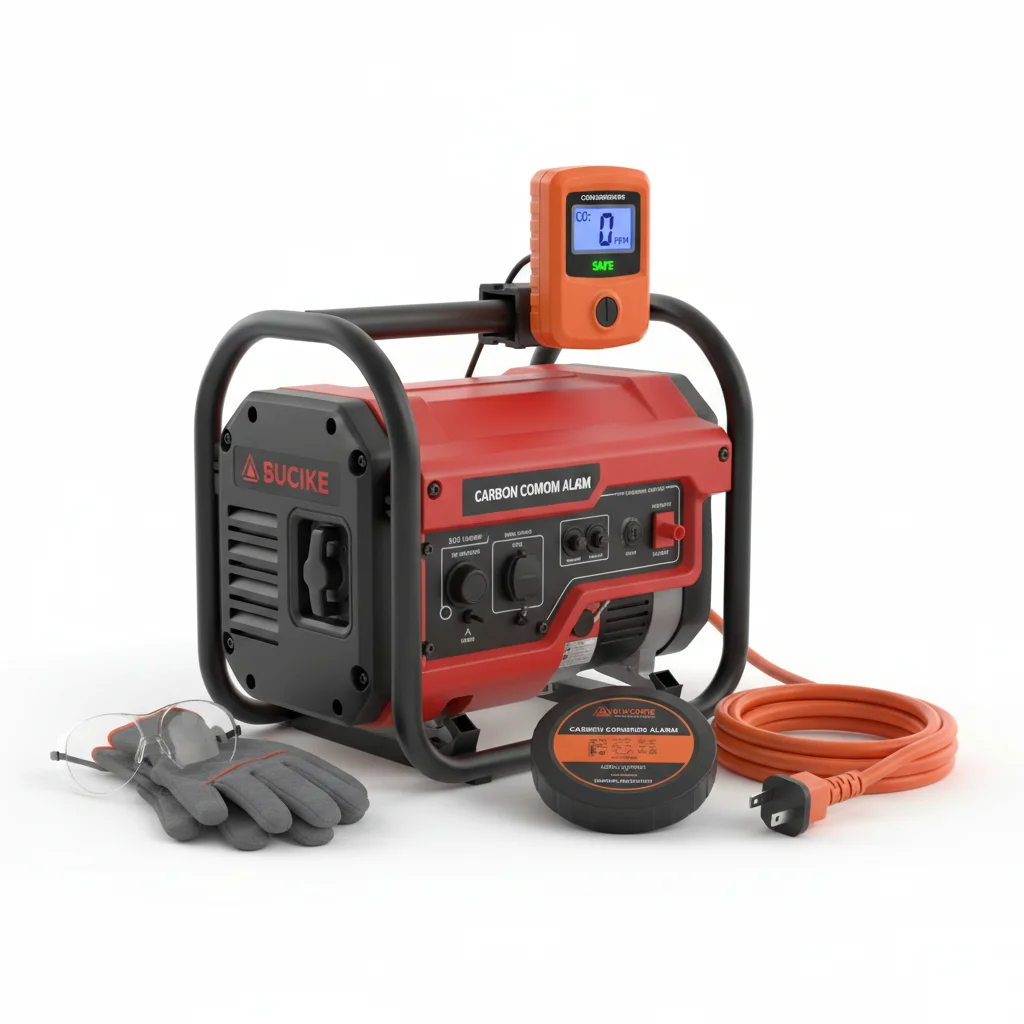
Understanding portable generator carbon monoxide safety is paramount, as carbon monoxide (CO) poisoning from generators claims an average of 70 lives annually in the United States. This colorless, odorless gas is a silent killer, making proper generator placement and safety protocols absolutely critical to prevent tragic accidents. By following established guidelines, you can significantly reduce the risk of CO exposure and ensure the safety of your household during power outages or outdoor activities.
The Dangers of Carbon Monoxide from Generators
Portable generators produce carbon monoxide as a byproduct of burning fuel. When operated in enclosed or partially enclosed spaces, CO can quickly accumulate to dangerous levels. Symptoms of CO poisoning include headache, dizziness, nausea, and fatigue, which can easily be mistaken for other illnesses. Prolonged exposure leads to disorientation, collapse, and ultimately, death. It’s crucial to recognize that even operating a generator near open windows or doors can allow CO to seep into your home, posing a serious threat.
Optimal Placement for Portable Generators
The most critical safety measure is to always operate portable generators outdoors, at least 20 feet away from your home, and away from any windows, doors, or vents. Ensure the exhaust is directed away from occupied buildings. Never run a generator in a garage, even with the door open, or under a carport. The exhaust fumes can still accumulate and enter your living space. Consider the wind direction when placing your generator to prevent fumes from blowing towards your home or a neighbor’s property. A clear, open area is always the safest choice.
Essential Carbon Monoxide Detectors
|
Our Picks for the Best Portable Generator in 2026
As an Amazon Associate I earn from qualifying purchases.
|
||
| Num | Product | Action |
|---|---|---|
| 1 | 5000 Watts Portable Dual Fuel Inverter Generator– Small Gasoline LPG Powered for Home Backup, Camping, RV, Tailgating with CO Protection, Eco Mode, Recoil/Electric/Remote Start, Parallel Capable |

|
| 2 | Generac 2,500-Watt Gas Powered Portable Inverter Generator - Lightweight and Compact Design - Produces Clean, Stable Power - Quiet Operation - Great for Home Backup, Camping, and RV Use |
|
| 3 | Champion Power Equipment 2500-Watt Dual Fuel Portable Inverter Generator with Quiet Technology and CO Shield |
|
| 4 | GENMAX Portable Inverter Generator, 6000W open frame Gas Powered High Speed Engine with Electric Start, Ultra Lightweight for Backup Home Use & Job Site,EPA Compliant (GM6000XiE) |
|
| 5 | maXpeedingrods 2400 Watt Portable Inverter Generator Gas Powered, Bluetooth® App Remote Data Monitor,Only 33lbs, Compact and Lightweight for Outdoor Camping, Home Use |
|
| 6 | Anker SOLIX C1000 Gen 2 Portable Power Station, 2,000W (Peak 3,000W) Solar Generator, Full Charge in 49 Min, 1,024Wh LiFePO4 Battery for Home Backup, Power Outages, and Camping (Optional Solar Panel) |
|
| 7 | Honda 664240 EU2200i 2200 Watt Portable Inverter Generator with Co-Minder |
|
| 8 | BLUETTI Portable Power Station AC180, 1152Wh LiFePO4 Battery Backup w/ 2 1800W (2700W peak) AC Outlets, 0-80% in 45Min, Solar Generator for Camping, Off-grid, Power Outage |
|
| 9 | Anker SOLIX C1000 Portable Power Station, 1800W (Peak 2400W) Solar Generator, Full Charge in 58 Min, 1056wh LiFePO4 Battery for Home Backup, Power Outages, and Outdoor Camping (Optional Solar Panel) |
|
| 10 | Westinghouse 155Wh 150 Peak Watt Portable Power Station & Solar Generator, Modified Sine Wave AC Outlet, Backup Lithium Battery for Camping, Home, Travel, Indoor/Outdoor Use (Solar Panel Not Included) |
|
Installing battery-operated or battery-backup carbon monoxide detectors on every level of your home, especially near sleeping areas, is a non-negotiable safety step. These devices provide an early warning system, alerting you to the presence of CO before symptoms appear. Test your CO detectors monthly and replace batteries twice a year, or as recommended by the manufacturer. If a CO detector alarms, immediately move everyone to fresh air and call 911. Do not re-enter the building until emergency services have deemed it safe.
- Install CO detectors on every level of your home.
- Place detectors near sleeping areas for maximum effectiveness.
- Test CO detectors monthly and replace batteries regularly.
- Know the sound of your CO alarm and what to do if it activates.
- Consider a CO detector with a digital display for real-time readings.
Safe Refueling and Maintenance Practices
Always turn off your generator and allow it to cool completely before refueling. Gasoline and other fuels are highly flammable, and spilled fuel on a hot engine can ignite. Store fuel in approved containers in a well-ventilated area, away from living spaces and ignition sources. Regular maintenance, including checking the exhaust system for leaks and ensuring proper ventilation, can help prevent CO buildup due to faulty operation. Consult your generator’s owner’s manual for specific maintenance schedules and procedures.
Understanding Generator Transfer Switches
If you plan to connect your portable generator to your home’s electrical system, you must use a properly installed transfer switch. This prevents backfeeding electricity into the utility lines, which can injure utility workers and damage your generator. A transfer switch also ensures that your generator’s power is isolated from the main grid, preventing dangerous electrical surges. Always have a qualified electrician install a transfer switch to guarantee safe and compliant operation.
