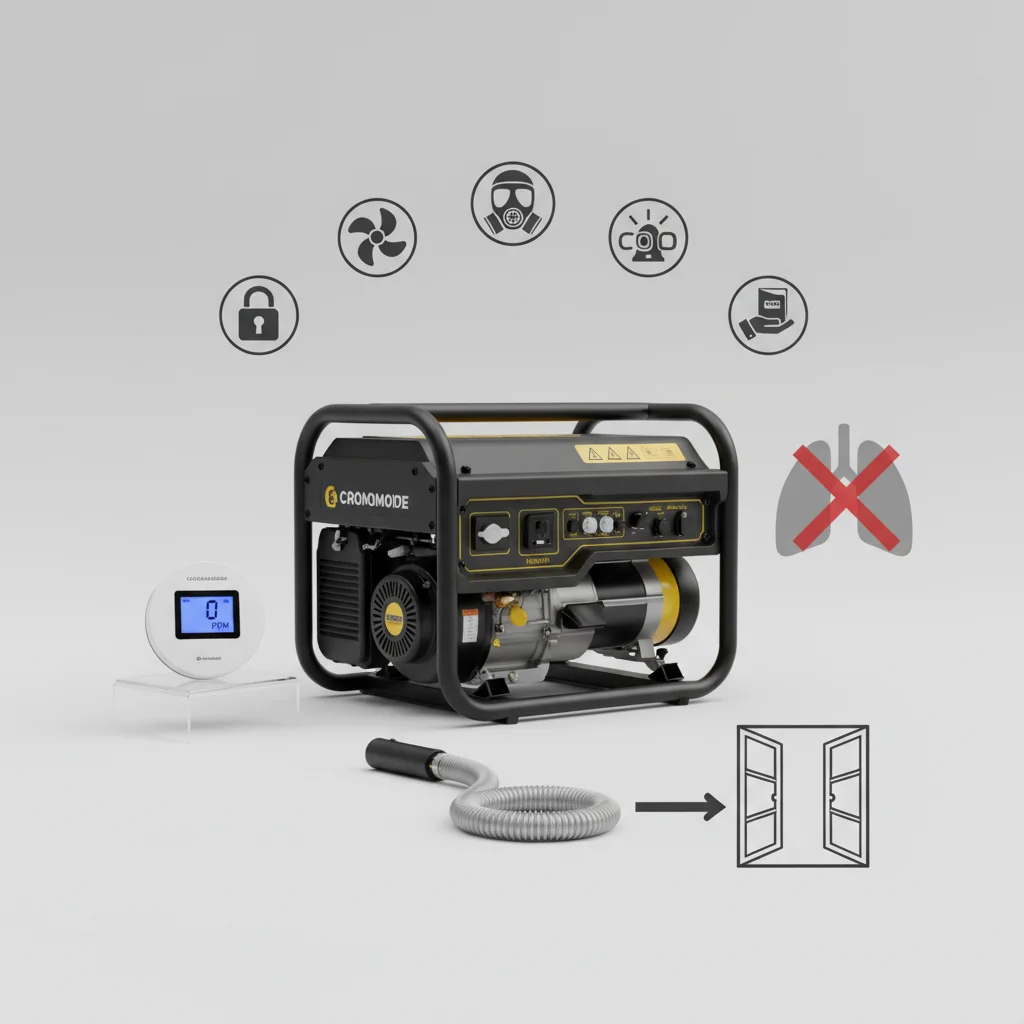
Ensuring portable generator carbon monoxide safety is paramount to prevent serious injury or even death. The most critical precaution is to never operate a portable generator indoors, in a garage, or in any partially enclosed space. Carbon monoxide (CO) is an odorless, colorless gas produced by burning fuel, and it can quickly accumulate to dangerous levels in confined areas. Following strict safety guidelines, such as maintaining proper ventilation and using CO detectors, can significantly reduce risks associated with generator use.
Understanding Carbon Monoxide Risks
Carbon monoxide poisoning occurs when CO gas builds up in your bloodstream, replacing oxygen. Symptoms can include headache, dizziness, nausea, and fatigue, often mistaken for the flu. Prolonged exposure can lead to unconsciousness, brain damage, and death. Portable generators are a common source of CO poisoning, especially during power outages when people might be tempted to use them in unsafe locations. Always be aware of the potential dangers and prioritize safety over convenience.
Proper Placement and Ventilation
The golden rule for portable generator carbon monoxide safety is to operate your generator outdoors, at least 20 feet away from your home, windows, and doors. Ensure the exhaust is directed away from any occupied buildings. Even an open garage door is not sufficient ventilation. Wind can also carry CO into your home, so consider prevailing wind directions when positioning your unit. Never place a generator under an overhang or near vents that could draw exhaust into your living space.
Install Carbon Monoxide Detectors
|
Our Picks for the Best Portable Generator in 2026
As an Amazon Associate I earn from qualifying purchases.
|
||
| Num | Product | Action |
|---|---|---|
| 1 | maXpeedingrods 2400 Watt Portable Inverter Generator Gas Powered, Bluetooth® App Remote Data Monitor,Only 33lbs, Compact and Lightweight for Outdoor Camping, Home Use |

|
| 2 | 5000 Watts Portable Dual Fuel Inverter Generator– Small Gasoline LPG Powered for Home Backup, Camping, RV, Tailgating with CO Protection, Eco Mode, Recoil/Electric/Remote Start, Parallel Capable |
|
| 3 | BLUETTI Portable Power Station AC180, 1152Wh LiFePO4 Battery Backup w/ 2 1800W (2700W peak) AC Outlets, 0-80% in 45Min, Solar Generator for Camping, Off-grid, Power Outage |
|
| 4 | Generac 2,500-Watt Gas Powered Portable Inverter Generator - Lightweight and Compact Design - Produces Clean, Stable Power - Quiet Operation - Great for Home Backup, Camping, and RV Use |
|
| 5 | GENMAX Portable Inverter Generator, 6000W open frame Gas Powered High Speed Engine with Electric Start, Ultra Lightweight for Backup Home Use & Job Site,EPA Compliant (GM6000XiE) |
|
| 6 | Anker SOLIX C1000 Gen 2 Portable Power Station, 2,000W (Peak 3,000W) Solar Generator, Full Charge in 49 Min, 1,024Wh LiFePO4 Battery for Home Backup, Power Outages, and Camping (Optional Solar Panel) |
|
| 7 | Westinghouse 155Wh 150 Peak Watt Portable Power Station & Solar Generator, Modified Sine Wave AC Outlet, Backup Lithium Battery for Camping, Home, Travel, Indoor/Outdoor Use (Solar Panel Not Included) |
|
| 8 | Champion Power Equipment 2500-Watt Dual Fuel Portable Inverter Generator with Quiet Technology and CO Shield |
|
| 9 | Honda 664240 EU2200i 2200 Watt Portable Inverter Generator with Co-Minder |
|
| 10 | Anker SOLIX C1000 Portable Power Station, 1800W (Peak 2400W) Solar Generator, Full Charge in 58 Min, 1056wh LiFePO4 Battery for Home Backup, Power Outages, and Outdoor Camping (Optional Solar Panel) |
|
Installing battery-operated or battery-backup carbon monoxide detectors on every level of your home, especially near sleeping areas, is a non-negotiable safety measure. These devices provide an early warning if CO levels become dangerous. Test your CO detectors monthly and replace batteries twice a year, or as recommended by the manufacturer. If a CO detector alarms, immediately move to fresh air and call 911.
Regular Generator Maintenance
Proper maintenance of your portable generator can help ensure it operates efficiently and produces less carbon monoxide. Regularly check and clean the air filter, spark plug, and exhaust system. A well-maintained engine burns fuel more completely, reducing CO emissions. Always follow the manufacturer’s recommended maintenance schedule. If you notice any unusual smells or sounds, have the generator inspected by a qualified technician before further use.
Safe Fuel Handling and Storage
While not directly related to CO emissions during operation, safe fuel handling is crucial for overall generator safety. Store fuel in approved containers in a well-ventilated area, away from living spaces and heat sources. Never refuel a hot generator; allow it to cool down completely to prevent spills and potential fires. Always use the correct type of fuel specified by your generator’s manufacturer.
- Never operate a generator indoors or in a garage.
- Place the generator at least 20 feet from your home.
- Install and regularly test carbon monoxide detectors.
- Ensure the exhaust is directed away from all buildings.
- Allow the generator to cool before refueling.
