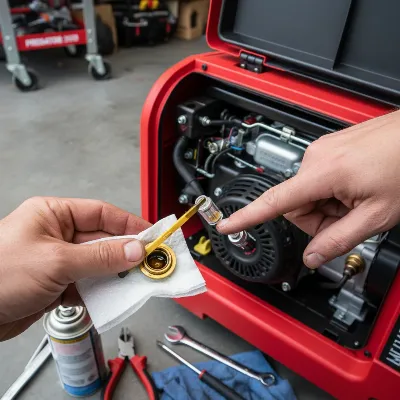
Portable generators are indispensable tools, providing crucial backup power during outages or electricity for outdoor projects. However, owning one comes with the significant responsibility of understanding its safe operation and, critically, its storage. While the convenience of indoor storage might seem appealing, gas-powered portable generators pose unique and serious risks that demand careful consideration and adherence to strict safety protocols. This comprehensive guide will walk you through the essential steps to prepare and store your gas portable generator indoors safely, protecting both your investment and, more importantly, your family.
Understanding the Inherent Dangers of Gas Portable Generators
Gas portable generators, though incredibly useful, are internal combustion engines that inherently come with several dangers that are amplified when considering indoor storage. Understanding these risks is the first step toward ensuring safety.
The most immediate and lethal danger associated with gas generators is carbon monoxide (CO) poisoning. These generators produce carbon monoxide as a byproduct of combustion. CO is a colorless, odorless, and tasteless gas, making it impossible to detect without specialized equipment. When a generator runs indoors or in an enclosed space like a garage, basement, or shed, CO can rapidly accumulate to toxic levels, leading to severe illness, permanent brain damage, and even death within minutes. It is an absolute rule that a gas portable generator must never be operated indoors or in any enclosed or partially enclosed space.
Beyond carbon monoxide, fire and explosion hazards are paramount. Gasoline, the primary fuel for these generators, is highly flammable. Its vapors are heavier than air and can travel along the floor to an ignition source, causing a dangerous flashback. These ignitable vapors can be present even at very low temperatures. Storing a generator with fuel indoors significantly increases the risk of a catastrophic fire or explosion. Additionally, if a generator were to be run indoors, the excessive heat generated could not only damage the unit but also heighten the risk of fire, especially if near flammable materials. [cite: 1 (from search 2)]
Essential Preparations Before Indoor Storage
To mitigate the inherent dangers and safely store your gas portable generator indoors, meticulous preparation is non-negotiable. These steps ensure the unit is inert and poses minimal risk.
Fuel System Management: Draining vs. Stabilizing
|
Our Picks for the Best Portable Generator in 2026
As an Amazon Associate I earn from qualifying purchases.
|
||
| Num | Product | Action |
|---|---|---|
| 1 | BLUETTI Portable Power Station AC180, 1152Wh LiFePO4 Battery Backup w/ 2 1800W (2700W peak) AC Outlets, 0-80% in 45Min, Solar Generator for Camping, Off-grid, Power Outage |

|
| 2 | 5000 Watts Portable Dual Fuel Inverter Generator– Small Gasoline LPG Powered for Home Backup, Camping, RV, Tailgating with CO Protection, Eco Mode, Recoil/Electric/Remote Start, Parallel Capable |
|
| 3 | Anker SOLIX C1000 Gen 2 Portable Power Station, 2,000W (Peak 3,000W) Solar Generator, Full Charge in 49 Min, 1,024Wh LiFePO4 Battery for Home Backup, Power Outages, and Camping (Optional Solar Panel) |
|
| 4 | GENMAX Portable Inverter Generator, 6000W open frame Gas Powered High Speed Engine with Electric Start, Ultra Lightweight for Backup Home Use & Job Site,EPA Compliant (GM6000XiE) |
|
| 5 | Generac 2,500-Watt Gas Powered Portable Inverter Generator - Lightweight and Compact Design - Produces Clean, Stable Power - Quiet Operation - Great for Home Backup, Camping, and RV Use |
|
| 6 | Anker SOLIX C1000 Portable Power Station, 1800W (Peak 2400W) Solar Generator, Full Charge in 58 Min, 1056wh LiFePO4 Battery for Home Backup, Power Outages, and Outdoor Camping (Optional Solar Panel) |
|
| 7 | Honda 664240 EU2200i 2200 Watt Portable Inverter Generator with Co-Minder |
|
| 8 | maXpeedingrods 2400 Watt Portable Inverter Generator Gas Powered, Bluetooth® App Remote Data Monitor,Only 33lbs, Compact and Lightweight for Outdoor Camping, Home Use |
|
| 9 | Champion Power Equipment 2500-Watt Dual Fuel Portable Inverter Generator with Quiet Technology and CO Shield |
|
| 10 | Westinghouse 155Wh 150 Peak Watt Portable Power Station & Solar Generator, Modified Sine Wave AC Outlet, Backup Lithium Battery for Camping, Home, Travel, Indoor/Outdoor Use (Solar Panel Not Included) |
|
The most critical step in preparing your gas generator for indoor storage is proper fuel management. Gasoline can degrade over time, leading to gum and varnish deposits that clog the carburetor and fuel lines, causing starting issues. More importantly, stored gasoline presents a significant fire and explosion risk due to its volatility.
For long-term indoor storage (typically beyond 1-3 months), it is highly recommended to completely drain all gasoline from the generator’s fuel tank, fuel lines, and carburetor. To do this, you can:
- Move the generator to a well-ventilated outdoor area.
- Turn the fuel valve to the “OFF” position.
- Run the generator until it runs completely dry, consuming all remaining fuel in the carburetor. This helps prevent carburetor issues.
- Once cool, carefully drain any remaining fuel from the tank using a siphon pump into an approved gasoline-resistant container.
- Locate the carburetor drain screw (often on the bottom of the carburetor bowl) and loosen it to allow any residual fuel to drain into an approved container.
- Tighten all drain screws and ensure no fuel spills.
If you anticipate only short-term storage (1-3 months) and are confident in a well-ventilated storage environment, a fuel stabilizer can be used. Add the stabilizer according to product instructions, then run the engine for 10-15 minutes to circulate it throughout the fuel system. While this prevents fuel degradation, it does not eliminate the fire hazard associated with stored gasoline. Therefore, completely draining the fuel is always the safest option for indoor storage. All drained fuel must be stored in approved, heavy-duty, self-closing metal safety cans, never inside living areas, and away from any ignition sources.
Cleaning, Maintenance, and Battery Care
After handling the fuel, focus on the overall condition of your generator. Start by thoroughly cleaning the exterior, removing any dirt, debris, oil, or fuel spills. This prevents corrosive damage and reduces fire risks. [cite: 4 (from search 1)]
For long-term storage, performing an oil change is highly advisable to remove contaminants that could harm internal components. Refer to your owner’s manual for specific oil types and procedures. You might also consider removing the spark plug and pouring a teaspoon of engine oil into the cylinder, then slowly pulling the recoil starter a few times to disperse the oil and protect internal components before replacing the spark plug. [cite: 5 (from search 3)]
If your generator has an electric start and a battery, disconnect the battery terminals to prevent drain and corrosion. For extended periods, using a trickle charger can help maintain the battery’s charge and lifespan.
Cooling Down the Unit
Crucially, always allow your generator to cool down completely after its last operation and before any storage preparation or moving it indoors. Hot engine parts, especially the muffler, remain a burn and fire hazard for a significant time. [cite: 2, 5 (from search 1)]
Choosing the Right Indoor Storage Location
Selecting an appropriate indoor storage location is as critical as the preparation itself. The goal is to minimize risks while protecting the generator from the elements.
Acceptable Indoor Locations (with strict caveats)
The consensus among safety experts and manufacturers is clear: never store a gas portable generator inside your home’s living areas, including basements, spare rooms, or crawl spaces. Even with an empty fuel tank, residual fumes and trace chemicals can pose health risks. [cite: 4 (from search 1)]
The most commonly cited acceptable indoor locations, provided specific conditions are met, are:
- Garages: An attached garage can be an option if it is well-ventilated and ideally separated from the main living space. It must be clean, free of clutter, and have no open flames, pilot lights (e.g., on water heaters or furnaces), or other ignition sources. [cite: 2, 4 (from search 1)]
- Detached Sheds: A dedicated, detached shed offers an even safer alternative as it physically separates the generator from your home. Like a garage, it must be cool, dry, and well-ventilated.
Environmental Conditions for Storage
Regardless of the chosen location, the environment itself must be suitable:
- Cool, Dry, and Stable Temperature: The storage area should be cool and dry to prevent rust, corrosion, and the accelerated degradation of materials. Avoid areas prone to extreme temperature fluctuations. [cite: 3, 4, 5 (from search 1)]
- Away from Heat and Ignition Sources: Position the generator far away from direct sunlight, heating appliances, water heaters, furnaces, pilot lights, or any potential ignition sources. Gasoline vapors can travel surprisingly far. [cite: 2, 3 (from search 1), 2 (from search 2)]
- Elevated Storage: If possible, store the generator elevated off the ground to protect it from dampness and potential flooding, which can cause damage and corrosion. [cite: 1 (from search 1)]
Importance of Ventilation and CO Detection
Even a prepared, non-running generator can emit trace fumes. Therefore, the chosen indoor storage area must be well-ventilated. This ensures that any residual vapors or fumes can dissipate safely.
Crucially, install and regularly test carbon monoxide detectors in any area where a gas generator is stored, such as a garage or shed. Furthermore, ensure your home’s living spaces are also equipped with functioning CO detectors. These devices are your only reliable defense against the silent threat of carbon monoxide poisoning. [cite: 3 (from search 2)]
 A gas portable generator with warning signs for carbon monoxide and fire hazards in a dimly lit, enclosed garage, emphasizing danger.
Best Practices and Common Pitfalls to Avoid
Storing a gas portable generator indoors requires ongoing vigilance. Adhering to best practices and consciously avoiding common mistakes will ensure continuous safety.
A primary best practice is to always consult your generator’s owner’s manual. This document provides specific instructions for your model regarding maintenance, fuel draining, and storage, which can vary between manufacturers. [cite: 1, 2 (from search 1)]
Do not store your generator with gasoline in the tank for extended periods without proper stabilization, and ideally, always drain it for indoor storage. This is a common oversight that leads to fuel system issues and significantly elevates fire risk.
> “Gasoline is an extremely hazardous material. Its vapors are heavier than air so they can travel away from the container. If the vapors come into contact with an ignition source, the vapors will ignite and flash back to the container.” – OSHA Safety Guidelines, Emphasizing Fuel Hazard [cite: 2 (from search 1), 5 (from search 2)]
Never store fuel, even in approved containers, or the generator itself, near ignition sources. This includes pilot lights on appliances, water heaters, furnaces, electrical outlets, or anything that could create a spark.
Do not neglect regular maintenance. Even in storage, periodically inspect your generator for signs of damage, leaks, or pest intrusion. Ensure all caps and covers are secure. A well-maintained generator is a safer generator.
Finally, if you drain fuel into separate containers, ensure they are clearly labeled with the fuel type and date of storage. This prevents accidental misuse and helps manage fuel rotation. [cite: 3 (from search 1)]
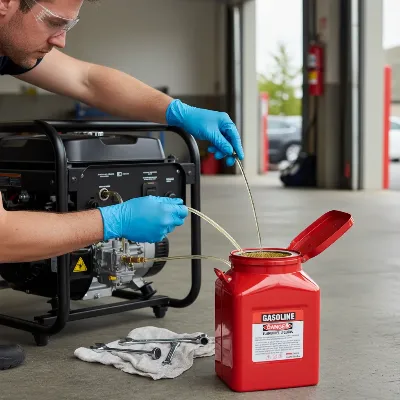 A person safely draining gasoline from a portable generator into an approved red fuel can in a well-ventilated outdoor area.
Conclusion
Safely storing a gas Portable Generator indoors is a task that demands careful attention to detail and a proactive approach to safety. The inherent risks of carbon monoxide poisoning, fire, and explosion from residual fuel and fumes are significant and must be respected. By meticulously draining fuel, performing essential maintenance, selecting an appropriate, well-ventilated location, and installing carbon monoxide detectors, you can substantially mitigate these dangers. Prioritizing safety through these practices not only protects your property but, more importantly, safeguards lives. How will you ensure your generator is ready and safe for its next use, wherever it may be stored?
Frequently Asked Questions
Can I store a gas generator in my attached garage?
Yes, you can store a gas generator in an attached garage, but only if it is completely drained of fuel and allowed to cool, and the garage is well-ventilated, clean, and free from any ignition sources like pilot lights. Never operate it in the garage.
Is it okay to store a portable generator with fuel in it?
For short-term storage (1-3 months), you can use a fuel stabilizer, but for long-term indoor storage, it’s safest to completely drain all gasoline from the tank, fuel lines, and carburetor to eliminate fire hazards and prevent fuel degradation. [cite: 1, 5 (from search 3)]
What are the signs of carbon monoxide poisoning?
Early symptoms of carbon monoxide poisoning include headache, fatigue, shortness of breath, nausea, and dizziness. Continued exposure can lead to confusion, loss of muscular coordination, loss of consciousness, and death. [cite: 5 (from search 1)]
How often should I check my generator in storage?
It’s advisable to periodically inspect your stored generator every few months for any signs of leaks, damage, or pest activity. If storing for extended periods, annual maintenance like oil changes is also recommended.
What kind of container should I use for drained gasoline?
Always use an approved, heavy-duty, self-closing metal gasoline safety can that is properly designed and marked for its contents. Store these containers away from living areas, heat, and ignition sources.