When a portable generator refuses to start, it often stems from common issues within its fuel, ignition, air intake, or electrical systems. Many problems, such as low fuel or a dirty spark plug, are simple to diagnose and fix with basic troubleshooting steps. This guide provides a systematic approach to quickly identify and resolve the most frequent causes of a non-starting portable generator, restoring power efficiently.
Understanding Why Your Portable Generator Won’t Start
A portable generator requires several core systems—fuel, ignition, air intake, and electrical—to operate in sync. If any of these components are not functioning optimally, the generator may struggle or fail to start. Identifying which system is at fault is the crucial first step in diagnosing the problem when your portable generator remains silent.
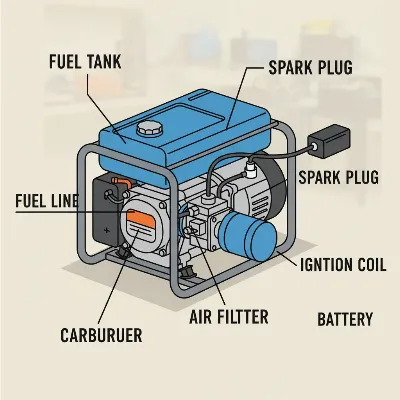 An illustrative diagram of a portable generator highlighting its key components for troubleshooting, including fuel tank, carburetor, spark plug, air filter, and battery. For explore our portable generator reviews on this site.
Initial Troubleshooting Steps for a Non-Starting Portable Generator
Before attempting complex repairs, always begin with the most straightforward checks. Many portable generator starting issues are resolved by ensuring basic operational requirements are met. Always prioritize safety by turning off the generator and disconnecting the spark plug wire to prevent accidental starts during inspection.
First, confirm the fuel level; an empty tank is a common oversight. Next, verify the engine oil level using the dipstick, as most modern portable generators have a low-oil shutdown sensor. Double-check that the fuel shut-off valve is in the “ON” or “OPEN” position. Ensure the generator’s kill switch is in the “RUN” or “ON” position, and inspect any circuit breakers, as a tripped breaker can prevent power output. For electric start models, ensure battery connections are secure and corrosion-free.
Detailed Fixes for Common Portable Generator Starting Problems
If basic checks don’t resolve the issue, a deeper investigation into specific systems is necessary. Most starting problems fall into a few key categories, each with its own diagnostic steps and solutions. Systematically working through these areas helps pinpoint and resolve the problem effectively.
Addressing Fuel System Issues
The fuel system is a frequent source of starting difficulties, especially for portable generators unused for extended periods. Stale fuel, which can degrade in as little as 30 days, forms gums and varnish that clog components. Always drain old fuel and refill with fresh, unleaded gasoline, ideally with a fuel stabilizer for storage over a month. Check the fuel filter for blockages; clean or replace it if clogged. A closed or clogged fuel valve will also prevent fuel flow. The carburetor, with its tiny jets, is highly susceptible to clogging from stale fuel, which can be cleaned with carburetor cleaner or replaced in severe cases.
Resolving Ignition System Failures
|
Our Picks for the Best Portable Generator in 2026
As an Amazon Associate I earn from qualifying purchases.
|
||
| Num | Product | Action |
|---|---|---|
| 1 | maXpeedingrods 2400 Watt Portable Inverter Generator Gas Powered, Bluetooth® App Remote Data Monitor,Only 33lbs, Compact and Lightweight for Outdoor Camping, Home Use |

|
| 2 | 5000 Watts Portable Dual Fuel Inverter Generator– Small Gasoline LPG Powered for Home Backup, Camping, RV, Tailgating with CO Protection, Eco Mode, Recoil/Electric/Remote Start, Parallel Capable |
|
| 3 | Anker SOLIX C1000 Gen 2 Portable Power Station, 2,000W (Peak 3,000W) Solar Generator, Full Charge in 49 Min, 1,024Wh LiFePO4 Battery for Home Backup, Power Outages, and Camping (Optional Solar Panel) |
|
| 4 | Generac 2,500-Watt Gas Powered Portable Inverter Generator - Lightweight and Compact Design - Produces Clean, Stable Power - Quiet Operation - Great for Home Backup, Camping, and RV Use |
|
| 5 | Honda 664240 EU2200i 2200 Watt Portable Inverter Generator with Co-Minder |
|
| 6 | GENMAX Portable Inverter Generator, 6000W open frame Gas Powered High Speed Engine with Electric Start, Ultra Lightweight for Backup Home Use & Job Site,EPA Compliant (GM6000XiE) |
|
| 7 | Anker SOLIX C1000 Portable Power Station, 1800W (Peak 2400W) Solar Generator, Full Charge in 58 Min, 1056wh LiFePO4 Battery for Home Backup, Power Outages, and Outdoor Camping (Optional Solar Panel) |
|
| 8 | Westinghouse 155Wh 150 Peak Watt Portable Power Station & Solar Generator, Modified Sine Wave AC Outlet, Backup Lithium Battery for Camping, Home, Travel, Indoor/Outdoor Use (Solar Panel Not Included) |
|
| 9 | Champion Power Equipment 2500-Watt Dual Fuel Portable Inverter Generator with Quiet Technology and CO Shield |
|
| 10 | BLUETTI Portable Power Station AC180, 1152Wh LiFePO4 Battery Backup w/ 2 1800W (2700W peak) AC Outlets, 0-80% in 45Min, Solar Generator for Camping, Off-grid, Power Outage |
|
Without a strong spark, your portable generator’s engine cannot ignite the fuel-air mixture. The spark plug is the most common component to check. Remove the spark plug and inspect it for fouling (oil, carbon, or fuel deposits). Clean deposits with a wire brush or replace the spark plug if worn or dirty. Ensure the spark plug gap is set correctly per your generator’s manual. A loose or disconnected spark plug wire can interrupt current, so ensure it’s securely attached. If the spark plug is clean, properly gapped, and still no spark is present when grounded against the engine block while cranking, the ignition coil might be faulty and require professional replacement.
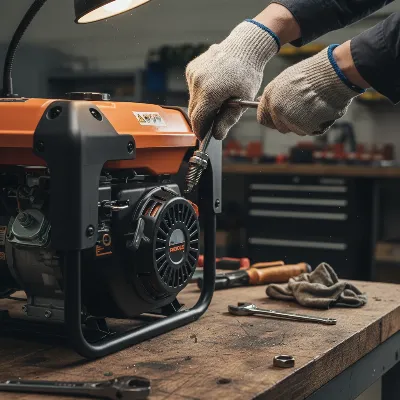 A technician checking a portable generator's spark plug for signs of wear and proper gapping.
Overcoming Air Intake and Compression Obstacles
A portable generator engine requires the correct air-fuel mixture for proper combustion. A clogged air filter restricts airflow, leading to a fuel-rich mixture that hinders starting. Regularly inspect your air filter and clean or replace it if dirty. The choke lever is critical for cold starts, enriching the mixture; set it to “closed” or “start” for cold engines, then to “open” once it fires. If the engine cranks repeatedly without starting and the spark plug is wet, you might have flooded the engine. Let the generator sit for 10-15 minutes with the choke open to allow excess fuel to evaporate before restarting.
Battery and Electrical Connection Troubleshooting
For portable generators with electric start, the battery and its connections are crucial. If your electric start generator only clicks or makes no sound, a dead or weak battery is a common cause. Test the battery’s voltage with a multimeter; if below 12.6 volts for a 12V battery, it needs recharging or replacement. Inspect battery terminals and cables for corrosion, cleaning any buildup with a wire brush and ensuring tight connections. Also, check for tripped circuit breakers on the generator, especially if the engine runs but produces no power, indicating a safety mechanism against overloading.
Preventative Maintenance to Avoid Starting Issues
Consistent preventative maintenance is the best defense against a portable generator failing to start. A regular maintenance schedule significantly extends unit lifespan and ensures reliable operation. As one expert states, “Routine generator maintenance is vital for ensuring reliable performance and longevity, preventing unexpected breakdowns and costly repairs.”
Key practices include checking and changing engine oil every 50-100 hours of operation as specified in the manual. Always use fresh fuel and add a fuel stabilizer if storing for over 30 days to prevent degradation and clogs. Run your portable generator under a light load for 15-30 minutes monthly to lubricate components and keep the fuel system clear. Clean or replace the air filter regularly, especially in dusty environments. Inspect and clean or replace the spark plug annually. Finally, keep the battery charged for electric start models and check all electrical connections for corrosion or looseness.
When to Seek Professional Help for Your Portable Generator
While many portable generator starting problems are DIY-fixable, professional assistance is sometimes necessary. If systematic troubleshooting fails, or if you suspect a complex internal issue, consult a certified technician. Faulty ignition coils, significant carburetor damage, internal engine problems, or deep electrical malfunctions often require specialized tools and expertise. Prioritize safety and avoid repairs beyond your comfort level, especially those involving major engine components or intricate electrical wiring. Professional diagnosis ensures safe and correct repair, saving time and preventing further damage.
Conclusion
A portable generator is an invaluable tool, providing essential power. While a non-starting unit can be frustrating, most issues stem from common problems in the fuel, ignition, air, or electrical systems. By following a systematic troubleshooting approach—starting with basics like fuel and oil levels, then moving to detailed checks of the spark plug, air filter, and carburetor—you can often diagnose and resolve the problem yourself. Consistent preventative maintenance, including fresh fuel with stabilizer and regular test runs, is crucial for reliable operation. This guide equips you to get your portable generator running smoothly again.
Frequently Asked Questions
Why does my portable generator crank but fail to start?
If your portable generator cranks but doesn't start, it typically points to a problem with the fuel supply or the ignition system. Check for low or stale fuel, a closed fuel valve, a clogged fuel filter or carburetor, a dirty spark plug, or a loose spark plug wire. Ensure the choke is correctly set for a cold start.
Can old fuel really prevent a portable generator from starting?
Yes, old or stale fuel is a very common reason a portable generator won't start. Gasoline can degrade in as little as 30 days, forming varnish and gum deposits that clog the carburetor and fuel lines, preventing proper fuel flow to the engine. Always use fresh fuel or a fuel stabilizer if storing for more than 30 days.
What if my portable generator's low oil sensor is stopping it from starting?
First, place your portable generator on a level surface and check the oil level with the dipstick, adding oil if it's low. If the oil level is correct but the sensor still triggers, the sensor itself might be faulty. While some models allow temporary disconnection for a test start, it's best to replace a malfunctioning sensor to protect your engine from damage.
How do I check if my portable generator's spark plug is working correctly?
To check the spark plug, carefully remove it and reattach it to the spark plug wire. Hold the metal part of the plug against a clean, unpainted metal surface of the engine block (grounding it) and pull the recoil starter. A strong, blue spark indicates a good spark plug and ignition system. If no spark occurs, the plug may be fouled or the ignition coil faulty.
My electric start portable generator isn't cranking at all. What could be wrong?
If your electric start portable generator isn't cranking, the battery is the most likely culprit. Check that the battery is charged, and inspect its terminals for corrosion or loose connections. Clean any buildup and tighten the cables. A faulty starter motor or a tripped main circuit breaker could also prevent it from turning over.
Troubleshoot a Portable Generator That Won't Start
This guide provides steps to diagnose and fix common starting issues with portable generators, covering fuel, ignition, air intake, and electrical systems.
Begin by confirming basic operational requirements. Check the fuel level, engine oil level, fuel shut-off valve position, kill switch, and any circuit breakers. For electric start models, ensure battery connections are secure and free of corrosion.
Inspect the fuel system for stale fuel, which can degrade in 30 days. Drain old fuel and refill with fresh gasoline, adding a stabilizer if storing. Check and clean or replace the fuel filter and ensure the fuel valve is open. Clean or replace a clogged carburetor.
Examine the spark plug for fouling; clean with a wire brush or replace if worn. Ensure the spark plug gap is correct and the wire is securely attached. If no spark is present after these checks, the ignition coil might need professional replacement.
Check the air filter for dirt or obstructions and clean or replace it as needed. Ensure the choke lever is correctly set for cold starts and then moved to the open position. If the engine is flooded, let it sit for 10-15 minutes with the choke open to evaporate excess fuel.
For electric start generators, test the battery voltage with a multimeter; recharge or replace if below 12.6 volts. Inspect battery terminals and cables for corrosion, cleaning any buildup and ensuring tight connections. Check for tripped circuit breakers on the generator.

Fantastic guide! My generator was sputtering and then just quit. I followed the steps for checking the air intake and found the air filter was completely gunked up. Replaced it and now it runs like new. Very practical and easy to follow instructions.
This guide was a lifesaver! My generator wouldn’t start after sitting all winter, and I was dreading taking it in for service. Turns out, the spark plug was just dirty, exactly like it mentioned. A quick clean and it fired right up. Saved me a ton of money and hassle.
While helpful for basic issues, I was hoping for a bit more detail on electrical system problems. My generator still isn’t starting, and I’ve checked the fuel and ignition. It’s probably something more complex than what was covered here, but it did help me rule out the simpler stuff.
I appreciated the systematic approach to troubleshooting. My issue ended up being a clogged fuel filter, which I hadn’t even considered. The steps for checking the fuel system were really clear and helped me pinpoint the problem quickly. Good advice for anyone with a stubborn generator.