Connecting a portable generator to your home’s electrical panel for backup power requires specific, code-compliant methods to ensure safety and prevent dangerous backfeeding into the utility grid. The two primary safe methods are installing a manual transfer switch or an interlock kit, both of which must be professionally installed by a licensed electrician. These systems ensure that your home is powered either by the utility or the generator, but never both simultaneously, protecting both your household and utility workers.
What is a Portable Generator? (Definition and Applications)
A portable generator is a self-contained power source designed to provide temporary electricity, typically for specific appliances or circuits, during power outages, outdoor events, or at job sites. These units consist of an engine that drives an alternator to produce electricity, often fueled by gasoline, propane, or diesel. Unlike larger, permanently installed standby generators, portable models are characterized by their mobility, making them versatile for various situations.
Portable generators come in several common types, each suited for different needs. Conventional portable generators are generally more robust and powerful, ideal for running heavier loads. Inverter generators, on the other hand, produce cleaner power, making them safer for sensitive electronics, and are often quieter and more fuel-efficient. Dual-fuel generators offer the flexibility of running on two different fuel sources, such as gasoline and propane, extending run times and providing options in fuel availability. For expert portable generator reviews on this site.
The applications for portable generators are extensive. In a residential setting, they are invaluable during power failures, allowing homeowners to power essential appliances like refrigerators, sump pumps, and some lighting circuits. For those working outdoors or at construction sites, portable generators provide electricity for power tools and equipment. They are also popular among campers and RV enthusiasts who need off-grid power for comfort and convenience.
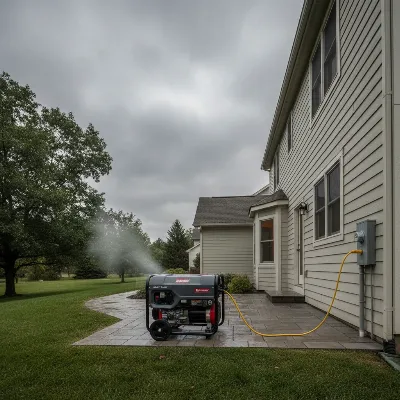 A modern portable generator connected to a residential house via an inlet box during a power outage scenario, emphasizing safe outdoor placement and professional setup.
Essential Factors When Choosing a Portable Generator
Selecting the right portable generator involves evaluating several critical factors to match your specific power needs and ensure safe, efficient operation. Understanding these elements will help you make an informed decision.
Wattage: Determining Your Power Needs
The most crucial factor is the generator’s power output, measured in watts. To determine your wattage requirements, list all the appliances and devices you intend to power simultaneously during an outage. For each item, identify both its running wattage (the power it consumes during continuous operation) and its starting wattage (the momentary surge of power required when it first turns on). The starting wattage, especially for motor-driven appliances like refrigerators and air conditioners, can be significantly higher than the running wattage. Add up the running watts of all chosen items, then add the single highest starting wattage from your list to get your total estimated requirement. It’s always wise to choose a generator with at least 10-20% more capacity than your calculated total to provide a safety margin and prevent overload. For instance, smaller generators (3,000-4,000 watts) might cover essentials like a fridge, lights, and phone charging, while larger units (5,000-7,500 watts) can handle pumps, air conditioners, or heating systems.
Fuel Type: Gasoline, Diesel, or Propane
|
Our Picks for the Best Portable Generator in 2026
As an Amazon Associate I earn from qualifying purchases.
|
||
| Num | Product | Action |
|---|---|---|
| 1 | Generac 2,500-Watt Gas Powered Portable Inverter Generator - Lightweight and Compact Design - Produces Clean, Stable Power - Quiet Operation - Great for Home Backup, Camping, and RV Use |

|
| 2 | Honda 664240 EU2200i 2200 Watt Portable Inverter Generator with Co-Minder |
|
| 3 | Anker SOLIX C1000 Portable Power Station, 1800W (Peak 2400W) Solar Generator, Full Charge in 58 Min, 1056wh LiFePO4 Battery for Home Backup, Power Outages, and Outdoor Camping (Optional Solar Panel) |
|
| 4 | maXpeedingrods 2400 Watt Portable Inverter Generator Gas Powered, Bluetooth® App Remote Data Monitor,Only 33lbs, Compact and Lightweight for Outdoor Camping, Home Use |
|
| 5 | BLUETTI Portable Power Station AC180, 1152Wh LiFePO4 Battery Backup w/ 2 1800W (2700W peak) AC Outlets, 0-80% in 45Min, Solar Generator for Camping, Off-grid, Power Outage |
|
| 6 | Champion Power Equipment 2500-Watt Dual Fuel Portable Inverter Generator with Quiet Technology and CO Shield |
|
| 7 | Westinghouse 155Wh 150 Peak Watt Portable Power Station & Solar Generator, Modified Sine Wave AC Outlet, Backup Lithium Battery for Camping, Home, Travel, Indoor/Outdoor Use (Solar Panel Not Included) |
|
| 8 | GENMAX Portable Inverter Generator, 6000W open frame Gas Powered High Speed Engine with Electric Start, Ultra Lightweight for Backup Home Use & Job Site,EPA Compliant (GM6000XiE) |
|
| 9 | Anker SOLIX C1000 Gen 2 Portable Power Station, 2,000W (Peak 3,000W) Solar Generator, Full Charge in 49 Min, 1,024Wh LiFePO4 Battery for Home Backup, Power Outages, and Camping (Optional Solar Panel) |
|
| 10 | 5000 Watts Portable Dual Fuel Inverter Generator– Small Gasoline LPG Powered for Home Backup, Camping, RV, Tailgating with CO Protection, Eco Mode, Recoil/Electric/Remote Start, Parallel Capable |
|
Portable generators operate on various fuel types, each with pros and cons:
- Gasoline: Widely available and relatively inexpensive, but it has a limited shelf life and produces more emissions. Gasoline generators are common for residential backup.
- Propane (LPG): Burns cleaner, stores indefinitely, and is often safer to store than gasoline. Propane tanks can be easily swapped, allowing for extended run times. However, propane can be less energy-dense than gasoline, potentially leading to lower power output.
- Diesel: Typically found in larger, more heavy-duty generators, diesel fuel is highly efficient and offers long run times. Diesel generators are generally more expensive and louder but are known for their durability.
- Dual-Fuel/Tri-Fuel: These generators offer the flexibility to switch between two or three fuel types (e.g., gasoline and propane), providing options depending on availability and preference.
Run Time: Fuel Capacity and Efficiency
A generator’s run time indicates how long it can operate on a full tank of fuel at a specific load. This is influenced by the fuel tank’s capacity and the engine’s fuel efficiency. Consider how long you anticipate needing power during an average outage. A larger fuel tank or a more fuel-efficient inverter model will provide longer run times between refueling, offering greater convenience, especially during extended blackouts.
Noise Level: Decibels and Comfort
Generators can be noisy, and their sound level is measured in decibels (dB). Conventional portable generators can be quite loud, often exceeding 70 dB, which can be disruptive to you and your neighbors. Inverter generators are typically much quieter, often operating in the 50-60 dB range, making them a better choice for residential areas or situations where noise is a concern. Always check the decibel rating and consider your proximity to others and your home when making a choice.
Additional Features: Enhancing Convenience and Safety
Modern portable generators offer a variety of features that can enhance their usability and safety:
- Electric Start: Allows you to start the generator with a push of a button, rather than a pull cord, which is especially convenient in cold weather or for those with physical limitations.
- Automatic Shutoff (Low Oil): Protects the engine by turning off the generator if the oil level drops below a safe threshold.
- Fuel Gauge: Helps you monitor fuel levels and plan for refueling.
- Circuit Breakers: Protect the generator and connected appliances from overload.
- Multiple Outlets: Offer various receptacle types and amperages to accommodate different cords and appliances.
- CO Shutoff Sensor: Automatically turns off the generator if dangerous levels of carbon monoxide are detected, a critical safety feature.
- Portability Features: Wheels and sturdy handles make it easier to move the generator.
Comparing Common Portable Generator Connection Methods
When it comes to connecting a portable generator to your home’s electrical panel, safety is paramount. The goal is to provide backup power without creating hazardous conditions for occupants or utility workers. Two primary, code-compliant methods stand out: the manual transfer switch and the interlock kit.
Manual Transfer Switch (MTS)
A manual transfer switch is a dedicated electrical subpanel installed next to your home’s main breaker panel. It allows you to safely switch selected circuits from utility power to generator power. This method provides complete mechanical isolation, ensuring that your generator cannot “backfeed” electricity into the utility grid.
How it works:
- An outdoor power inlet box is installed on the exterior of your home.
- A heavy-duty generator cord connects your portable generator to this inlet box.
- Inside, the transfer switch panel is wired to selected circuits from your main electrical panel.
- During an outage, you manually switch the desired circuits from “Line” (utility) to “Generator” power, ensuring that only one power source is active at a time for those circuits.
Pros:
- Highest Safety: Provides robust mechanical separation between utility and generator power.
- Code Compliant: Widely accepted by electrical codes and inspectors.
- Dedicated Circuits: Allows you to pre-select and prioritize specific circuits for generator power.
- Easy Operation: Clear, labeled controls simplify switching power sources.
Cons:
- Higher Cost: Generally more expensive to purchase and install than an interlock kit, as it involves a separate panel and more wiring.
- Professional Installation: Requires a licensed electrician for installation.
Interlock Kit
An interlock kit is a mechanical sliding plate installed on your existing main electrical panel. It physically prevents the main utility breaker and a dedicated generator breaker (installed in your main panel) from being in the “on” position simultaneously. This ensures that only one power source can feed the panel at any given time, preventing backfeeding.
How it works:
- A dedicated breaker is installed in your main electrical panel for generator power.
- An interlock device is installed, which physically blocks either the main utility breaker or the generator breaker from being turned on if the other is already on.
- An outdoor power inlet box connects to this dedicated generator breaker.
- During an outage, you turn off the main utility breaker, slide the interlock to allow the generator breaker to be turned on, then switch on the circuits you want to power.
Pros:
- Cost-Effective: Generally less expensive than a transfer switch, as it utilizes your existing panel.
- Space-Saving: Doesn’t require a separate subpanel.
- Flexibility: Allows you to power any circuit in your main panel, provided the generator can handle the load.
Cons:
- Manual Management: Requires careful manual management of individual circuit breakers to avoid overloading the generator.
- Panel Compatibility: Not compatible with all electrical panel layouts; your panel must have suitable space and configuration.
- Still Requires Professional Installation: While simpler, installation still needs a licensed electrician to ensure safety and code compliance.
> “Never attempt to plug a generator directly into a wall outlet. This ‘backfeeding’ is incredibly dangerous and can be fatal to utility workers or cause severe damage to your home’s electrical system.” – Johnathan Hayes, Master Electrician and Safety Expert.
Direct Extension Cord Connection
While technically a connection method, using individual extension cords directly from the generator to appliances is typically considered a temporary and partial solution. It should only be used for a few select, cord-and-plug-connected devices.
Pros:
- Simple and Inexpensive: No complex installation required.
Cons:
- Limited Power: Cannot power hardwired appliances (e.g., furnace, water heater, well pump).
- Inconvenient: Requires running multiple cords, often through windows or doors, which creates safety hazards (tripping, fire risk, carbon monoxide entry if windows/doors are not sealed properly).
- Not Code-Compliant: Does not meet safety standards for home backup power.
Comparison Table: Portable Generator Connection Methods
| Feature | Manual Transfer Switch | Interlock Kit | Direct Extension Cords |
|---|---|---|---|
| Safety | Highest (mechanical isolation) | High (physical barrier) | Low (numerous hazards) |
| Code Compliance | Fully compliant with NEC Article 702 | Generally compliant (check local codes) | Not compliant for home backup |
| Cost (Installation) | Higher | Lower | Minimal (cost of cords) |
| Ease of Operation | Easy, clearly labeled switching | Requires careful manual breaker management | Simple, but cumbersome |
| Circuits Powered | Pre-selected, dedicated circuits | Any circuit in main panel (with capacity limits) | Only cord-and-plug appliances |
| Installation | Professional electrician required | Professional electrician required | DIY (but highly discouraged for critical loads) |
| Prevents Backfeeding | Yes, inherently | Yes, mechanically | No, significant risk if used improperly |
How to Connect a Portable Generator to a House Panel (Buying Guide)
Connecting a portable generator to your house panel is a significant safety and investment decision. Following a structured buying guide will ensure you choose the right equipment and integrate it safely.
Step 1: Determine Your Power Needs
Before you even look at generators or connection kits, identify what you absolutely need to power during an outage. Make a comprehensive list of essential appliances:
- Critical Loads: Refrigerator, freezer, well pump, furnace fan, medical devices, lighting in key rooms, phone chargers.
- Comfort Loads (if generator capacity allows): Television, microwave, small air conditioner, computer.
Once your list is complete, find the running wattage and starting wattage (also called surge wattage) for each item. This information is usually on a label on the appliance or in its owner’s manual. Sum the running wattages of all appliances you expect to run simultaneously. Then, identify the single appliance with the highest starting wattage and add that to your total running wattage. This sum represents the minimum surge wattage your generator must provide. Aim for a generator that offers at least 10-20% more power than this calculated minimum to prevent overloading and ensure stable operation.
Step 2: Establish Your Budget
Your budget will significantly influence your choices. Connecting a portable generator to a house panel involves not just the generator’s cost but also the expense of a transfer switch or interlock kit, an outdoor power inlet box, heavy-duty cabling, and professional installation by a licensed electrician.
- Generator Cost: Portable generators can range from a few hundred dollars for smaller models to several thousand for larger, feature-rich inverter or dual-fuel units.
- Connection Equipment: Transfer switches are typically more expensive than interlock kits. Prices for these components can vary based on brand, amperage, and the number of circuits supported.
- Professional Installation: This is a mandatory and often significant part of the overall cost, but it’s crucial for safety and code compliance. Obtain multiple quotes from licensed electricians.
Consider the long-term value. While a cheaper upfront solution might be tempting, investing in a robust, safe setup can save you from costly repairs or dangerous situations down the line. Balance between affordability and the quality/safety features you require.
Step 3: Choose a Reputable Brand and Supplier
The market offers numerous generator brands and electrical components. Opting for reputable manufacturers ensures product quality, reliability, and access to customer support and warranty services. Some well-regarded portable generator brands include Champion, Generac, Honda, and DuroMax. For transfer switches and interlock kits, brands like Reliance Controls, Generac, and Eaton are common.
- Research Brands: Look for brands with a strong track record, positive customer reviews, and good warranty policies.
- Read User Reviews: Real-world experiences from other homeowners can provide valuable insights into a product’s performance, durability, and any common issues.
- Consult Licensed Electricians: Your installing electrician may have recommendations for specific brands or types of transfer equipment they prefer working with, often due to ease of installation, reliability, or local code familiarity.
- Reliable Supplier: Purchase equipment from authorized dealers or well-known home improvement stores to ensure authenticity and proper warranty coverage. Avoid unverified online sellers.
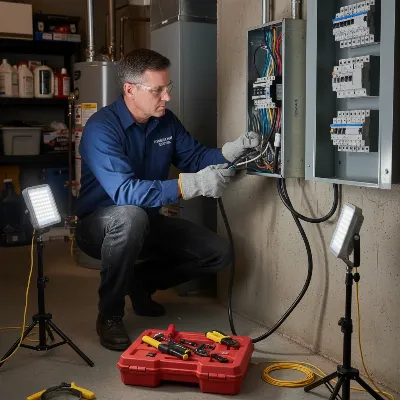 A licensed electrician installing a manual transfer switch next to a main electrical panel, with safety gear and tools visible, highlighting professional expertise.
Top Portable Generator Models for Home Backup
Choosing the right portable generator can make all the difference during a power outage. Here are some highly-rated models often favored for home backup, considering factors like power output, features, and reliability.
- Champion 7500-Watt Dual Fuel Portable Generator:
- Pros: Excellent value for its wattage, dual-fuel capability (gasoline and propane) offers flexibility, electric start for convenience, robust construction. Can handle most essential household appliances and some larger loads.
- Cons: Can be relatively loud compared to inverter models, not ideal for sensitive electronics without additional surge protection.
- Generac GP8000E Portable Generator::
- Pros: Known for reliability and durability, powerful enough for larger homes or those needing to run more appliances, electric start, often includes a maintenance kit.
- Cons: Heavier and bulkier, typically a conventional generator so noise levels are higher.
- Honda EU7000iS Inverter Generator:
- Pros: Exceptionally quiet operation, clean power output (safe for sensitive electronics), excellent fuel efficiency, electric start, robust build quality, parallel capability for increased power.
- Cons: Premium price point, lower wattage than some conventional counterparts for the price, heavier for an inverter model.
- DuroMax XP12000EH Dual Fuel Portable Generator:
- Pros: High wattage output makes it suitable for larger homes or extensive backup needs, dual-fuel option, heavy-duty construction, competitive price for its power.
- Cons: Very heavy and requires two people to move, high noise level.
When comparing these models, always cross-reference their starting and running wattages against your determined power needs. Consider the fuel type that best suits your storage and availability, and whether features like electric start or quiet operation are priorities for your home and usage scenario. Read recent reviews to ensure the latest models maintain their reputation for reliability and performance.
Maintaining and Using Your Portable Generator Correctly
Proper maintenance and safe operation are crucial for extending the life of your portable generator and ensuring it performs reliably when you need it most.
Regular Maintenance for Longevity
Treating your generator like a small engine in a car will help it last. Follow the manufacturer’s recommendations in your owner’s manual for all maintenance tasks, which typically include:
- Oil Changes: Regularly change the engine oil after the first 20-25 hours of operation, and then every 50-100 hours or annually, depending on usage. Use the recommended type and weight of oil.
- Spark Plug Inspection/Replacement: Check spark plugs periodically for wear and carbon buildup, and replace them as needed to ensure efficient ignition.
- Air Filter Cleaning/Replacement: A clean air filter is vital for engine performance. Clean or replace it regularly, especially if operating in dusty conditions.
- Fuel System Care: If storing the generator for an extended period, drain the fuel tank or use a fuel stabilizer to prevent fuel degradation, which can clog the carburetor.
- Battery Check (Electric Start Models): For models with electric start, check the battery terminals for corrosion and ensure the battery is charged.
- General Cleaning: Keep the generator clean, free from debris, and ensure cooling fins are clear for proper heat dissipation.
Essential Safety Measures During Operation
Safety must always be your top priority when operating a portable generator:
- Outdoor Use Only: ALWAYS operate generators outdoors in a well-ventilated area, at least 10-20 feet away from your home, windows, doors, and vents. Carbon monoxide (CO) is an odorless, colorless, deadly gas produced by generators. Never run a generator in a garage, basement, or any enclosed space.
- Carbon Monoxide Detectors: Install battery-operated CO detectors with digital displays inside your home, and check them regularly.
- Dry Conditions: Never operate a generator in wet conditions (rain, snow) unless it is protected by a dry, open canopy-like structure that still allows ample ventilation.
- Proper Fueling: Allow the generator to cool down completely before refueling to prevent fire hazards. Do not overfill the tank.
- Grounding: Ensure your generator is properly grounded according to the manufacturer’s instructions and local electrical codes.
- Overload Protection: Do not overload your generator. Understand its wattage limits and use the built-in circuit breakers. Turn off large appliances before starting the generator and power them on one by one.
- Children and Pets: Keep children and pets away from the generator during operation.
- Secure Placement: Place the generator on a level, stable surface to prevent it from tipping over.
Troubleshooting Common Issues
While regular maintenance prevents many problems, some common issues can arise:
- Generator Won’t Start: Check fuel levels, oil levels, spark plug condition, and ensure the choke is correctly set. For electric start, check the battery.
- No Power Output: Verify that the circuit breakers on the generator and any transfer switch are engaged. Check connections.
- Engine Runs Roughly: Could be old fuel, a dirty air filter, or a fouled spark plug.
- Overload Shutoff: If the generator shuts down, it might be overloaded. Disconnect some appliances, reset the breaker, and restart.
For any persistent or complex issues, consult the owner’s manual or a qualified technician. Attempting repairs without proper knowledge can be dangerous.
Conclusion
Connecting a portable generator to your house panel is a critical step towards ensuring your home remains powered and safe during outages. While the convenience of readily available electricity is invaluable, it is paramount to prioritize safety by always adhering to proper installation methods and electrical codes. Whether you choose a manual transfer switch for its robust isolation or an interlock kit for its cost-effectiveness, professional installation by a licensed electrician is non-negotiable.
Remember to carefully assess your power needs, select a generator with adequate wattage, and commit to regular maintenance to ensure its longevity and reliable performance. By understanding the essentials of safely connecting and maintaining your portable generator, you empower your home against unexpected power disruptions. Are you prepared to take the necessary steps to secure your home’s power future?
Frequently Asked Questions
Can I plug a portable generator directly into my wall outlet?
No, absolutely not. Plugging a portable generator directly into a wall outlet, known as “backfeeding,” is extremely dangerous and illegal. It can send electricity back into the utility grid, potentially electrocuting utility workers or causing severe damage to your home’s electrical system and the generator itself. Always use a proper transfer switch or interlock kit installed by a licensed electrician.
What is the difference between a transfer switch and an interlock kit?
Both devices prevent backfeeding. A transfer switch is a separate electrical panel that completely isolates selected circuits from the utility grid before connecting them to the generator. An interlock kit is a mechanical device installed on your existing main electrical panel that physically prevents the main utility breaker and a dedicated generator breaker from being turned on simultaneously. Transfer switches generally offer more dedicated control and are often considered a more robust solution, while interlock kits are typically more cost-effective.
How far away should a portable generator be from my house?
Portable generators must be operated outdoors, at least 10-20 feet away from your home, windows, doors, and vents. This distance is crucial to prevent dangerous carbon monoxide fumes from entering your living spaces, which can be fatal. Ensure the exhaust is directed away from any building openings.
Do I need a professional to install a generator connection?
Yes, installation of a transfer switch or an interlock kit to connect a portable generator to your house panel requires a licensed and qualified electrician. This ensures the installation complies with all local and national electrical codes (like the National Electrical Code – NEC) and is performed safely, preventing dangerous situations like backfeeding.
How do I determine what size generator I need for my home?
To size a generator, list all the essential appliances and devices you want to power during an outage. Find the running wattage for each, then identify the single appliance with the highest starting wattage. Add all running wattages together, then add the highest starting wattage to that sum. This total represents the minimum wattage your generator should provide. It’s advisable to add an extra 10-20% for a safety margin.
How to Connect a Portable Generator to a House Panel
Connecting a portable generator to your home's electrical panel safely involves determining power needs, budgeting, and choosing reputable equipment for professional installation.
List all essential appliances you need to power during an outage, such as refrigerators, medical devices, and lights. Identify both the running wattage and the starting wattage for each item. Sum the running wattages and add the single highest starting wattage to calculate your total minimum wattage requirement, then add 10-20% for a safety margin.
Factor in the cost of the portable generator, the connection equipment (transfer switch or interlock kit), an outdoor power inlet box, heavy-duty cabling, and professional installation by a licensed electrician. Transfer switches are generally more expensive than interlock kits. Obtain multiple quotes for installation to balance affordability with quality and safety.
Select generators and electrical components from reputable manufacturers like Champion, Generac, Honda, or DuroMax for generators, and Reliance Controls, Generac, or Eaton for transfer equipment. Research brands, read user reviews, and consult licensed electricians for recommendations. Purchase equipment from authorized dealers to ensure authenticity and warranty coverage.

I finally got around to installing an interlock kit after reading about it. The instructions here were super clear on why it’s important to prevent backfeeding, and my electrician had no trouble with the install. Now, when the power goes out, I can safely run my essential circuits without worrying about utility workers. It’s a game-changer for peace of mind.
I appreciate the emphasis on code-compliant methods for connecting a portable generator. I’ve been using mine for outdoor events and job sites for a while, but never really considered connecting it to my house. While the information is solid, I wish there were more details on specific generator brands that are easier to integrate with these systems. It felt a little generic in that regard.
This guide really helped me understand the difference between a transfer switch and an interlock kit. I ended up going with a manual transfer switch for my setup, and it works great. My only minor complaint is that the initial cost for professional installation was a bit higher than I anticipated, but safety is definitely worth it.
After a few too many power outages, I knew I needed a better solution than extension cords. The explanation of how these systems protect both my household and utility workers really hit home. I had a licensed electrician install a transfer switch, and now I feel much more prepared for the next storm. It’s so much safer and more convenient.