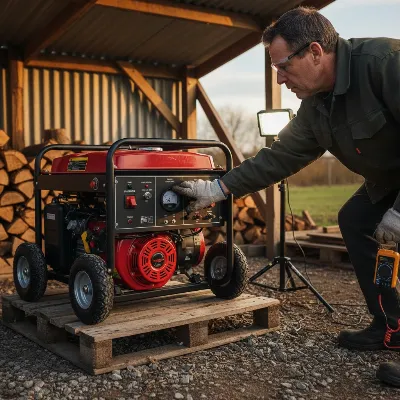
Bringing home a new portable generator is an exciting investment, promising reliable power for emergencies, outdoor adventures, or job sites. However, before you put your new machine to work, there’s a crucial initial step that many owners overlook: the engine break-in. This isn’t just a suggestion; it’s a vital process that profoundly impacts your generator’s lifespan, efficiency, and overall performance. By taking the time to properly break in your portable generator’s engine, you are laying the groundwork for years of dependable service. This article will guide you through the essential steps, ensuring your generator is ready to deliver power when you need it most.
What is Portable Generator Engine Break-In and Why Does It Matter?
Portable generator engine break-in is the initial period of operation during which the internal moving parts of the engine, particularly the piston rings and cylinder walls, gradually wear against each other to form an optimal, tight seal. Think of it as a controlled conditioning phase, allowing these precision-machined components to adapt to their operational stresses and achieve a perfect fit.
This process is critical for several reasons. Firstly, it establishes optimal compression, which is fundamental for efficient combustion and power output. Without proper seating, combustion gases can leak past the piston rings—a phenomenon known as “blow-by”—leading to power loss and increased oil consumption. Secondly, break-in ensures proper lubrication. The cylinder walls are designed with microscopic cross-hatch patterns that hold oil; during break-in, the peaks of these patterns are worn down, creating a consistent surface for the piston rings to glide over while maintaining an essential oil film. Skipping this step can lead to premature wear, reduced fuel efficiency, and even a condition called “cylinder glazing,” where the cylinder walls become too smooth, preventing proper ring seating and potentially causing permanent damage. Ultimately, a successful break-in translates to a more reliable, efficient, and longer-lasting portable generator, safeguarding your investment from costly repairs and unexpected failures.
Essential Preparations Before Breaking In Your Portable Generator
Before you even think about starting your new portable generator, thorough preparation is paramount. Taking a few proactive steps can prevent common issues and ensure a smooth break-in process.
Consult Your Owner’s Manual
|
Our Picks for the Best Portable Generator in 2026
As an Amazon Associate I earn from qualifying purchases.
|
||
| Num | Product | Action |
|---|---|---|
| 1 | Honda 664240 EU2200i 2200 Watt Portable Inverter Generator with Co-Minder |

|
| 2 | GENMAX Portable Inverter Generator, 6000W open frame Gas Powered High Speed Engine with Electric Start, Ultra Lightweight for Backup Home Use & Job Site,EPA Compliant (GM6000XiE) |
|
| 3 | Anker SOLIX C1000 Portable Power Station, 1800W (Peak 2400W) Solar Generator, Full Charge in 58 Min, 1056wh LiFePO4 Battery for Home Backup, Power Outages, and Outdoor Camping (Optional Solar Panel) |
|
| 4 | maXpeedingrods 2400 Watt Portable Inverter Generator Gas Powered, Bluetooth® App Remote Data Monitor,Only 33lbs, Compact and Lightweight for Outdoor Camping, Home Use |
|
| 5 | Anker SOLIX C1000 Gen 2 Portable Power Station, 2,000W (Peak 3,000W) Solar Generator, Full Charge in 49 Min, 1,024Wh LiFePO4 Battery for Home Backup, Power Outages, and Camping (Optional Solar Panel) |
|
| 6 | Champion Power Equipment 2500-Watt Dual Fuel Portable Inverter Generator with Quiet Technology and CO Shield |
|
| 7 | Westinghouse 155Wh 150 Peak Watt Portable Power Station & Solar Generator, Modified Sine Wave AC Outlet, Backup Lithium Battery for Camping, Home, Travel, Indoor/Outdoor Use (Solar Panel Not Included) |
|
| 8 | 5000 Watts Portable Dual Fuel Inverter Generator– Small Gasoline LPG Powered for Home Backup, Camping, RV, Tailgating with CO Protection, Eco Mode, Recoil/Electric/Remote Start, Parallel Capable |
|
| 9 | BLUETTI Portable Power Station AC180, 1152Wh LiFePO4 Battery Backup w/ 2 1800W (2700W peak) AC Outlets, 0-80% in 45Min, Solar Generator for Camping, Off-grid, Power Outage |
|
| 10 | Generac 2,500-Watt Gas Powered Portable Inverter Generator - Lightweight and Compact Design - Produces Clean, Stable Power - Quiet Operation - Great for Home Backup, Camping, and RV Use |
|
This step is non-negotiable. While general guidelines exist, every portable generator model is unique, and manufacturers provide specific instructions tailored to their engines. Your owner’s manual contains vital information regarding recommended oil types, fill levels, specific break-in periods, and safety warnings. Deviating from these guidelines, especially those related to oil, fuel, or load application, could not only harm your engine but also void your warranty. Always refer to your manual first for precise, model-specific procedures.
Safe Location & Initial Inspection
Unboxing a new generator requires a brief but important safety check. First, select a safe and appropriate location for operation. Portable generators must always be run outdoors in a well-ventilated area, at least 20 feet away from any windows, doors, or structures, with the exhaust pointing away from occupied areas. This is crucial to prevent the accumulation of deadly, odorless carbon monoxide gas. Place the generator on a flat, stable, non-combustible surface to ensure proper air circulation and prevent tipping. Before adding fluids, inspect the unit for any signs of shipping damage, loose parts, or leaks. Make sure all external components are securely fastened and there are no obstructions around the air intake or exhaust.
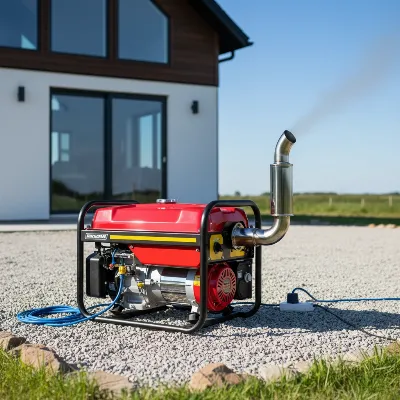 A new portable generator running safely outdoors on a level surface, away from a house.
Fueling and Lubrication
Correct fueling and lubrication are foundational for a successful break-in. First, add the recommended engine oil to the crankcase. Most portable generators require conventional 10W-30 or 5W-30 oil, but always check your manual for the exact type and fill capacity. Use a funnel to prevent spills and fill to the marked “full” line on the dipstick without overfilling. Some experts suggest removing the spark plug and adding a small amount of oil conditioning fluid directly into the cylinder before the first start. This ensures the cylinder walls are pre-lubricated, preventing a “dry start” that can cause immediate wear. Next, fill the fuel tank with fresh, clean gasoline. Avoid using stale fuel or fuel containing high concentrations of ethanol if your generator’s manual advises against it, as ethanol can degrade fuel lines and carburetor components over time. Ensure the fuel cap is securely fastened.
Step-by-Step Guide to Breaking In Your New Portable Generator Engine
Successfully breaking in your portable generator involves a series of controlled operational phases designed to optimize its internal components.
The First Start-Up (No Load)
With your generator safely positioned and all fluids checked, it’s time for the inaugural start. Before attempting to start, ensure that no electrical loads or appliances are connected to the generator. This “no-load” start is crucial. Follow your manual’s specific starting procedure: open the fuel valve, set the choke (if manual), turn the ignition switch to “on,” and then pull the recoil cord or press the electric start button. Once the engine starts, gradually push the choke back to the “run” position. Allow the generator to run without any load for a period, typically ranging from 30 minutes to an hour. This initial idle period allows the oil to circulate thoroughly, coating all moving parts and allowing the engine to warm up and settle without undue stress.
Gradually Applying and Varying Loads
After the initial no-load run, the next critical phase involves introducing and varying electrical loads. The goal is to create enough pressure within the cylinder to help the piston rings properly seat against the cylinder walls, but without overwhelming the new engine. Avoid running the generator at a constant light load for extended periods, as this can lead to cylinder glazing. Similarly, do not immediately connect heavy loads that push the generator to its maximum capacity.
Instead, apply loads gradually, typically staying below 75% of the generator’s rated capacity during the break-in period. A good strategy is to connect various appliances, cycling them on and off to create a dynamic load. For instance, you could connect a space heater on a low setting for 15-20 minutes, then switch it to a medium setting for another 15-20 minutes, or add a few power tools. The key is variation. Run the generator under these varying load conditions for the manufacturer’s recommended break-in duration, which often falls within 20 to 30 hours for many portable models. Continuously monitor the generator for any unusual noises, vibrations, or smells.
The Critical First Oil Change
The most important maintenance step during the break-in period is the initial oil change. As the engine’s new components wear in, tiny metallic particles and manufacturing debris are naturally shed into the oil. This “dirty” oil can cause accelerated wear if not removed promptly.
The timing of this first oil change varies by manufacturer, but it is almost universally recommended significantly sooner than subsequent oil changes. Some manuals suggest changing the oil after just the first hour of no-load operation, while others recommend it after 5-10 hours, or once the total break-in period (e.g., 20-30 hours) is complete. Always consult your specific model’s manual for the precise interval. To perform the oil change, ensure the generator is turned off and cool, then drain the old oil completely and refill with fresh, recommended oil. This vital step flushes out contaminants and prepares your engine for its long operational life.
Continued Break-In Runs
Depending on your generator and its manual, the break-in process may require a series of runs over several days or weeks. If the break-in period extends beyond the first critical oil change, continue running the generator with varying light to moderate loads. Some manufacturers may recommend a second oil change after a further 20-25 hours of operation if the initial break-in was particularly short. The goal is to accumulate the total recommended break-in hours while ensuring the engine is not continuously stressed at maximum capacity or left idling for too long. This gradual conditioning ensures all internal parts are properly worn in, setting the stage for optimal long-term performance and reliability.
Common Pitfalls to Avoid During Portable Generator Break-In
While breaking in a portable generator isn’t overly complex, certain mistakes can severely impact its longevity and performance. Being aware of these common pitfalls can save you from future headaches and costly repairs.
One of the most frequent errors is overloading the generator too early. A new engine’s components are still settling, and subjecting it to maximum electrical demands can cause excessive heat and stress, leading to premature wear on piston rings, bearings, and other critical parts. Always keep the load below 75% of the generator’s rated capacity during the break-in period, gradually increasing it as recommended by the manufacturer.
Conversely, running the generator on a consistent, very light, or no load for too long is another significant mistake. While an initial no-load warm-up is good, prolonged operation without sufficient load can prevent the piston rings from seating properly against the cylinder walls. This lack of pressure can lead to cylinder glazing—a smooth, hardened surface that hinders proper ring seal, reducing compression, increasing oil consumption, and decreasing overall efficiency. Varying the load, even with simple resistive devices, is crucial for proper ring seating.
Skipping or delaying the first oil change is perhaps the most detrimental mistake. As previously mentioned, the initial hours of operation produce metallic debris from the engine’s new components wearing in. This “break-in oil” becomes contaminated quickly. Failing to change it at the recommended early interval means these abrasive particles will continue to circulate, grinding against internal parts and causing accelerated wear. This single oversight can significantly shorten your generator’s lifespan.
Finally, using the wrong type or amount of oil/fuel can also be a major issue. Always use the oil type and octane level specified in your owner’s manual. Incorrect lubricants can lead to inadequate protection, increased friction, and overheating. Similarly, using stale fuel or fuel with unrecommended ethanol content can clog carburetors and fuel lines, causing hard starting or engine damage.
Post Break-In: Maintaining Your Portable Generator for Years of Reliable Power
The break-in period is just the first step in ensuring your portable generator’s longevity. Once successfully broken in, consistent and proper maintenance will keep your unit running smoothly for years to come.
Regular oil changes are paramount. After the initial break-in, most portable generators require an oil change every 50 to 100 hours of operation or at least once a year, whichever comes first. Refer to your manual for the exact schedule. Clean oil lubricates the engine, reduces friction, and helps dissipate heat, preventing premature wear.
Beyond oil, routine checks and replacements of other components are essential. Inspect and clean or replace the air filter regularly, especially if operating in dusty environments, to ensure proper airflow and prevent contaminants from entering the engine. Check the spark plug annually and replace it if it’s fouled or worn, as a healthy spark plug is vital for efficient combustion and easy starting. Also, inspect fuel lines for cracks or leaks and ensure the fuel filter is clean.
Proper storage and fuel management are also critical for extending lifespan. If your generator will be stored for an extended period (more than a month), always add a fuel stabilizer to the tank and run the engine for a few minutes to circulate it, or drain the fuel completely from the tank and carburetor. This prevents fuel degradation and gumming, which can cause significant starting issues and costly carburetor repairs.
Lastly, always adhere to your generator’s load limits during regular use. While a properly broken-in engine can handle its rated capacity, consistent overloading will shorten its life. Periodically run your generator under a moderate load (e.g., 25-50% of its capacity) for an hour or so every few months, even if you don’t need it, to keep fluids circulating and prevent seals from drying out.
Conclusion
Properly breaking in your new portable generator is more than just a recommendation; it’s a fundamental investment in its future. By meticulously following the initial setup, carefully managing varying loads during the break-in period, and executing that all-important first oil change, you ensure the engine’s internal components seat correctly, leading to optimal performance, improved fuel efficiency, and a significantly extended lifespan. Remember, your portable generator is a crucial tool for power independence, and taking the time to care for it from day one will guarantee it’s always ready to perform when you need it most.
What steps will you take to ensure your new portable generator receives the best possible start for a long and reliable service life?
Câu Hỏi Thường Gặp
How long does a portable generator break-in take?
The break-in period for most portable generators typically ranges from 20 to 30 hours of operation. However, manufacturers often recommend a critical first oil change after just 1 to 5 hours of initial use to remove metallic debris. Always consult your specific owner’s manual for precise recommendations for your model.
What kind of oil should I use for break-in?
You should always use the type and viscosity of oil recommended in your portable generator’s owner’s manual. Most small engines use conventional 10W-30 or 5W-30 motor oil. Using the correct oil is crucial for proper lubrication and engine protection during this critical phase.
Can I use synthetic oil for the first oil change?
While synthetic oils offer excellent protection, it’s generally advised to use conventional oil for the initial break-in period. Synthetic oil is so slippery that it can sometimes hinder the proper seating of piston rings against the cylinder walls. After the break-in period and the first few conventional oil changes, you can typically switch to synthetic if desired and if recommended by the manufacturer.
What happens if I don’t break in my generator?
Skipping the break-in process can lead to several problems, including premature engine wear, reduced engine lifespan, increased oil consumption (due to improperly seated piston rings), lower fuel efficiency, and a higher risk of costly mechanical failures. It can also potentially void your generator’s warranty.
Can I run my new generator at full capacity during break-in?
No, it is generally recommended to avoid running a new Portable Generator at full capacity during the break-in period. Overloading a new engine can cause excessive stress and heat, hindering the proper seating of components. Instead, apply varying light to moderate loads, typically staying below 75% of the generator’s rated capacity.