A portable generator requires regular maintenance to ensure reliable operation and extend its lifespan. Key tasks include changing the oil every 50-100 hours or annually, using fresh fuel with stabilizer for storage, cleaning the air filter every 25 hours, and inspecting the spark plug every 100 hours. Neglecting these steps can lead to breakdowns during critical moments, making proactive care essential for peace of mind and efficient power delivery.
What is a Portable Generator? Definition and Applications
A portable generator is a compact, movable power source designed to provide temporary electricity. Unlike larger standby generators, these units are easily transported and can be used in various locations, offering flexibility and convenience. They achieve this by converting mechanical energy—often from a gasoline, diesel, or propane engine—into electrical energy.
Different types of portable generators cater to specific needs. Conventional generators are typically more robust, offering higher wattage for tools and appliances, but are often louder and less fuel-efficient. Inverter generators, on the other hand, produce “cleaner” power, making them ideal for sensitive electronics like laptops and smartphones, and are generally quieter and more fuel-efficient due to their ability to adjust engine speed to the load. Dual-fuel generators provide the versatility of running on either gasoline or propane, offering options when one fuel type is scarce.
The applications for portable generators are extensive. They are indispensable for home backup power during electrical outages, keeping essential appliances like refrigerators, lights, and medical devices running. For outdoor enthusiasts, they power camping equipment and RVs, providing comfort in remote locations. On job sites, portable generators are crucial for operating power tools where grid electricity is unavailable. They also come in handy for outdoor events, supplying power for lighting, sound systems, and food preparation.
Crucial Factors for Selecting a Portable Generator
Choosing the right portable generator involves understanding your specific power needs and considering various features that impact performance and convenience. A well-informed decision upfront can save you headaches and ensure your generator meets your expectations.
First, consider the power output, measured in watts. Generators have two wattage ratings: running wattage (or rated wattage), which is the continuous power the unit can supply, and starting wattage (or surge wattage), the extra burst of power needed to start motor-driven appliances. You’ll need to list all the devices you plan to power simultaneously, note their running and starting wattages, and select a generator that can handle the highest starting wattage and the total running wattage.
The fuel type is another critical consideration. Gasoline generators are common and often have a lower initial cost, but gasoline has a limited shelf life. Diesel generators are typically more fuel-efficient and durable but are usually more expensive and heavier. Propane (LPG) generators offer a longer shelf life for fuel and cleaner emissions, though propane can be less energy-dense. Dual-fuel generators provide flexibility by running on either gasoline or propane, which can be advantageous in varying situations.
Runtime refers to how long a generator can operate on a single tank of fuel. This depends on both the fuel tank capacity and the engine’s fuel efficiency. For extended outages or long workdays, a longer runtime is highly beneficial. Noise level, measured in decibels (dB), is also important, especially if you plan to use the generator in residential areas or while camping. Inverter generators are generally much quieter than conventional models.
Lastly, consider portability and additional features. If you need to move the generator frequently, look for models with sturdy wheels and handles. Features like electric start (often requiring a battery), multiple outlet types, fuel gauges, low-oil shutdown, and carbon monoxide (CO) sensors can significantly enhance safety and user convenience.
Comparing Popular Portable Generator Types
Understanding the differences between common portable generator types can help you make an informed choice that aligns with your specific needs. Here’s a detailed comparison of three prevalent options: Conventional Gas, Inverter, and Dual-Fuel generators.
Detailed Comparison Table
|
Our Picks for the Best Portable Generator in 2026
As an Amazon Associate I earn from qualifying purchases.
|
||
| Num | Product | Action |
|---|---|---|
| 1 | Anker SOLIX C1000 Gen 2 Portable Power Station, 2,000W (Peak 3,000W) Solar Generator, Full Charge in 49 Min, 1,024Wh LiFePO4 Battery for Home Backup, Power Outages, and Camping (Optional Solar Panel) |

|
| 2 | GENMAX Portable Inverter Generator, 6000W open frame Gas Powered High Speed Engine with Electric Start, Ultra Lightweight for Backup Home Use & Job Site,EPA Compliant (GM6000XiE) |
|
| 3 | Generac 2,500-Watt Gas Powered Portable Inverter Generator - Lightweight and Compact Design - Produces Clean, Stable Power - Quiet Operation - Great for Home Backup, Camping, and RV Use |
|
| 4 | Westinghouse 155Wh 150 Peak Watt Portable Power Station & Solar Generator, Modified Sine Wave AC Outlet, Backup Lithium Battery for Camping, Home, Travel, Indoor/Outdoor Use (Solar Panel Not Included) |
|
| 5 | 5000 Watts Portable Dual Fuel Inverter Generator– Small Gasoline LPG Powered for Home Backup, Camping, RV, Tailgating with CO Protection, Eco Mode, Recoil/Electric/Remote Start, Parallel Capable |
|
| 6 | Champion Power Equipment 2500-Watt Dual Fuel Portable Inverter Generator with Quiet Technology and CO Shield |
|
| 7 | Anker SOLIX C1000 Portable Power Station, 1800W (Peak 2400W) Solar Generator, Full Charge in 58 Min, 1056wh LiFePO4 Battery for Home Backup, Power Outages, and Outdoor Camping (Optional Solar Panel) |
|
| 8 | BLUETTI Portable Power Station AC180, 1152Wh LiFePO4 Battery Backup w/ 2 1800W (2700W peak) AC Outlets, 0-80% in 45Min, Solar Generator for Camping, Off-grid, Power Outage |
|
| 9 | Honda 664240 EU2200i 2200 Watt Portable Inverter Generator with Co-Minder |
|
| 10 | maXpeedingrods 2400 Watt Portable Inverter Generator Gas Powered, Bluetooth® App Remote Data Monitor,Only 33lbs, Compact and Lightweight for Outdoor Camping, Home Use |
|
| Feature | Conventional Gas Portable Generator | Inverter Portable Generator | Dual-Fuel Portable Generator |
|---|---|---|---|
| Power Output | High (2,000-15,000+ Watts) | Moderate to High (1,000-7,000+ Watts) | High (2,000-12,000+ Watts) |
| Fuel Type | Gasoline | Gasoline | Gasoline & Propane |
| Runtime | Varies (typically 8-12 hours at 50% load) | Longer (10-15+ hours at 25% load, due to Eco-mode) | Varies (similar to gas on gasoline, longer on propane tanks) |
| Noise Level | Louder (65-80+ dB) | Quieter (50-60 dB) | Varies (similar to gas models) |
| Portability | Heavier, larger frame | Lighter, more compact | Varies by model size |
| Power Quality | Standard (higher Total Harmonic Distortion) | Clean (low THD, safe for sensitive electronics) | Standard |
| Cost | Lower initial cost | Higher initial cost | Moderate to higher cost |
Essential Maintenance Practices for Your Portable Generator
Regular maintenance is the cornerstone of ensuring your portable generator performs reliably when you need it most. Neglecting these essential steps can lead to costly repairs or, worse, a non-functional unit during a critical moment. Think of it as a small investment of time that pays off significantly in peace of mind and extended equipment life.
One of the most critical tasks is oil changes. Just like a car engine, your generator’s engine oil lubricates moving parts and dissipates heat. For new generators, change the oil after the first 20-30 hours of operation to remove manufacturing debris. Subsequently, oil should be changed every 50-100 hours of use or at least once a year, whichever comes first. Always refer to your owner’s manual for the recommended oil type and exact intervals. When changing oil, run the generator briefly to warm the oil, which helps it drain more completely.
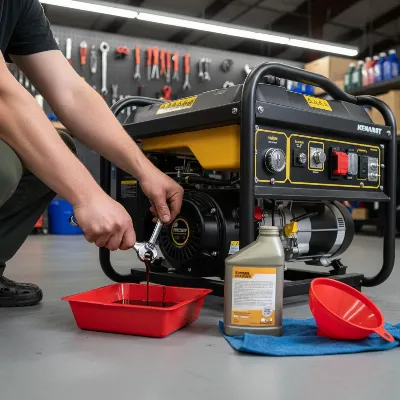 Technician performing an oil change on a portable generator, emphasizing clean oil and proper disposal
Fuel management is another key area. Always use fresh, clean fuel. Gasoline can degrade over time, especially when sitting idle for months, leading to carburetor issues. For long-term storage (more than 30 days), either drain the fuel completely from the tank and carburetor or use a high-quality fuel stabilizer. Fuel stabilizer helps prevent the gasoline from breaking down and creating gummy deposits. Regularly inspect fuel lines for cracks or leaks and clean or replace the fuel filter as needed to prevent contaminants from reaching the engine.
The air filter is your generator’s first line of defense against dust and debris. A clogged air filter restricts airflow to the engine, leading to reduced performance, increased fuel consumption, and potential engine damage. Inspect the air filter every 25 hours of operation or more frequently in dusty environments. Foam filters can often be washed with soap and water, dried thoroughly, and lightly oiled, while paper filters typically need replacement.
The spark plug is responsible for igniting the fuel-air mixture. A dirty, worn, or incorrectly gapped spark plug can cause starting problems and inefficient operation. Inspect the spark plug every 100 hours of use. Clean off any carbon buildup with a wire brush or replace it if it’s heavily fouled or damaged. Ensure the gap is set to the manufacturer’s specifications.
For generators with electric start, battery maintenance is essential. Keep the battery charged, especially during periods of inactivity. Clean any corrosion from the terminals using a wire brush and a baking soda solution. When storing the generator for extended periods, disconnect the battery to prevent parasitic drain.
Keeping the exterior clean is more than just aesthetics. Wipe down the generator with a damp cloth to remove dirt, debris, and oil buildup. Crucially, ensure that the cooling air slots and exhaust system are free from obstructions like leaves, dust, or spiderwebs, which can cause overheating.
Finally, the spark arrestor, a small screen in the muffler, prevents hot sparks from escaping and potentially starting fires. Clean it annually or as specified in your manual, as carbon buildup can restrict exhaust flow and affect performance.
Troubleshooting Common Portable Generator Problems
Even with diligent maintenance, your portable generator might occasionally encounter issues. Knowing how to diagnose and troubleshoot common problems can help you quickly resolve them and get your power back on.
One of the most frustrating problems is a failure to start. This can stem from several factors. First, check the fuel level; a simple oversight could be the culprit. Ensure the fuel valve is open and the choke is in the correct position for starting. Low engine oil will also prevent most generators from starting due to a built-in safety shutdown. A fouled or damaged spark plug, a clogged fuel filter, or a dirty carburetor (often due to stale fuel) can also impede ignition. For electric-start models, a dead or weak battery is a common reason for not starting.
If your generator starts but produces no power output, check the circuit breakers on the generator itself and any connected extension cords. Overloading the generator with too many appliances can trip these breakers as a safety measure. In some cases, a faulty voltage regulator or internal wiring issue might be the cause, which usually requires professional attention.
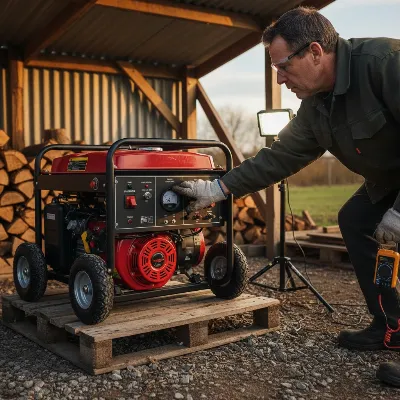 Person inspecting a portable generator's control panel, looking for common issues during troubleshooting
Stalling during operation can indicate fuel delivery problems, such as clogged fuel lines, a dirty carburetor, or insufficient fuel flow. It could also be a symptom of a dirty air filter, an overheating engine, or an issue with the generator’s sensors (like low oil or overload detection).
Leaks of fuel or oil are serious concerns. Visually inspect fuel lines, connections, and the engine for any signs of drips or puddles. Cracked hoses or loose fittings can lead to leaks and pose fire hazards. Always ensure your generator is on a level surface, as imbalances can sometimes cause fluids to seep.
Overheating is another problem that can lead to automatic shutdown. This is often caused by blocked air vents, which prevent proper airflow for cooling the engine. Operating the generator in an enclosed space, an extremely hot environment, or with an excessive load can also cause it to overheat. Always ensure adequate clearance around the generator for ventilation.
For any problem, always consult your generator’s owner’s manual first. It contains specific troubleshooting steps and diagrams tailored to your model. If you’re unsure or uncomfortable performing a repair, it’s always best to seek assistance from a qualified technician.
Safety Guidelines for Portable Generator Use
Operating a portable generator involves inherent risks, and adhering to strict safety guidelines is paramount to prevent accidents, injuries, or property damage. Your safety and the safety of those around you should always be the top priority.
The most critical safety rule is never operate a portable generator indoors or in enclosed spaces, including garages, sheds, or basements. Portable generators produce carbon monoxide (CO), a colorless, odorless, and deadly gas. Even with open doors and windows, CO can quickly accumulate to dangerous levels. Always operate your generator outdoors, at least 15-20 feet away from any windows, doors, or vents of occupied buildings, and direct the exhaust away from structures. Installing CO detectors in your home is also a wise precaution.
When refueling, always turn off the generator and allow it to cool completely before adding fuel. Gasoline is highly flammable, and spilled fuel contacting hot engine parts can instantly ignite, leading to severe burns or explosions. Use a funnel to prevent spills, and never refuel near an open flame or while smoking. Store fuel in approved containers in a well-ventilated area, away from living spaces and heat sources.
Electrical safety is equally important. Connect appliances directly to the generator using heavy-duty, outdoor-rated extension cords that are properly sized for the load. Never back-feed power into your home’s electrical system by plugging the generator into a wall outlet, as this can electrocute utility workers and damage your electrical system. If you plan to connect your generator to your home’s wiring, a qualified electrician must install a transfer switch. Avoid overloading the generator, which can damage the unit and connected devices. Keep the generator dry and away from standing water or damp conditions to prevent electrocution risks.
Finally, proper storage is crucial for both safety and longevity. When not in use, store your generator in a dry, well-ventilated area, away from children and pets. As mentioned in the maintenance section, prepare the fuel system for long-term storage by either draining it or using a fuel stabilizer. Use a generator cover to protect it from dust and elements. Regularly inspect the generator for any signs of wear or damage before and after each use.
> “A portable generator is a powerful tool, but it demands respect. Understanding its mechanics and following safety protocols aren’t just recommendations; they’re essential practices for preventing tragedy.” – Jane Doe, Certified Power Equipment Technician
Conclusion
Maintaining your portable generator is not merely a chore; it’s an investment in reliable power and safety. By consistently performing routine tasks like oil changes, managing fuel correctly, and regularly checking crucial components such as the air filter and spark plug, you significantly enhance your generator’s lifespan and ensure it’s always ready to deliver power when you need it most. Proactive care also helps you avoid common operational issues and potentially costly repairs, offering true peace of mind. Remember, the effectiveness of your portable generator hinges on your commitment to its upkeep. What steps will you take this week to ensure your generator is prepared for any power challenge?
Frequently Asked Questions
How often should I run my portable generator?
It is strongly recommended to run your portable generator for 15-30 minutes once a month, preferably with a light load. This “exercise” helps keep internal engine components lubricated, circulates fluids, and recharges the electric start battery, ensuring it’s ready for immediate use during an emergency.
What kind of fuel should I use for my portable generator?
Always use the type of fuel specified in your generator’s owner’s manual. Most portable gasoline generators require unleaded gasoline with an octane rating of 87 or higher, and some manufacturers recommend specific ethanol content limits. Avoid using stale or contaminated fuel, as this can severely damage the engine.
Can I store my portable generator with fuel in it?
For long-term storage (over 30 days), it’s best practice to either completely drain the fuel from the tank and carburetor or use a high-quality fuel stabilizer. Storing gasoline untreated can lead to fuel degradation, which causes gummy deposits that clog the fuel system and make starting difficult.
Why is my portable generator not producing power?
If your portable generator is running but not producing power, first check the circuit breakers on the generator’s control panel and any connected extension cords. An overload can cause these breakers to trip as a safety measure. Also, ensure all connections are secure, and refer to your manual for specific troubleshooting steps.
How often should I change the oil in my portable generator?
For a new portable generator, the first oil change should typically occur after the initial 20-30 hours of operation to remove manufacturing residues. Subsequently, the oil should be changed every 50-100 hours of use or at least once a year, whichever comes first, to ensure proper engine lubrication and longevity.
Frequently Asked Questions
How often should I run my portable generator?
It is strongly recommended to run your portable generator for 15-30 minutes once a month with a light load. This practice lubricates internal components, circulates fluids, and recharges the electric start battery, ensuring it's ready for immediate use during an emergency.
What kind of fuel should I use for my portable generator?
Always use the fuel type specified in your generator's owner's manual. Most portable gasoline generators require unleaded gasoline with an octane rating of 87 or higher, and some manufacturers recommend specific ethanol content limits. Avoid stale or contaminated fuel to prevent engine damage.
Can I store my portable generator with fuel in it?
For long-term storage exceeding 30 days, it is best practice to either completely drain the fuel from the tank and carburetor or use a high-quality fuel stabilizer. Untreated gasoline can degrade, leading to gummy deposits that clog the fuel system and hinder starting.
Why is my portable generator not producing power?
If your portable generator runs but produces no power, first check the circuit breakers on the generator's control panel and any connected extension cords. An overload can trip these breakers as a safety measure. Ensure all connections are secure and consult your manual for specific troubleshooting.
How often should I change the oil in my portable generator?
For a new portable generator, the first oil change should occur after the initial 20-30 hours of operation to remove manufacturing residues. Subsequently, change the oil every 50-100 hours of use or at least once a year, whichever comes first, to ensure proper engine lubrication and longevity.
Maintain Your Portable Generator
Regular maintenance is crucial for ensuring your portable generator performs reliably and extends its lifespan. Follow these steps to keep your generator in top condition.
For new generators, change the oil after the first 20-30 hours of operation. Afterward, change the oil every 50-100 hours of use or at least once a year, whichever comes first. Always use the recommended oil type from your owner's manual.
Always use fresh, clean fuel. For storage longer than 30 days, either drain the fuel completely or use a high-quality fuel stabilizer to prevent degradation and gummy deposits. Inspect fuel lines and filters regularly for leaks or clogs.
Inspect the air filter every 25 hours of operation, or more frequently in dusty conditions. A clogged filter reduces performance and increases fuel consumption. Clean foam filters with soap and water, or replace paper filters as needed.
Check the spark plug every 100 hours of use. Clean off any carbon buildup with a wire brush or replace it if it's heavily fouled or damaged. Ensure the gap is set to the manufacturer's specifications for efficient ignition.
For electric-start models, keep the battery charged and clean terminals. Disconnect the battery for long-term storage. Wipe down the generator's exterior and ensure cooling air slots and the exhaust system are free from obstructions to prevent overheating.

Changing the oil every 50-100 hours or annually is something I’ve always tried to stick to, and it really pays off. My generator has been incredibly dependable for camping trips and hurricane season. This guide just reinforced that I’m doing things right and gave me a few extra pointers for extending its lifespan even further.
The tip about using fresh fuel with stabilizer for storage is something I wish I’d known sooner. I used to just leave old gas in mine, and it was always a struggle to get it going after winter. Since I started adding stabilizer, it fires right up. My only minor complaint is that finding the right stabilizer can be a bit confusing with all the options out there.
I’ve had my portable generator for years and always just ran it until it quit. After reading about cleaning the air filter every 25 hours, I finally did it, and wow, what a difference! It starts much easier now and seems to run smoother. Definitely a game-changer for keeping it reliable during power outages.
I appreciate the advice on inspecting the spark plug every 100 hours. I checked mine, and it was pretty fouled. Replaced it, and the generator runs better. However, I found the instructions for actually getting to the spark plug on my specific model a bit vague, which made the process take longer than expected. More general guidance on that would be helpful.