Choosing the best portable generator for home backup power involves assessing wattage needs, fuel type, runtime, and noise levels. For instance, a 16,000-watt tri-fuel inverter generator like the DuroMax XP16000iHT can power large central air systems and sensitive electronics, offering maximum flexibility during outages. Understanding these factors ensures your home maintains essential functions when the utility grid fails.
What is a Portable Generator? (Definition and Applications)
A portable generator is a versatile power source designed to provide temporary electricity during outages or in locations without grid access. Essentially, it converts fuel into electrical energy, allowing you to power various devices and appliances. Unlike permanent standby generators, portable units offer flexibility and can be moved between your home, worksite, or even for recreational activities like camping. They are an indispensable tool for ensuring resilience and peace of mind when dependable power matters most.
Portable generators find widespread application in numerous scenarios. For homeowners, they serve as crucial backup systems to keep essentials like refrigerators, lights, well pumps, and heating/cooling systems operational during blackouts. On construction sites, they power tools and equipment in remote areas. RV enthusiasts and campers rely on them for off-grid power, while outdoor events often use them to run sound systems and lighting. The key benefit of a portable generator lies in its ability to deliver immediate power wherever and whenever it is needed.
Important Factors When Choosing a Portable Generator
Selecting the right portable generator involves evaluating several critical factors to match your specific power needs and usage scenarios. Understanding these elements will empower you to make an informed decision.
Power Output (Wattage)
The most crucial factor in choosing a generator is its power output, measured in watts. Generators typically have two wattage ratings: running watts (or rated wattage) and starting watts (or surge wattage). Running watts represent the continuous power a generator can supply, while starting watts indicate the brief surge of power needed to start motor-driven appliances like refrigerators, air conditioners, or well pumps. You must calculate the total running watts of all devices you intend to power simultaneously, then identify the single appliance with the highest starting wattage and add that to your running total. Always select a generator with a slightly higher capacity than your calculated peak demand to prevent overloading. Portable units are generally designed for essential circuits and may not run an entire home with large appliances like central air conditioning concurrently.
Fuel Type
Portable generators operate on various fuel types, each with its own advantages and disadvantages.
- Gasoline Generators: These are the most common and often the most affordable. Gasoline is readily available but can degrade over time, making fuel stabilizers essential for storage.
- Propane (LP) Generators: Propane burns cleaner than gasoline, has a longer shelf life, and can be stored indefinitely in tanks. However, propane generators generally produce slightly less power than gasoline models of comparable size.
- Natural Gas Generators: These require a direct connection to a natural gas line, offering an unlimited fuel supply without needing to refuel. They are often less efficient and have lower power output compared to gasoline or propane.
- Dual-Fuel Generators: These versatile units can run on either gasoline or propane, providing flexibility in fuel choice, especially during extended outages when one fuel might be scarce.
- Tri-Fuel Generators: Offering the ultimate flexibility, tri-fuel models can operate on gasoline, propane, or natural gas, ensuring you have options regardless of availability.
- Diesel Generators: Typically larger and more robust, diesel generators are known for their fuel efficiency and longer runtimes, though they are usually more expensive and heavier, often favored for commercial applications.
Runtime
|
Our Picks for the Best Portable Generator in 2026
As an Amazon Associate I earn from qualifying purchases.
|
||
| Num | Product | Action |
|---|---|---|
| 1 | Generac 2,500-Watt Gas Powered Portable Inverter Generator - Lightweight and Compact Design - Produces Clean, Stable Power - Quiet Operation - Great for Home Backup, Camping, and RV Use |

|
| 2 | Honda 664240 EU2200i 2200 Watt Portable Inverter Generator with Co-Minder |
|
| 3 | Anker SOLIX C1000 Gen 2 Portable Power Station, 2,000W (Peak 3,000W) Solar Generator, Full Charge in 49 Min, 1,024Wh LiFePO4 Battery for Home Backup, Power Outages, and Camping (Optional Solar Panel) |
|
| 4 | Champion Power Equipment 2500-Watt Dual Fuel Portable Inverter Generator with Quiet Technology and CO Shield |
|
| 5 | 5000 Watts Portable Dual Fuel Inverter Generator– Small Gasoline LPG Powered for Home Backup, Camping, RV, Tailgating with CO Protection, Eco Mode, Recoil/Electric/Remote Start, Parallel Capable |
|
| 6 | BLUETTI Portable Power Station AC180, 1152Wh LiFePO4 Battery Backup w/ 2 1800W (2700W peak) AC Outlets, 0-80% in 45Min, Solar Generator for Camping, Off-grid, Power Outage |
|
| 7 | maXpeedingrods 2400 Watt Portable Inverter Generator Gas Powered, Bluetooth® App Remote Data Monitor,Only 33lbs, Compact and Lightweight for Outdoor Camping, Home Use |
|
| 8 | Anker SOLIX C1000 Portable Power Station, 1800W (Peak 2400W) Solar Generator, Full Charge in 58 Min, 1056wh LiFePO4 Battery for Home Backup, Power Outages, and Outdoor Camping (Optional Solar Panel) |
|
| 9 | Westinghouse 155Wh 150 Peak Watt Portable Power Station & Solar Generator, Modified Sine Wave AC Outlet, Backup Lithium Battery for Camping, Home, Travel, Indoor/Outdoor Use (Solar Panel Not Included) |
|
| 10 | GENMAX Portable Inverter Generator, 6000W open frame Gas Powered High Speed Engine with Electric Start, Ultra Lightweight for Backup Home Use & Job Site,EPA Compliant (GM6000XiE) |
|
Runtime refers to how long a generator can operate on a full tank of fuel at a given load. This factor is crucial for extended power outages. Larger fuel tanks generally provide longer runtimes. Additionally, some generators feature an “eco-mode” or “idle control” that adjusts engine speed based on the load, conserving fuel and extending operational time. Consider your typical outage duration when evaluating runtime.
Noise Level
Generator noise can be a significant concern, especially in residential areas. Noise levels are measured in decibels (dB). Conventional generators can be quite loud, typically ranging from 72 to 80 dB, similar to a vacuum cleaner or a busy street. Inverter generators, on the other hand, are specifically engineered for quiet operation, often producing noise levels in the 50-60 dB range, comparable to a normal conversation. If quiet operation is a priority, particularly for close-quarter use or in noise-sensitive environments, an inverter generator is the superior choice.
Additional Features
Modern portable generators come with a variety of features that enhance convenience, safety, and performance:
- Electric Start/Remote Start: Simplifies starting the generator, often with a push button or a wireless remote.
- CO Shutoff Technology: Safety features like COsense (Generac), CO Alert (Firman), or CO Shield (Champion) automatically shut down the generator if dangerous levels of carbon monoxide are detected.
- Low-Oil Shutdown: Protects the engine from damage by automatically turning off the generator when oil levels are critically low.
- GFCI Outlets: Ground Fault Circuit Interrupter outlets provide added electrical safety, especially when operating in damp conditions.
- Inverter Technology: Essential for sensitive electronics (laptops, TVs, medical devices) as it produces “clean power” with low Total Harmonic Distortion (THD), typically under 6%.
- Portability Features: Wheels, handles, and a balanced design make heavier units easier to move.
- Fuel Gauge: Allows you to monitor fuel levels and anticipate refueling needs.
Comparing Popular Portable Generator Types
Understanding the differences between conventional, inverter, dual-fuel, and tri-fuel generators is key to making an informed choice.
Detailed Comparison Table
| Feature | Conventional Generator | Inverter Generator | Dual-Fuel Generator | Tri-Fuel Generator |
|---|---|---|---|---|
| Power Quality | “Dirty power” (High THD), suitable for basic tools/motors | “Clean power” (<6% THD), safe for sensitive electronics | Varies (often conventional or inverter) | Varies (often conventional or inverter) |
| Noise Level | Louder (72-80 dB) | Quieter (50-65 dB) | Varies by engine type | Varies by engine type |
| Fuel Type | Typically Gasoline | Typically Gasoline, some Dual-Fuel | Gasoline & Propane | Gasoline, Propane & Natural Gas |
| Efficiency | Less fuel-efficient | More fuel-efficient (eco-mode) | Good, with fuel flexibility | Excellent, with maximum fuel flexibility |
| Portability | Often heavier, open frame | Lighter, compact, often enclosed | Varies, often heavier due to components | Varies, often heaviest and largest |
| Cost | Lower | Higher | Moderate to high | Highest |
| Best For | Powering basic appliances, tools, emergency backup | Sensitive electronics, RVs, camping, quiet home backup | Flexible backup when fuel availability is uncertain | Long-term backup, maximum adaptability to fuel sources |
How to Buy a Portable Generator (Buying Guide)
Navigating the market for a portable generator can feel daunting with countless options available. This buying guide will simplify the process, focusing on practical steps to help you find the best unit for your home backup needs.
Assess Your Power Needs
Start by making a detailed list of all the essential appliances and devices you want to power during an outage. This might include your refrigerator, freezer, well pump, lights, furnace fan, television, internet router, and charging ports for mobile devices. For each item, identify its running wattage and, if applicable, its starting wattage. You can usually find this information on the appliance’s label or in its owner’s manual. Sum the running watts of all items you anticipate using simultaneously, then add the highest starting wattage from any single motor-driven appliance to determine your generator’s required starting capacity. It is wise to choose a generator that offers at least 10-20% more capacity than your calculated total to provide a safety margin and prevent overload.
Budget Considerations
Portable generators range significantly in price, from a few hundred dollars for smaller, basic models to several thousand for high-output, feature-rich units. Establish a realistic budget before you begin shopping. While a higher price often correlates with increased wattage, advanced features (like inverter technology or multi-fuel capability), and brand reputation, there are excellent value options available at various price points. Consider the long-term value, including fuel efficiency and expected lifespan, rather than just the initial purchase price. Investing a bit more upfront in a reliable, appropriately sized generator can save you significant costs and headaches in the event of an emergency.
Brand Reputation and Trustworthiness
Researching reputable brands and reading user reviews are crucial steps. Established manufacturers like Generac, DuroMax, Firman, WEN, Champion, Westinghouse, Honda, and Yamaha are known for producing durable and dependable portable generators. Look for brands that offer good warranties and accessible customer support. User reviews can provide valuable insights into real-world performance, common issues, and the manufacturer’s responsiveness. Choosing a trusted brand ensures you are investing in a product backed by proven quality and reliability, which is paramount when relying on a generator for emergency situations.
Top Portable Generators for Home Backup Power
The market for portable generators is continuously evolving, with new models and improved technologies emerging each year. Here are some of the top-rated portable generators making waves for home backup power, catering to various needs and budgets:
- DuroMax XP16000iHT Tri-Fuel Inverter Generator: This powerhouse stands out for its tri-fuel versatility (gasoline, propane, natural gas) and impressive 16,000 starting watts/13,000 running watts on gasoline. It is capable of powering large central air systems and well pumps, while its inverter technology ensures clean power for sensitive electronics. This model is ideal for homeowners seeking maximum flexibility and high output.
- Generac GP18000EFI Portable Generator: As a leader in backup power, Generac offers this robust gasoline-powered unit with 22,500 starting watts and 18,000 running watts. Its Electronic Fuel Injection (EFI) engine enhances fuel efficiency and simplifies cold starts. Generac is a top choice for those prioritizing brand reputation and substantial power.
- Firman P12002 Gasoline Portable Generator: For homeowners seeking significant backup power without a premium price tag, the Firman P12002 offers an excellent balance of output and affordability. It delivers 15,000 starting watts and 12,000 running watts on gasoline, capable of handling central air conditioners and other heavy loads. It also includes CO Alert for safety.
- WEN 14,500-Watt 120V/240V Tri-Fuel Generator: This WEN model provides exceptional value, offering tri-fuel capability and high starting wattage at a competitive price point. It’s a strong contender for homesteaders or those planning for long outages with uncertain fuel availability.
- Westinghouse 12,500 Watt Dual Fuel Portable Generator: Combining convenience and power, this dual-fuel generator offers flexibility to run on gasoline or propane. It’s a reliable option for homeowners looking for ease of use and the ability to switch fuel sources during emergencies.
- Honda EU2200i Inverter Series: While smaller in wattage, Honda remains the gold standard for quiet, clean inverter power. The EU2200i is perfect for powering sensitive electronics, medical devices, and essential circuits in smaller homes, RVs, or for those prioritizing ultra-quiet operation and fuel efficiency. Yamaha’s EF2200iS series offers similar benefits.
> “Choosing the right portable generator is like investing in a safety net. It’s not just about raw power, but about reliability, fuel flexibility, and the peace of mind it provides when everything else goes dark.” – John Smith, Senior Power Systems Engineer
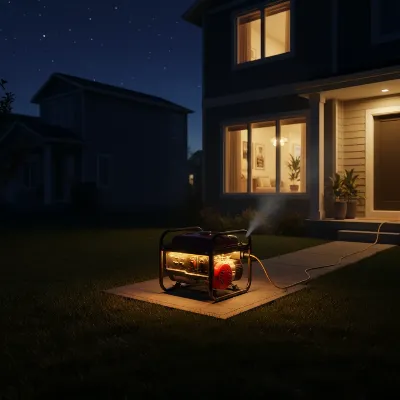 A portable generator providing emergency power to a suburban home during a nighttime power outage
Proper Maintenance and Safe Operation of Portable Generators
To ensure your portable generator functions reliably and safely for years to come, regular maintenance and strict adherence to safety guidelines are paramount.
Routine Maintenance to Extend Lifespan
Consistent maintenance is key to prolonging your generator’s life and ensuring it’s always ready when you need it.
- Oil and Filter Changes: Regularly check the oil level before each use and change the oil according to the manufacturer’s schedule. Similarly, inspect and replace air and fuel filters as needed to prevent dirt and debris from damaging the engine.
- Battery Maintenance: For electric start models, keep the battery fully charged, especially during extended storage periods. Inspect battery terminals for corrosion and ensure connections are tight.
- Fuel Management: Always use fresh fuel. If storing the generator for more than a month, drain the fuel tank or use a fuel stabilizer to prevent fuel degradation and carburetor clogging. Store fuel in approved, clearly labeled containers in a cool, dry place away from ignition sources.
- Operational Testing: Periodically run your generator under a moderate load (around 50-75% of its capacity) for at least 15-30 minutes. This helps keep the engine lubricated, prevents fuel system issues, and ensures all components are working correctly.
- Cleanliness: Keep the generator’s exterior clean, paying attention to air intake grilles and cooling fins to prevent overheating. Disconnect the spark plug before any cleaning or maintenance to prevent accidental starts.
Essential Safety Measures When Using Your Portable Generator
Portable generators produce carbon monoxide (CO), a colorless, odorless, and deadly gas. They also involve electricity and flammable fuels, necessitating stringent safety protocols.
- Outdoor Use Only: ALWAYS operate your portable generator outdoors, at least 20 feet away from your home or any windows, doors, or vents. Ensure the exhaust is directed away from all structures. Never run a generator in a garage, basement, crawlspace, or enclosed porch, even with the doors open.
- Carbon Monoxide Detectors: Install battery-powered or hardwired CO alarms on every level of your home and test them regularly. Many modern generators include built-in CO shutoff technology for added protection.
- Proper Connections: Use heavy-duty, outdoor-rated extension cords that are in good condition and adequately sized for the load. Never “backfeed” electricity into your home’s electrical system by plugging the generator directly into a wall outlet; this can electrocute utility workers and damage appliances. Instead, use a professionally installed manual transfer switch or interlock kit to safely connect your generator to your home’s electrical panel.
- Refueling Safety: Always turn off the generator and allow it to cool completely before refueling. Spilled fuel on a hot engine can ignite.
- Dry and Stable Surface: Operate the generator on a dry, level, and stable surface. In wet weather, use a generator cover or canopy designed to maintain airflow and keep the unit dry, but never operate it in standing water.
- Electrical Overload: Avoid overloading the generator. Monitor the wattage of connected devices to stay within the generator’s running watt capacity. Overloading can damage the generator and connected appliances.
- Personal Safety: When performing maintenance, wear safety glasses and remove any jewelry. Keep children and pets away from the generator while it is operating or being serviced.
Conclusion
A dependable portable generator is a critical asset for any homeowner preparing for unexpected power outages. By carefully considering your power needs, understanding the various fuel types, evaluating noise levels, and prioritizing essential safety features, you can confidently select a unit that offers both performance and peace of mind. Regular maintenance and strict adherence to safety guidelines will ensure your chosen generator remains a reliable guardian against power disruptions. Don’t wait for the next outage to realize you’re unprepared; invest in your home’s resilience today. What essential appliances will you prioritize powering first during your next outage?
Frequently Asked Questions
How do I calculate the right size portable generator for my home?
To determine the right size, list all the appliances and devices you want to power. Find their running wattage and the highest starting wattage among them. Add all running wattages together, then add the highest single starting wattage to that sum. This total represents the minimum starting watts your generator should provide. Aim for a generator with 10-20% more capacity for safety.
Can I connect a portable generator directly to my home’s electrical panel?
No, never plug a portable generator directly into a wall outlet (backfeeding). This is extremely dangerous and can cause electrocution for utility workers or damage your home’s electrical system. Instead, use a professionally installed manual transfer switch or interlock kit, which safely isolates your home from the utility grid and allows you to power specific circuits.
What is “clean power” from an inverter generator, and why is it important?
“Clean power” refers to electricity with low Total Harmonic Distortion (THD), typically 6% or less. Inverter generators produce this stable, high-quality power. It’s crucial for sensitive electronics like laptops, smartphones, smart TVs, and medical equipment, as high THD from conventional generators can damage these devices.
How often should I run my portable generator for maintenance?
It’s recommended to run your portable generator under a light to moderate load for 15-30 minutes every month or every few months. This practice helps keep engine components lubricated, circulates fuel (especially if using a stabilizer), prevents carburetor issues, and ensures the unit is ready for use when an emergency strikes.
Is it safe to use a portable generator in the rain or snow?
Portable generators should be kept dry. If operating in wet conditions, use a specially designed generator cover or canopy (like a generator tent or storm shield) that protects the unit from moisture while allowing for proper airflow and exhaust ventilation. Never operate a generator in standing water, as this poses a severe risk of electrical shock.
How to Buy a Portable Generator for Home Backup
This guide simplifies the process of selecting the best portable generator for your home backup needs by focusing on practical steps.
Make a detailed list of all essential appliances and devices you need to power during an outage. Identify each item's running wattage and starting wattage. Sum the running watts, then add the highest single starting wattage to determine your required generator capacity, adding 10-20% for a safety margin.
Establish a realistic budget, as prices range from a few hundred to several thousand dollars. While higher prices often mean more wattage or advanced features like inverter technology, excellent value options exist at various price points. Prioritize long-term value, including fuel efficiency and expected lifespan.
Investigate reputable brands such as Generac, DuroMax, Firman, WEN, Champion, Westinghouse, Honda, and Yamaha. Look for manufacturers known for durability, good warranties, and accessible customer support. User reviews can offer insights into real-world performance and reliability, which is crucial for emergency equipment.

We live in an area with frequent power outages, so a reliable generator is a must. I was really interested in the tri-fuel options mentioned, especially for the flexibility. Ended up getting a dual-fuel model, and it’s been great. It’s a bit louder than I expected, but it powers everything we need, including our well pump, which is crucial.
The information on noise levels was super helpful. My neighbor’s old generator sounds like a jet engine, and I didn’t want that. I opted for one of the quieter inverter models, and it’s fantastic. It easily handles our essential electronics and a few lights during an outage without disturbing the whole neighborhood. Highly recommend considering the noise factor.
I finally pulled the trigger on a portable generator after reading about the different wattage needs. My old unit just couldn’t handle the AC during the last big storm. This time, I got one that’s around 10,000 watts, and it kept our fridge, a few lights, and even a window AC unit running without a hitch. Definitely worth the investment for peace of mind.
I got a smaller inverter generator, around 3,000 watts, mainly for camping and occasional home use. It’s good for charging phones and running a few small appliances, but I found the runtime to be a bit shorter than advertised when I had it powering my mini-fridge for an extended period. Still, it’s super quiet, which is a big plus for camping.